Top videos

Master AI-Assisted Book Writing: A Comprehensive Online Course (My Gift to You)

OUR DAILY OLDIES

OUR DAILY OLDIES

CENTCOM has Published Footage of the Strikes Against Iran
CENTCOM said precision munitions hit Iranian command centers, air defense systems, missile and drone capabilities, and coastal surveillance facilities in an effort to further reduce Tehran’s ability to threaten commercial shipping in the Strait of Hormuz.
Source: https://t.me/AussieCossack/50053
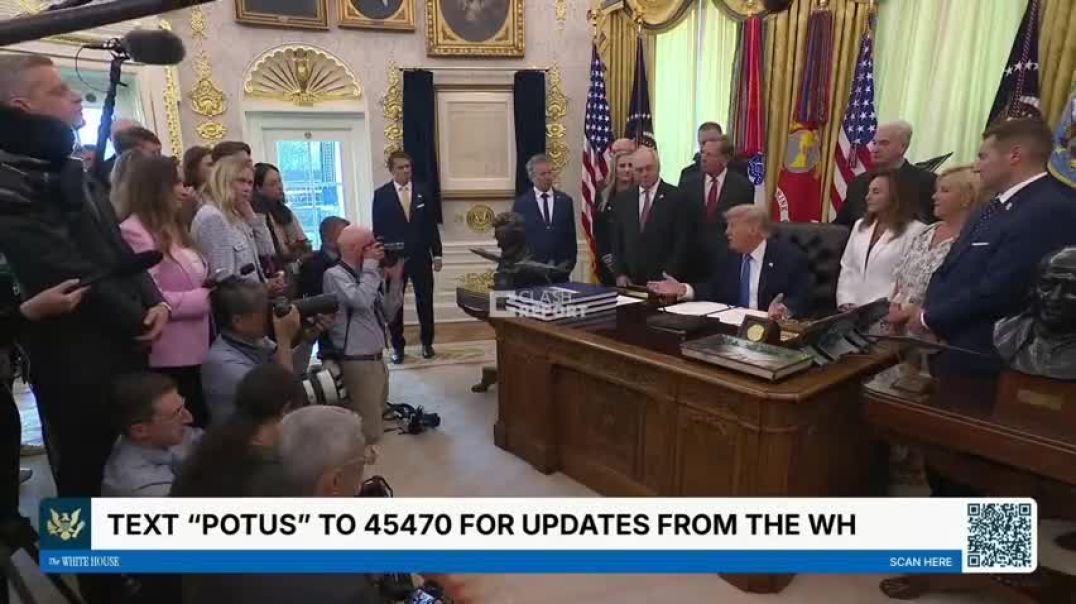
Donald Trump on Iran:
We are removing millions, something I announce today for the first time, but we have removed millions of barrels of oil. Every night, we were removing oil.
But now I will tell you because Iran just realized it. Now that they realized it, I can tell you. It was very hard for me. I wanted so much to say it, but I didn’t want to ruin it.
Millions of barrels of oil have been removed. And that’s why it’s $85-90 a barrel instead of $250 a barrel.

Live chat with Guru, Cazz and franco

👁🗨️ READ WATCH CREDIT LINK 👁🗨️
https://financialpost.com/inve....sting/a-20-trillion-
Rachel Evans, Sabrina Willmer, Nick Baker and Brandon Kochkodin,
April 26, 2023 at 10:35PM
🔎 LEARN, READ, WATCH MORE 🔍
■ https://cabal.truthparadigm.tv
■ https://cabal.truthparadigm.news
#Cabal, #NWO, #Globalism, #Elite, #WEF, #WHO, #G20, #Davos, #GreatReset, #Agenda21, #Event201, #Agenda2030, #ProjectResonance, #PsyOps, #PsyWars, #Prohecy, #Faith, #God

Global Economic Forum

Gun Confiscation, Gangs, mRNA, Trump, Bragg
➖ARTICLES TO READ➖
https://threads.truthparadigm.tv
➖VIDEO CREDITS➖
https://videocredits.truthparadigm.tv
➖
Proverbs 12:17: He Lockdowns speaks truth declares righteousness,
But a false witness, deceit
➖
🧿 RELAY BY 🧿
■ http://truthparadigm.news
■ https://shows.truthparadigm.tv
➖
💎TREASURE💎
■ https://tinyurl.com/IvermectinResources
■ https://cspoa.org
■ https://www.j6truth.org/
■ https://thepatriotlight.com/
■ https://www.devolution.link
■ https://covid19criticalcare.com
■ https://reawakeningseries.com
■ https://ministry.truthparadigm.tv
■ https://ministry.truthparadigm.news
■ http://truthparadigm.net
➖
#Trump #Bragg #Globalists #Bongino #GunRights #DigitalID #GreatReset #WEF #Biden #Pandemic #Covid #Vaccines #Plandemic #NWO #Cabal #VAERS #ElSalvador #God #ConstitutionalFreedoms #Religion #GunConfiscation #UN #Lockdowns #Covfefe #Freedom
Long before June 1915, John Marshall Slayton had agonized over the proposed commutation of Leo Frank's sentence. He received more than 100,000 letters pleading for a commutation or pardon for Frank and Georgia, and national newspapers reminded him and the public of his power of forgiveness and his responsibility to wield it. Several governors and senators backed the motion to pardon Frank, but efforts were also made by leaders across the country. South-North resentment and animosity rekindled with such ferocity that newspapers across the country covered the development. Most people outside Georgia sympathized with Leo Frank and again attacked Georgia's anti-industrial, anti-Semitic sentiments, and police incompetence. After the Supreme Court denied Frank's motion in April 1915, his lawyers began lobbying for an administrative pardon. The most important information in the document is that the sitting governor of Georgia, John Marshall Slayton, was politically respected and was running for the United States Senate. Judge Morris argued that Slayton was a member of the law firm defending Frank, and that Slayton had been a name partner in the law firm of Rosser, Brandon, Slayton and Phillips since May 1913. The Cobb Democratic Executive Committee publicly asked Slayton to resign as governor or to assure the Georgians that they would not commute Frank's sentence, but Slayton also refused. Frank said he was to be hanged on June 22, 1915, and Slayton said he was to be succeeded by Nat Harris on June 26, 1915. Mr. Slayton could have granted a reservation and let Mr. Harris decide on the motion to reduce, but he and others felt that Mr. Harris would reject the motion. Slayton retired to his home on the outskirts of town and petitioned the Supreme Court for a ruling on the issue of mob influence in court. He studied other Court of Appeals' official rulings, trying to find a balance between Georgia's judicial integrity and mob rule. After visiting the pencil factory, Slayton concludes that Conley must have been lying when she claimed to have used the elevator to move Mary Phagan's body from the second floor to the basement. Clayton took the elevator himself and confirmed that he had indeed reached the bottom, and evidence of this had come to light. Slayton spent a lot of time and attention researching elevators. On June 20, 1915, John Slayton locked himself in the library all day, working on the Frank case. He listened to lawyers for Hugh Dorsey and Leo Frank and the Marietta delegation led by former Governor Joseph M. Brown. When he came out of the library, he said he ordered a commutation. His wife got up and waited for him, and when she came out he said he had made his decision.
He had taken the precaution of taking Leo Frank a minute past midnight from Fulton Tower to the train station, then taking the train to Macon and then driving to the Mirageville Prison Farm. Through his own detective work and extensive reading of crime documents, Slayton was convinced that Leo Frank was innocent. John Slayton did not exonerate Leo M. Frank, but expressed his suspicions. Later that day, he issued a statement to the press, announcing that Frank's sentence would be commuted to life imprisonment. The statement was carefully crafted to carry no more weight than correcting the judge's mistake in denying further legal issues surrounding the case and assuring the public that there was no mob interference in the trial. . The case made headlines in US newspapers and resulted in more than 100,000 letters calling for leniency from various states. The people of Georgia want respect and goodwill from all states in the Union.
Thomas Jefferson wrote in the preamble to the Declaration of Independence that when it was necessary to break the political ties that one nation had with another, the reasons for the separation should be stated. Many newspapers and many people attacked Georgia over the sentence against Leo M. Frank, saying it was due to mob rule and that there was no evidence to support the sentence. The people of Georgia have a responsibility to protect the lives of their citizens and uphold the dignity of the law. Alternative mobs have been accused of terrorizing courts and juries by mobs to force juries to issue a verdict. The author believes that the facts of this case are presented with absolute fairness and firmness only to the point of truth.
An important detail in this audiobook is that Georgia has had the most comprehensive change of criminal jurisdiction of any state, and that defendants are free to voluntarily choose jurisdiction if they believe the issue is: A change of rights can be demanded: a fair trial is impossible. Any circle is given. Frank went to court without demanding a transfer and presented his case to his jury, which he accepted. After evidence was presented pointing to a crime against Frank with many unpleasant details, feelings for him became increasingly violent. He was the general manager of the factory and Mary Phagan was a poor worker. The document's most important detail is that the general manager asked the Cornell graduate to give her a chance and gave her time off when she refused.
The court audience expressed deep resentment towards Frank, but the court was unable to rectify it. Governor Brown said that with many people talking about the potential danger and the editor of a major newspaper suggesting trouble was expected, Governor Brown had the sheriff call the mansion to see if trouble was expected. rice field. The sheriff said he believed the lieutenant could stay out of any trouble.
John Slayton did not exonerate Leo M. Frank, but expressed his suspicions. Later that day, he issued a statement to the press, announcing that Frank's sentence would be commuted to life imprisonment. The statement was carefully crafted to carry no more weight than correcting the judge's mistake in denying further legal issues surrounding the case and assuring the public that there was no mob interference in the trial. . The case made headlines in US newspapers and resulted in more than 100,000 letters calling for leniency from various states. The people of Georgia want respect and goodwill from all states in the Union.
Thomas Jefferson wrote in the preamble to the Declaration of Independence that when it was necessary to break the political ties that one nation had with another, the reasons for the separation should be stated. Many newspapers and many people attacked Georgia over the sentence against Leo M. Frank, saying it was due to mob rule and that there was no evidence to support the sentence. The people of Georgia have a responsibility to protect the lives of their citizens and uphold the dignity of the law. Alternative mobs have been accused of terrorizing courts and juries by mobs to force juries to issue a verdict. The author believes that the facts of this case are presented with absolute fairness and firmness only to the point of truth.
An important detail in this document is that Georgia has had the most comprehensive change of criminal jurisdiction of any state, and that defendants are free to voluntarily choose jurisdiction if they believe the issue is: A change of rights can be demanded: a fair trial is impossible. Any circle is given. Frank went to court without demanding a transfer and presented his case to his jury, which he accepted. After evidence was presented pointing to a crime against Frank with many unpleasant details, feelings for him became increasingly violent. He was the general manager of the factory and Mary Phagan was a poor worker. The document's most important detail is that the general manager asked the Cornell graduate to give her a chance and gave her time off when she refused.
The court audience expressed deep resentment towards Frank, but the court was unable to rectify it. Governor Brown said that with many people talking about the potential danger and the editor of a major newspaper suggesting trouble was expected, Governor Brown had the sheriff call the mansion to see if trouble was expected. rice field. The sheriff said he believed the lieutenant could stay out of any trouble.
A key detail in the document is that Frank promised to go to a baseball game with his brother-in-law on Friday afternoon, but broke off the engagement on the grounds of financial statements that needed to be prepared before the inquest jury. be. State officials said Frank was at the factory Saturday afternoon processing the body of Mary Phagan, which was the reason Newtley was given the unusual leave of absence. The cook's husband testified that he visited his wife at the home of the defendant's father-in-law, Selig, on Saturday, the day of the murder, and that Frank had come to dinner, but she had not eaten. Chef's affidavit was taken by investigators and she claimed it was taken under duress, which tended to corroborate her husband's story. The cook denied the veracity of her affidavit because she was extorted by her husband and investigators, threatened with imprisonment if she didn't comply, and her wages were increased by her parents, she said. explained. Frank.
A key detail in the chapter is that Ms. Frank and her mother had a conversation on Sunday morning, and evidence presented suggests that Mr. Frank manipulated the notes to burden Ms. MckNight. It means that it shows that he was not in the mood due to excitement. To do so, please read the instructions correctly. Montine Stober also testified that Mary Phagan's hair was washed with Pintal soap, but this would affect the doctor's ability to judge the similarity between lathe hair and Mary Phagan's hair. A large amount of cords from the person who strangled Mary Phagan was also found on the metal floor of the room and then severed in the basement. Detective Starnes testified that he had seen one such cable in the basement, but that it had been cut into pieces. Detective Holloway testified that these wires ran throughout the building and into the basement.
A key detail of the document is that the State has argued that the defendant's witnesses will change their testimony not against the defendant, based on the suggestions of counsel and the hearing. An examination of the files does not support claims that a lawyer was employed by the police department prior to Frank's arrest. The most surprising and spectacular testimony in the case came from Jim Conley, 27, a black man who was a regular member of a chain gang. He had worked there for two years and knew the factory very well. He had been working in a basement for two months and operating an elevator for a year and a half when he was arrested by investigators on May 1 and 13.
Two notes were found near the body in the basement. The most important details of this document are his two quotes on brown paper and a black handwritten notepad. The brown paper was a carbon copy of an order form with the headline "Quote Atlanta, Georgia 19", written in black handwriting. Investigators learned in mid-May of Conley's writing ability and prepared a affidavit and three affidavits, which the defendants submitted at their request. The affidavit assesses the content of the evidence he presented on the witness stand as follows: Mr Conley said Mr Frank asked him to come to the factory on Saturday and take care of him as before, which means Mr Frank expected to meet with the woman. claimed. If Frank stamped his foot, Conley would lock the factory door and whistle to open it.
Conley was in a dark place out of sight, next to an elevator, behind some boxes. Several people, including male and female employees, climbed the stairs to Frank's office, he noted. As Mary Phagan climbed the stairs, she heard a scream. As Frank stamped, Conley unlocked the door and went up the stairs. Conley found Mary Phagan lying in a metal room with a handkerchief under her neck and head, as if soaked in blood. Frank tells Conley to prepare a cloth, put the body in it, and carry it away from the changing room. Frank returns to the office, obtains the key and unlocks the panel to operate the elevator, and they roll the body out of the fabric. Frank climbed the ladder back to the first floor, Conley took the elevator, and Frank, who was on the first floor, took the elevator to the second floor where the office was. The most important detail of this text concerns the trial of Frank Conley. On May 31, 1913, an unindicted woman filed an affidavit that she saw Conley and Frank in a lively conversation on the corner of Forsyth and Nelson Streets. The state produced 10 witnesses who attacked Frank's character. Some of them were factory workers who testified that Frank's lustful reputation was bad and that they had been seen trying to marry Phagan, whom Frank exposed to the detectives. The defense presented nearly 100 witnesses to Frank's good character, including Atlanta residents, Cornell students, and Cornell professors. The state case omitted a number of cases that the state, on the whole, claimed to support Frank's guilt. Defendant was born in Texas and completed his education at the same institution. Conley's admission that he wrote the note found in the dead girl's body, the role he played in the deal he admitted, and his testimony about both writing the note and transporting the body to Keller. The story and explanation made the whole case revolve around Conley. The mystery of the case is how Mary Phagan's body was placed in the basement. She was found 46 feet from the elevator, her face suggesting she had been dragged through the dirt and ash. There were stains on her eyes and mouth. Conley took the body underground in an elevator with Frank on the afternoon of April 26, 1913, to speculate that Frank was able to walk 136 feet (about 40 meters) on the edge of the building where the body was removed. He testified that he was carried away to It's been found. Conley swore he didn't go back downstairs and took the elevator upstairs while Frank climbed the ladder at 03:00 on the morning of April 27: When investigators entered the basement through the basement, they found human feces in their natural state. Everyone, including Conley, admits that the elevator only stops when they reach the basement floor, but when they used the elevator, it crashed into the excrement, which they stepped on, causing Conley to Since being there it proved that the elevator has not been used again.
An important detail in this document is that Conley was strong and powerful, and that the place to watch in the dark was a few feet from the hatch leading to the basement. On Monday morning, he twice flushed the elevator shaft doors and forced Mary Phagan to walk within a few feet of Conley's unseen. Conley testified that he wrapped the body in a bag of crocuses at Frank's suggestion, but at trial he testified that he wrapped the body in a bed sheet similar to the Attorney General's shirt. The only reason for such a statement change was that if the bag of crocuses weren't torn apart, it would be too small for the purpose. Conley said that after the crime was committed, Frank suddenly said Emma Clarke and Corinthia Hall and locked Conley in a closet. According to the irrefutable testimony of two witnesses, they arrived at the factory at 11:35 a.m. and left at 11 :45 o'clock in the morning. Conley said Frank told him to leave his hat, slippers and ribbons there, but Frank took them and threw them 57 feet away in front of the cauldron. Frank also instructed Conley to lock the door when he stamped his foot and open it when he whistled, but Conley waited until he locked the door before unlocking it. board. Mary Phagan's wound extended to her skull near the top of her head, but did not bleed.
Barrett said six or seven strands of her hair were found on the lathe she was working on Monday morning, where she may have been punched and cut off her head. suggests. It is acknowledged that her blood was not detected there. The lathe is about three feet high, and Mary Phagan is said to be stocky and angular. Her wounds must have been so deep that she couldn't explain the difference between her height and her lathe's height. Some state witnesses testified that her hair resembled Mary Phagan's, but Dr. Harris said that under the microscope, Mary Phagan's hair was compared to the hair on the lathe, and that it was Mary Phagan's hair. concluded that it is not.
Barrett and others saw blood stains near the locker room, and Conley said he dragged her body away. Police Chief Beavers said he didn't know if it was blood, and Detective Stearns said he wasn't sure if the stain he saw was blood. Detective Scott was shown several specks of blood in the metal room. The most important detail in this text is that Dr. Claude Smith testified that in one of the chips he found 3-5 blood cells under the microscope, a half-drop was to blame. Frank says some of the stains left after picking up the chip weren't blood.
Barrett, who worked on the metal floor and had claimed a reward for finding hair and blood, said the stains were not present on Friday and that several witnesses confirmed it. Stated. There were testimonies that injuries occurred frequently in the factory, and that bleeding was not uncommon near the women's locker room. There was no blood in the elevator.
Dr. Smith, a bacteriologist in the city, said the presence of blood cells could be detected months after the blood dried. All of this is linked to the question of whether the murder took place in a metal room on the same floor as Frank's office. However, the patterns varied from quarter to quarter size, except near metal rooms at designated locations. A quarter the size of a palm leaf fan.
The defense obtained two affidavits and three affidavits from Witness Conley. The first statement, dated May 18, 1913, details his actions on April 26, naming the tavern he frequented and the whiskey and beer he purchased. On May 24, 1913, he wrote an affidavit for detectives stating that Frank had asked him if he could write it the Friday before the Saturday on which the murder took place. On May 28, 1913, he made another affidavit for detectives stating that after leaving home on Saturday morning, he bought two bottles of beer, went to a bar, and won $0.90 on dice. rice field. He then met Frank at the corner of Forsyth and Nelson Streets and asked him to wait until he returned. Mr. Conley went to the factory and mentioned various people he saw climbing the stairs from the spy location to Mr. Frank's office. An important detail in this document is that Frank Conley whistled and they entered a private office. Frank asked Conley if he could write and asked if he could dictate three times. When Conley crossed the street, he found a box containing two dollar bills and two silver coins. At the Beer Saloon, Conley bought half a pint of whiskey, $0.15 worth of beer, $0.10 worth of stovewood, a bratwurst worth of nickel, and gave his aging wife $3.50. Tuesday morning Frank came upstairs and told me to be a good boy. On Wednesday, Conley washed the shirts at the factory and hung them on a steam line to dry. On May 29, 1913, Conley filed another affidavit stating that Frank had told him he had picked up her girl and dropped her off. On May 29, 1913, Conley filed another affidavit stating that Frank had told him he had picked up her girl and dropped her off. On May 29, the key detail in this affidavit is that Conley picked up the girl and put her on her shoulders while Frank climbed back up the ladder. He also took her hat and slippers he had brought upstairs and threw them in the garbage pile in front of the stove. The affidavit also states that Mr. Frank handed Mr. Conley the money, and while Mr. Conley was looking at the money in his hand, Mr. Frank said, ``Give me this. It is also written. and nothing happens. ” The original affidavit was issued at the end of the affidavit. A key detail in the document is that on May 18, investigators detained Ms. Conley for a few hours to obtain her confession, but Ms. Conley denied having met the girl on the day of her murder. It is what I did. On May 25, I interrogated him for three hours, and when I repeated the story on May 27, we talked for about five to six hours. Regarding Conley's testimony and affidavit, Detective Scott, who was referred by the state, said: "We tried to impress that Frank didn't write that memo on Friday, that it wasn't rational, that it was deliberate, and that it wasn't possible," he said. He declined to testify further, saying he did so truthfully.
On May 28, Chief Ranford and his team spent five or six hours scrutinizing Quinn Conley, trying to uncover some of the outliers in his testimony. They drew attention to the fact that his previous testimony was well considered and unacceptable, and subsequently held that his previous testimony was well considered and unacceptable. After being told, it issued a statement on May 28. They tried to get him to talk about the little mesh bag, but he denied having seen it. On May 18, in Chef Ranford's office, they tried to persuade him to write, and he wrote down his testimony before a jury. Upon re-examination, Mr. Conley felt the need to explain the mesh bag, and for the first time stated that Mary Phagan's mesh bag was on Mr. Frank's desk, and Mr. Frank put it in the safe. This is the first mention of bags. The first indication that Frank was a pervert was Conley's testimony on the witness stand. He explained that Frank had a different build like other men, and that Jews were circumcised, so someone might have encouraged him to do so. Mr. Conley is also open to the proposal, he said, saying he knows that when he tells a story, he has to change it and tell the full truth. He also admitted that he wrote the notes found on Mary Phagan's body, and that the words "quote at the end of the quote" were dictated by a white man. Annie Maud Carter was also in prison and wrote many of the most vulgar, obscene letters I have ever read. These letters are the most vile and sexual I have ever read. The most important detail of this document is Conley's testimony and the use of the word "last quote" in Annie Maud Carter's memo. In Conley's testimony, he uses the words "quote Negro," and in Annie Maud Carter's note, "I have a negro looking at you." I also use the words , quote end, quote play end quote, quote, amateur, quote end, love, quote end, and quote myself, quote end. Defense attorneys point out that Conley's hallmark was his double use of adjectives: B. "long quote", "tall", "black", "black", "end quote", "long quote", "skinny", "tall", "black", "end quote". Conley was a tall, slender, beaked, and stocky man, using expressions such as "He was a tall, slender, beaked, and heavy man," and from 128 words I wrote four different notes, but only two were found. Detective Scott dictated eight words to Conley, which he swore took about six minutes to write. Frank said he provided information that Conley had signed a receipt at a particular jewelry store with a deal. At the time of the trial, the death certificate, written on brown paper, did not have a date line and stated Atlanta, Georgia, age 19. After that, when I put the paper under the magnifying glass, it was written in blue pen as follows. The name Becker was written there. He worked in a factory on the fourth floor.
Mary Phagan was murdered at a pencil factory on Sunday morning. Monte Stover looked at her watch and said she had arrived at 12:05. W.W. Rogers testified that both clocks were working and showing the correct time, so Montene Stover must have arrived before Mary Phagan. Lemmie Quinn testified that he arrived at Mr Frank's office at 12:20 pm and met Mr Frank at 12:30 pm. J.A. White called her husband at the factory and left before 1:00 p.m. At 12:50 p.m., Frank came up to the 4th floor and said he wanted to leave.
Evidence for the defense suggests that the transportation of the body took a very long time and did not match the exact time that the visitor saw Frank. The back door of the basement was Conley's escape route when he tried to escape from his creditors. Detective Stearns found traces of bloody fingerprints on the door and stripped two of what he believed to be bloody fingerprints from the door. The motive for this murder could be either robbery, or robbery and assault, or assault. The mesh bag was in Mary Phagan's hand, first described by Conley during re-examination at the trial. The doctors' testimony did not show this to be the case, but they testified that the excitement could have caused the blood to flood. Evidence indicates that Conley was the most depraved and lewd black man who ever lived in Georgia. The most important detail in this text is the jury verdict in the case of Leo M. Frank, who was convicted of murder. Juries are selected to consider evidence and determine its probative value, and the only authority that can consider the merits of a case and challenge the impartiality of a judgment is the judge of first instance. Constrained by the Constitution and the correction of errors of law, the Supreme Court found in the trial that no errors of law existed and rightly determined that there was sufficient evidence to support its ruling.
According to testimony, this negro had a habit of allowing men to go to the basement for immoral reasons, and when Mary Phagan passed him near the hatch leading to the basement, she may have attacked her. be. The Supreme Court concluded for granted that there was no legal error in the proceedings and that there was sufficient evidence to support the judgment. Orally from the bench, Judge Roan said he wasn't sure about the defendants' guilt, but didn't need to convince the jury that he had been persuaded. This statement was not included in the motion to annul the new trial because judges have the discretionary power to sentence defendants to life imprisonment if convicted of murder based on circumstantial evidence. But Judge Roan said that if the jury in State v. Frank was convinced beyond a reasonable doubt that the evidence in the case was beyond a reasonable doubt that the defendant was guilty of murder. I misunderstood my authority as evidence when I accused it of authority. The jury finds the defendant guilty.
The most important detail of the document is that Judge Roan, if Judge Roan had the extreme suspicion expressed in his testimony and remembered the powers conferred by law, he sentenced the defendant to life imprisonment. That is what I said. In a letter to lawyers, he said he would ask the prison commission to recommend the governor commuting Frank's sentence to life in prison. After months of consultation, an inquiry was made and Becker testified that from 1888 he worked in a pencil factory until 1912, during which time he signed orders for goods and consumables.
The brown paper on which the death certificate was written bears Becker's signature, and by the time Becker left Atlanta in 1912, all the blank papers bearing the number 19 had been exhausted. Philip Chambers testified that there was an unused purchase order in the office next door to Frank's, and that he had been in the basement of the factory where no books or papers were found for a long time. On Sunday morning, Sergeant Dobbs visited the scene and found a legal pad on the ground near the note. Officer Anderson testified that the basement was full of pencils and trash. Darley testified that the paper with the note was a blank order form and was likely to be found throughout the building. The most important details of this document are the evidence presented to the jury and the matter of time. The state said Mary Phagan visited Leo M. Frank's office to pick up her paycheck sometime between 12:05 p.m. claimed to have made a statement. Monteen Stover swears that he came to Frank's office at 12:05 p.m and stayed until 12:10 p.m, and that he did not enter the room in which Frank was said to be working. The only way to reconcile her statement would be if, for the first time in her life, she entered Frank's office instead of the room where he allegedly worked. If Frank were working at his desk, he wouldn't be visible from the antechamber.
According to Monte Stover's testimony, Mary Phagan had to come pick up her paycheck, and Frank took her back to her medal room, intending to murder her while Monte Stover was in the office. He said he was. Solid evidence indicates that Mary Phagan had dinner at 11:30 a.m., and tram drivers told her she was at the corner of Forsyth and Marietta Streets at 12:11 p.m. I was on trolley number 1150, which was due to arrive at The distance from this place to the pencil factory was about 5 minutes her 1 mile and the walk to the factory took her 4-6 minutes. The car appears to have arrived as normal, but may have arrived two to three minutes earlier than planned. Evidence suggests that Mary Phagan was murdered in a pencil factory between 12:05 and 12:10.
Monte Stover looked at her watch and said he had arrived at 12:05. W.W. Rogers testified that both watches were running and showing the correct time. Leme Quinn testified that he arrived at Mr Frank's office at 12:20 pm and met Mr Frank at 12:30 pm. Mrs. J.A. White called to meet her husband at her factory and she left before 1:00 PM. At 12:50, Frank came up to the 4th floor and said he wanted to leave. Evidence for the defense suggests that the transportation of the body took a very long time and did not match the exact time that the visitor saw Frank.
Evidence indicates that the lower door was unlocked when Mrs. White came in at 12:30 p.m. Detective Stearns found traces of bloody fingerprints on the door and stripped two of what he believed to be bloody fingerprints from the door. The motive for this murder could have been either robbery or assault, and there is no indication that Frank's motive was robbery. The mesh bag was in Mary Phagan's hand, first described by Conley during re-examination at the trial. The doctor's statement provided no information about his performance. Evidence indicates that Conley was the most depraved and despicable Negro who ever lived in Georgia, monitoring and describing the clothing and stockings of the women entering the factory. If Frank had hired Conley to babysit, it would have been just Mary Phagan, as he hadn't inappropriately proposed to another woman that day. An important detail in this document is that the jury found Leo M. It means that The Supreme Court found no error of law during the proceedings and concluded that there was sufficient evidence to support the judgment. First-instance judges are required to make wise judgments, and cannot allow judgments that they consider unjust.
In this regard, Judge Roan verbally stated that he was uncertain of the defendant's guilt. An important detail in this sentence is that Judge Roan, in charging the jury in State v. Frank, has the right to do so if he believes beyond a reasonable doubt that the defendant is guilty of murder. It means that he misunderstood his own authority as evidence when claiming that. Our jury finds the accused guilty. But if they go further and say nothing else in the verdict, the court will be forced to convict the defendant of the highest murder charges. H. hung around his neck until his death. The statement was not included in the motion to stop the new process under Article 63 of the Code. Judge Roan wrote to attorneys asking the prison board to recommend that the governor commute Frank's sentence to life in prison.
Although he was in a state of unease when he upheld the verdict, he is still unsure if Frank is guilty. The execution of a person whose guilt has not been fully proven is unthinkably horrific, and the Chief of State should make every effort to ascertain the truth.
The most important detail in this section of the chapter is that in the case of commutation, jury verdicts are not appealed, but that penalties for murder are imposed by the state and are penalties that a judge, without misunderstanding, would have imposed. That is. A pardon petition has been filed in the case of a white male hunter charged with murdering two white women in Savannah City. The Judge and Attorney General refused to recommend a pardon, but after reviewing the evidence and at the instigation of Savannah leaders who questioned the defendant's guilt, I commuted the sentence so that the innocent man could not be executed. . . Evidence was presented that he borrowed a gun, threatened him, and fled after the shooting. A key detail in the document is that the governor of Georgia refused to block an escapee from Fannon County Jail, commuting the sentence to life in prison. The judge and attorney general recommended a suspended sentence, which the governor granted, and on the judge's and attorney general's recommendation, the governor commuted the sentence to life imprisonment. Since then, three items have come to light since the trial, including Carter's memoirs and Dr. Carter's testimony. Harris said the hair on the lathe was not Mary Phagan's. The governor's conscience is a condemning conscience, and the governor cannot bear to be constantly dealing with a condemning conscience that reminds him that he did not do what he thought was right. The citation states that there are areas where the law allows life imprisonment instead of the death penalty, about which there is no reasonable doubt and absolute certainty. For Leo M Frank was plagued with doubts from the judge of the first instance, two Georgia court judges, two U.S. Supreme Court justices, and one of the three prison commissioners.
Governor John M. Slayton allowed the death penalty to be commuted to life imprisonment. The reaction to the cuts was immediate, with large angry rallies in Cobb, Fulton and other counties. In Marietta, a group hung a portrait of Frank and Slayton in the town park, and a portrait of the Governor with the words "Our Traitor Governor". The first issue of Tom Watson's The Jeffersonian continued to denounce and denigrate John Slayton, stating that "our great empire has been raped." A key detail of the document is that a mob was formed, allegedly marched to the state capitol to seek out and assault the governor.
Judge John J. Hart tried to address them as a pacifist, but they yelled at him. A mob then formed in Atlanta and attempted to march against the governor's home. Governor Slayton did not live in the governor's mansion, but in his own house. Fearing violence, the governor called in his bodyguards, members of the state militia. Captain Stokes was in charge, and Walter W. Foote was a relative of Pollard Turman's wife, Laura Trautman. The troops were stationed at a reasonable distance around the Governor's Palace.
Jefferson Davis McCord, former Athletic Director of Emory University, was a Private First Class in the University's Militia Division. A deadline was set on the street in front of the house, and the mob reached the line of troops. Lieutenant Foot attempted to address the crowd, but he was hit with a beer bottle. The mob dispersed, but the militia remained on guard for three days. During the week, violent anti-Semitic riots broke out, and Jewish businessmen in Atlanta and Marietta went out of business. Slayton risked his life to attend the inauguration of Nat E. Harris. Loud boos, hissing, and meowing erupted from the State Capitol as Mr. Slayton handed over the Georgia coat of arms. Slayton was able to leave Georgia unharmed and the following week he and his wife vacationed in Adirondack, New York, before embarking on a tour of Georgia, the Northeast, Midwest and Far West. Many years passed before the Slaytons' return seemed certain. John Slayton expressed his belief in Frank's innocence in a letter to his cousin Lamar on March 15, 1945. The letter described Sally, who never thought or did anything wrong when the mob threatened her home and life.
Sally accompanied all the meetings of the American Bar Association, and Justice Arthur Powell said of her that she was the Queen of her Bar Association. Sally made her debut at the White Greenbrier in Sulfur Springs and her sponsor and companion was Robert E. Lee's daughter Miss Mildred Lee. This letter was written to Sally for her amazing kindness and tenderness, and Sally would have been happy to have read it in her lifetime.

The coroner's inquest began Wednesday morning after lengthy interviews with Frank and Newt Lee at the police station Tuesday night. A large number of witnesses, including factory girls and many others, arrived at the police station to testify at the inquest. The first to testify were Constables W.F. Anderson and Brown, who detailed how they were informed of the murder and how they found the body on that harrowing Saturday night. Mr. Anderson said the basement was a long narrow enclosure between rock walls, with an elevator shaft near the front, a boiler in the middle on the right, and a partition enclosed in a junk-room-like enclosure on the left that opened. I explained that there was a restroom. The right side is behind the cauldron, the left side is behind the girl's body and behind the door. Brown followed Anderson to the witness stand and made a very damaging testimony against Newt Lee. He said it was impossible to tell that the body belonged to a white girl unless you were within a few feet of it.
Brown testified that Mary Phagan's body was found in a pile on her chair, along with her clothes, a purple dress with white trimmings, shoes, and gunmetal-black slippers around 11 o'clock. At 4:45 a.m. Newt Lee took the stand and testified that he had arrived at the factory at 4:00 a.m. He then left as Frank told him to. Detectives and police say it was face down, but he testified that he found it face up. J.Q. Spear of Cartersville saw a girl and a man outside a pencil factory on Saturday afternoon, they were excited and nervous, and the girl was seen at P.'s on Sunday. Newt Lee testified that it was the same as Chapel of J. Bloomfield. George Epps, a young newsboy who had driven into town with Mary Phagan, testified that Mary told her that Mr. Frank gave her a look and that he was suspicious. E.L. Sentell testified that he saw Mullinax with a girl he believed to be Mary Phagan late Saturday night. R. P. Barrett testified that he found bloodstains near Mary's machine on the second floor. Gant took the stand and told the same story he had already told the detectives. J.W. Coleman testified about the horror she and her mother felt on the night of the murder by Leo M. Frank. Fourth National Bank assistant teller Barry said the note found on the girl's body was written in the same hand-writing as several other notes written by black nightguard Newt Lee, detectives at police headquarters. said.
The inquest was postponed until Thursday as investigators took steps toward solving the mystery of the death of infant Mary Phagan. They concluded that Mary had only briefly gone to the factory on Saturday afternoons to collect her wages, and that she had never left the factory. Claims that Mary was seen in the middle of the night with Malenax and girls matching her description were scrutinized but found to be unfounded. Elle Center confirmed that she saw Pearl Robinson, not Mary Phagan with Mullinax. Other witnesses who are said to have seen the girl on Saturday afternoon also came forward and said they may have been wrong.
Officials have come to the plausible speculation that Mary Phagan never made it out of the pencil factory alive. Gant and Molinax were released from custody on Thursday afternoon, and the inquest was temporarily postponed. The Donahue coroner said an autopsy into the girl's death was postponed until Monday. The two suspects are: Newt Lee and Leo Frank were transferred to Fulton County Tower pending an investigation at Police Headquarters. The coroner's warrant that brought them to the Tower was identical in both cases, except for the name that Frank read to the Fulton County, Georgia jailer. After the two men in the tower and two other former suspects were released Thursday, there seemed little doubt that investigators held the key to the mystery. But James Jim Conley, a black cleaner at a pencil factory, was arrested at 2 a.m. At 12:00 p.m. Thursday, he was detained at the Police Headquarters factory along with elevator boy Snowball. Conley's arrest was not well publicized at the time, and the newspapers wrote only one paragraph about it. The sixth arrest in the Phagan murders was made by investigators at 1:00 am.
At midnight Thursday, James Conley, a black janitor employed at the National Pencil Factory, was seen washing his shirts at the faucet behind the building. He claimed that the stains on his shirt were rust stains and that he had washed the shirt to appear in court to attend the interrogation he was summoned for. His testimony is believed by the police, and theories and clues are pouring into the detective agency. Many of Frank's friends personally worked on the case to clear the cloud of suspicion hanging over the prominent young superintendent. Theories flood the detective agency as to how Mary Phagan came to her death and what system might be used to bring her murderers to justice. People have been calling authorities to tell them how to proceed, and the agency has received hundreds of letters of advice and theories from the state and six other states. The most important detail in this text is that the two women had a murder dream and the murderer is detailed. Frank's friends flocked to his defense as both Frank and blacks denounced him. Thursday night, Joseph M. Brown advised Lieutenant General J. Van Holt Nash to keep in touch with the 5th Regiment's Georgia National Guard so that the unit could act in the event of an emergency.
This has prompted city, county and even state officials to pay close attention. Governor Brown also advised Lieutenant General J. Van Holt Nash to keep in touch with the Georgia National Guard at the 5th Georgia Regiment to keep the unit ready for action in the event of an emergency. The governor warned prison officials and police to be on alert for signs of civil unrest. Colonel E.E. Pomeroy, commander of the 5th Regiment, gathered his men in the Auditorium Armory, a few blocks from the tower where Frank and Lee were inside the prison, and held them there until late at night 11 o'clock. At 3:30 pm the soldiers were allowed to return to their homes.
Rumors of mob violence were proven unfounded until the coroner's jury met again Thursday through Monday morning, and on Saturday night the militia were again ordered to stand by in case of trouble. A meeting between Chief Detective Rumford and Coroner Paul Donoghue summoned additional witnesses to the investigation, resulting in a united effort by city and state forces to tackle the case. Rumors circulated in the city throughout Saturday that one of the two prisoners in the tower had made a confession, which authorities angrily denied, but later proved to be completely unfounded.
The first week after the discovery of Mary Phagan's body ended with elite county, city, state, and outside agencies working on the case, with two suspects inside the tower, and the state as a whole. I was looking forward to responding to the coroner's investigation.
The Frank Case is the story of Georgia's greatest crime thriller, the story of how young Mary Phagan was murdered while collecting paychecks at the National Pencil Factory. Leo M. Frank, the manager of a large factory where a humble little employee died, was arrested and became the Frank case. The story of the case, the major developments over the next four months, and the grand trial in which two of the South's top criminal defense attorneys battled the insight of the Atlanta Attorney General to save Frank were covered in the press. Frank's sentencing in Fulton High Court will finish the job, but new trial motions have been filed and the death penalty, if any, would be months away. The most important details in this document are the events leading up to the trial of Leo M. Frank.
At 3 a.m. on April 27, the body of Mary Phagan is found in the basement of the National Pencil Factory. At 12:00 a.m., the night watchman Newt Lee Negro arrives. Arthur Mullinax is arrested and blood is found in a metal room on the second floor. Coroner Donahue appoints a jury and suspends the investigation. J.M. Gantt is arrested and Pinkerton is ordered to find the hunter. Frank and Lee are taken to the county jail and held there pending the coroner's findings. Attorney General Dorsey joins the case, and Frank recounts his actions on the day of the crime. Paul Bowen is arrested and released after establishing an alibi. Frank and Lee are detained by the grand jury's coroner's board.
Mrs. Frank visits her husband for the first time since her imprisonment. Colonel Thomas B. Felder announces that Detective Burns is working to solve the mystery. May 21 - New York fingerprint expert PA Flack says the results of the investigation are unclear. May 24 - Conley makes a startling confession that Frank had tricked him into writing a note near the body. 5/26 - Burns authorities announced that the investigation was closed.
May 27 - Conley also released a sensational affidavit, stating that he helped Frank move the body of Mary Phagan to the basement. June 3 - Minola McKnight has prepared a sensational affidavit of hearing Frank speak of his strange behavior on the night of the murder. 7 June - Mrs. Frank rebukes Lawyer Dorsey, explaining that the room in which Minola McKnight filed her affidavit was a torture chamber. June 8 - Attorney Rosser accuses Chief Ranford of misconduct in the murder hunt. June 23 - Attorney Dorsey determines that night watchman Newt Lee was awakened by the clock on the second floor of the National Pencil Factory.
A shadow in the corner dances toward him as he holds his hand to warm the glass of the lantern. The light of the lanterns reflected the dial of a large clock that chimed every half hour. Soon Newt will be able to patrol abandoned factory buildings, strike clocks, and sit down to rest. He was so tired that he thought he needed a rest.
Newt has been a night watchman at the factory for months. He is tired, but his caretaker, Mr. Frank, has given him rest for most of the afternoon. As he approaches the bottom of the stairs, he mutters to himself as he throws the light of his lantern back and forth across the empty first floor. Haya comes down at 03:00. At 6:00, Mr. Frank told him to slow down and not come back until 6:00. Newt calmly looks around his ground floor, as usual. There were no busy workers, no men eager to pack pencils, no dozens of little factory girls crouching at the machines. He likes machines because for a night watchman, silence in everyday life means safety. Going to another floor, he will fill the basement, the darkest darkness. Newt Lee raised the trapdoor over the water, and a faint glimmer of light shone through. His lantern flickers with light, faintly illuminating the dim light of the basement. Each time he circles, he raises his leg carefully, while his lantern moves the light back and forth, faintly illuminating the dim light of the basement. His feet were planted on the ground, and as he stood on the subterranean floor, the lantern emitted a yellow light. He takes three steps and stops. Lights came on, illuminating stacks of clothing and things Newt had never seen before. His heart raced and he tried to laugh, but his voice was hard and raspy in the silence. Taking another step forward, Newt Lee staggered back as the lantern flashed again. He saw something as blood-stopping as a dam of ice and climbed the ladder, jumping and sobbing. The same clock chimed as Newt patrolled the factory buildings. Welcome hour meant that the office's big press would print out pages and pages for the townsfolk to pass the Sunday hours between breakfast and church. They arrived on a foggy, misty Decatur Street, freed from the throngs of happy, laughing blacks that had packed in a few hours earlier. Britt was in Boots Rogers' car, and the third reporter remained in the car. In the station building, staff members sat on chairs and spent the rest of the day until dawn. A thin speck of light appeared on the eastern smoke-shrouded horizon, and the hands of the station's clock were pointing to 45 minutes. Police officers charged with disorderly conduct heard a black man sob in a cell behind the station early in the evening. The sergeant yelled at the burly man near the door, whose chevron crest proclaimed him in front of the detachment. When the phone rang, Mr. Boots' deputy, Mr. Rogers, opened his mouth and began an impassioned account of the Grace case. Officer W. T. Anderson got up tired and went to the phone booth door and opened it.
His officer brethren looked up in a moment of interest, but then returned to their seats. Then he got a message from a black man many blocks away. The Negro was speaking in a trembling voice about the dead girl found in the basement of the National Pencil Factory on Forsyth Street. When Officer Anderson burst out of the phone box with a message, the sleeping officers jumped and woke up. They jumped in the car, woke the sleeping reporters, and drove to the corner of Prior and Decatur Streets. Two men, police officers Dobbs and Brown, stood at the corner. The car slowed down and the four men got out. Officer Anderson was banging on the door with his fist clenched, Newt Lee's frightened face staring at them. They fired at him and entered the dimly lit gates of the factory. Lee was in front, Anderson right behind him, clutching his revolver. Newt Lee led them down a ladder into the darkness, pointing anxiously at something in the corner. Officers crouched to see the frightened, mutilated corpse of a girl with her head forward and her legs angled into the right rear corner. Her face had bruises and she was black with dirt. When the men bent down to investigate further, the most important detail in the document was the discovery of two dirty yellow pieces of paper on which someone had scribbled vulgar writing. Officers read a note written by Lee, a tall black man, and his mother as they pushed him into the pit. Anderson suddenly turned to the security guard, tapped him on the shoulder with a rude hand, and accused Nigger of doing this. Officers then contacted Ms. Brown, who had thoroughly searched the basement, and found the girl's other pair of slippers. Officers later found two dirty yellow pieces of paper on which someone had scribbled rude letters. Anderson suddenly turned to the security guard, tapped him on the shoulder with a rude hand, and accused Nigger of doing this. Newt Lee was arrested on suspicion of murder on Sabbath morning and taken to a police building to identify the dead child. Grace Hicks, who lived at 100 McDonough Road, traveled with Rogers to the P.J. Bloomfield morgue to see Mary Phagan's dismembered body. Detective Stearns calls the property manager, Frank, and tells him that something happened at the factory and that he's going to pick him up. With the police and CID busy at the scene, Detective Stearns called his home supervisor Frank to tell him that something had happened at the factory and that he would come pick him up. Rogers and Detective John Black drive to Frank's house to ask if anything happened at the pencil factory.
Frank was dressed up except for his collar and tie and seemed extremely nervous. On the way, Black asks Frank if he knows a girl named Mary Phagan, and the factory manager tells him to check the factory payslip. On their way to the factory, the three stop at a funeral home to see the body of Mary Phagan. By sunrise word of the murder had spread through town and a few men, including N.V Darley the plant manager, were standing outside the factory gates.
Frank greeted the foreman and officers and went to Frank's office. When the superintendent opened the safe, he found a blank book bearing the name of Mary Phagan. Frank then asked if there was any evidence of wage rotation in the factory. The next request was to see where the girl's body was found. Frank went to the control box next to the elevator, unlocked it, and switched on the machine. Back on the first floor, someone suggested that we all go to the station building, where Frank took the key out of his pocket and suggested that we open the locked door on the right. Boots Rogers later testified that Frank took the key out of his pocket, unlocked the right side, and took out the Timeslip. An important detail in this document is that Frank found a pencil in one of the potholes and asked Lee why he was there. Frank then unlocks his watch and writes April 26, 1913 on the margin of the slip, while at the police station Frank sits on Darley's lap, shaking violently. At the police station, Frank spoke of a visit to the factory by a young man named J.M. Gantt on Saturday morning. Gantt was a young man who had just been laid off from the factory and returned in the afternoon to pick up the shoes he had left behind. . Based on this statement, the Criminal Investigative Division launched a search for Gantt. Newt Lee was in custody at Frank's home while detectives were looking for multiple suspects. Mary Phagan was a factory girl who worked hard from morning till night. On Memorial Day, she drove into town to see the Confederate Veterans Parade on Peachtree Street.
She took the tram into town and met George Epps, a newspaperman who had always liked her. She promised to meet him at 1:00 p.m. and saw boys in gray march down Marietta and Forsyth streets. Later that night, George Epps ran to the Phagans to find out why Mary had not met her as promised. Mary's stepfather, J.W. Coleman, went into town to see if she could find Mary where she may have been to the Beauty Theater with a few friends.
The audio file's most important detail is the events leading up to Mary Coleman's death. Mr. Coleman went to Bijou and watched her face stream past, but he never saw the face of the little girl he was looking for. He returned to her home at 146 Lindsay Street and comforted her mother, who was grieving at the thought that Mary had gone to Marietta to visit her grandmother. In the early hours of Sunday, April 27th, there was a knock on the door of the Phagan family, and her mother's heart told her it was a message from Mary. Her neighbor, Miss Helen Ferguson, was standing at the door, her eyes filled with sorrow, her lips barely able to utter the terrible words she wanted to say. The news reached the Phagan family, and Mr. Coleman rushed into town to see the body of the girl who had become more than just a daughter to him. At Bloomfields, undertaker Will Giessling showed her body, which the old man positively identified. This scene later saw hundreds of people staring at the empty walls of the pencil factory. Mary Phagan was murdered in the basement of the National Pencil Factory in Atlanta, Georgia, on April 29. Her remains were buried in an old family cemetery in Marietta, Georgia, 32 miles from Atlanta. On May 7, the body was exhumed by order of the public prosecutor and a thorough examination of the stomach and other vital organs was carried out by doctors. H.F. Harris was implemented by the State Board of Health. The mystery surrounding the murder of Mary Phagan and her brutal crimes caused a sensation and remained a mystery for months, not just the required nine days. Mary Phagan's name was on everyone's lips, and more and more newspapers were published on Monday morning, the day after the murder. Atlanta police were inundated with rumors leading to the discovery of the killer. The first wave of public opinion unanimously blamed Newt Lee, but reports of other suspects led to the arrest of Arthur Mullinax, a former tram conductor and alleged friend of the dead girls. Mullinax was arrested based on the testimony of C.J. Camper Food Company employee E.L. Sentell. Sentell said he had known Mary Phagan for years and was convinced that the girl he had seen on her street was her. Mullinax was briefly arrested by police and taken to the police station late Sunday evening. A key detail in this document is the arrest of two suspects, J.M. Gant, Lee, and Mullinax. It was known that Mr. Gant knew Mary Phagan and had been at the factory on Saturday afternoons. He had worked at the factory before and was familiar with the building. Gant's sister, Mrs. F.C. Terrell was found at his home at 284 East Linden Street by police officers who gave conflicting accounts of his actions. The officers decided they were on the right track and arrested Mr. Gant on a warrant for the murder of Mary Phagan. Gant was taken to Atlanta and joined Lee and Mullinax at the station building.
The two police officers emerge on Decatur Street, freed from the crowd of happy, laughing blacks that had swarmed them hours earlier. They found Britt in Boots Rogers' car, while a third reporter remained in the car. In the station building, staff sit on chairs and doze off, spending the rest of the day until dawn. A thin smudge of light appears on the eastern smoke-shrouded horizon, the hands of the station clock pointing to his 45 minutes. Officer Anderson receives a message from a Negro who tells him about the dead girl found in the basement of the National Pencil Factory on Forsyth Street, blocks away. Anderson rushed out of the phone booth with the news, waking the sleeping cops to their feet. In case of emergency he machine will arrive in less than a minute. Police Dobbs and Brown were seen standing at the corner of Prior and Decatur Streets as the National Pencil Company car approached. As the four got out of the car, Officer Anderson clenched his fists and banged on the door. Newt Lee led them down a ladder into the darkness, pointing anxiously at a dead body in the corner. The police found her hair ragged, a bloody black hair from a severe blow to the back of her head, an unmistakably Caucasian hair, the blue ribbon she tied was faded and stained, and blood on her lavender silk dress. I saw it covered in A small white slipper was still attached to her right foot. The most important detail of this document is the discovery of two dirty yellow pieces of paper on which someone had scribbled jumbled letters. These letters were written by tall black blacks, hired by tall black blacks. Officers then read the note aloud, revealing that the man who wrote it had committed this hellish act. Officers later found the girl's other pair of slippers, a small thin hat, and two dirty yellow pieces of paper on which someone had scribbled rude letters. Newt Lee was arrested and taken to a police building where the deceased child was identified. The sentence concludes by stating that an investigation into the killing of a small factory worker has been launched.
The two policemen emerge on Decatur Street, freed from the crowd of happy-laughing blacks that had swarmed them hours earlier. They found Britt in Boots Rogers' car, while a third reporter remained in the car. In the station building, staff members are dozing off in chairs for the rest of the time until dawn. A thin smudge of light appears on the eastern smoky horizon, the hands of the station clock pointing to his 45 minutes. Officer W. T. Anderson receives a message from a black man that a young girl has been found dead in the basement of the National Pencil Factory on Forsyth Street several blocks away.
The sleepy officers jumped and woke up when Officer Anderson burst out of the phone box with a message. In case of emergency he machine will arrive in less than a minute. Officers Dobbs and Brown were seen standing at the corner of Prior and Decatur streets as the National Pencil Company car approached. As the four got out of the car, Officer Anderson clenched his fists and banged on the door. Newt Lee led them down a ladder into the darkness, pointing anxiously at a dead body in the corner.
The officers saw her hair ragged, blood-blackened by a severe blow to the back of her head, an unmistakably Caucasian hair, the blue ribbon that tied it faded and stained, and a lavender-colored silk dress. was covered in blood. A small white slipper was still attached to her right foot. The most important detail of this document is the discovery of two dirty yellow pieces of paper on which someone had scribbled jumbled letters. These notes were written by tall black blacks hired by tall black blacks. When a police officer read the note, it turned out that the man who wrote it had committed this hellish act. Officers later found the girl's other pair of slippers, a small thin hat, and two dirty yellow pieces of paper on which someone had scribbled rude letters. Shortly after Newt Lee's arrest, Newt Lee was taken to a police building to identify the dead child.
Deputy Rogers told officers that he knew a girl who worked in a pencil factory and could probably look at the murdered child and guess who it was. Grace Hicks, who lived at 100 McDonough Road, accompanied him to P.J. Bloomfield's mortuary where his body was laid. Detective Stearns called the caretaker, Frank, and asked him to bring his coat and come with him. On the way, Black asked Frank if he knew a girl named Mary Phagan, and the factory manager said he would check the factory payslips.
On their way to the factory, the three stop at a funeral home to see the body of Mary Phagan. Frank was asked if he knew her girlfriend, and he replied that she could always be found by going to the factory. As the sun rises, the three approach the factory, where news of the murder spreads throughout the city. Among them is N.V. Darley, the factory manager who asked Frank to inform his wife before leaving home. Frank greeted the foreman and entered Frank's office with the supervisor and officers. When the superintendent opened the safe, he found a blank book bearing the name of Mary Phagan. Frank then asked if there was any evidence of wage rotation in the factory. The inspector's next request was to investigate the place where the girl's body was found. Frank went to the control box next to the elevator to unlock it, turned on the machine and the elevator began to descend. After touring the basement where the body was found, the group returned to the second floor. Frank is said to have known Darley for a long time and said that if he could get anything out of him, it would be Darley. When we returned to the first floor, someone asked us to get off at the station building. Frank turned to Darley and asked him to put a new note on his watch. Boots Rogers testified that Frank said little about the murder and watched the scene where Mary Phagan was found dead. The foreman agreed when I told Darley about the new error in the watch. Then Frank took the key out of his pocket, opened the locked door on the right, and took out the Timeslip. He examined the notes, found a pencil in one of the holes, and asked Lee why it was there. The Negro, he said, put a pencil there so he wouldn't make a mistake by drilling the correct hole. Frank unlocked his watch and penciled in "26." April 1913" is written at the end of the note. Frank and the cops board Roger's plane to the police station, where Frank sits on Darley's lap. At the police station, Frank nervously jumps out of the car and speaks quickly and softly. Frank talked about how J.M. Gant, a young man who had just been laid off from the factory, visited the factory on Saturday morning and returned in the afternoon to pick up the shoes he had left behind. Based on this statement, the Criminal Investigative Division launched a search for Gant. Newt Lee was in custody at Frank's home while detectives were looking for multiple suspects.
Mary Phagan was a factory girl who worked hard from morning till night. On her Memorial Day, she drove into town and at the factory she received a wage of $1.20. She took the tram into town and met George Epps, a newspaperman who had always liked her. They were in the car together and Mary promised to meet him at 1:00 a.m. At 12 o'clock that night, George Epps ran to the Phagan household to find out why Mary had not met as she had promised. J.W. Mary's stepfather, Coleman, went into town to see if he could find Mary where she may have been to the Beauty Theater with a few friends. Mrs. Coleman's husband, Mr. Coleman, went to Bijou and watched the people pass by, but never saw the face of the girl he was looking for. He returned to her home at 146 Lindsay Street and comforted her mother, who was grieving at the thought that Mary had gone to Marietta to visit her grandmother. In the early hours of Sunday, April 27, there was a knock at Phagan's door, and her mother's heart flew to her threshold, telling her it was a message from Mary. Neighbor Helen Ferguson stood in the doorway. Her eyes were filled with sorrow, and her mother was heartbroken. The news reached the Phagan family, and Mr. Coleman rushed into town to see the body of the girl who had become more than just a daughter to him. At Bloomfields, undertaker Will Geesling showed her body, which the old man positively identified. This scene later saw hundreds of people staring at the empty walls of the pencil factory. The document's most important detail is the events surrounding the murder of Mary Phagan, a girl who was murdered in the basement of the National Pencil Factory in Atlanta, Georgia. On April 29, the girl's body was buried in an old family cemetery in Marietta, Georgia, 32 miles from Atlanta. On May 7, her body was exhumed by order of the public prosecutor, and doctors performed a thorough examination of her stomach and other vital organs. H.F. Harris was implemented by the State Board of Health. The results of the investigation were known only to him and his lawyer until he testified on the witness stand almost three months later. This crime has shocked the city of Atlanta like never before. The Grace case was a sensation that lasted for months instead of nine days. The mystery surrounding the murder of Mary Phagan and her brutal crimes caused a sensation and remained a mystery for months, not just the required nine days. Newspapers continued to circulate on Monday morning, the day after the murder, and Atlanta police were bombarded with rumors, most of which they claimed had led to the discovery of the culprit. The first wave of public opinion unanimously blamed Newt Lee, but reports from other suspects led to another man being arrested before the end of the first Sunday.
Mullinax was briefly arrested by the police and placed in a separate cell. Another suspect, J.M. Gantt, was arrested in Marietta on Monday. It was known that he knew Mary Phagan and had been at the factory on Saturday afternoons. Ms. Gant's sister, Mrs. F.C. Terrell, was found by police at her mansion at 284 East Linden Street and gave conflicting accounts of Ms. Gant's movements. Officials then decided they were on the right track.
On Monday morning, Gant was arrested with a warrant for the murder of Mary Phagan. He was taken to Atlanta and joined Lee and Mullinax at the station building. Gant spoke candidly, admitting he was fired from the factory a few weeks ago and returned to Marietta to buy shoes. The morning after his imprisonment, Gant attempted to get out of prison by filing a habeas corpus, but he and Mullinax were released before it could take effect. Both gave clear alibi, according to testimony at a May 1 forensic examination.
Police and investigators were outraged by rumors that the girl had been kidnapped and drugged. Former Atlanta boy Paul Bowen, who knew Mary Phagan, was arrested in Houston, Texas and provided an alibi on May 7, the day after his arrest. Police reportedly received help Monday after the murder, when it emerged that pencil factory officials had asked local Pinkerton detectives to help investigate the murder. On Monday, April 28, the coroner's jury met with coroner Paul Donoghue in a metal-armored pencil factory room. Because of the interesting discovery of blood stains on the floor of a metal room, investigators suspected that Phagan's girl had been murdered there, rather than in the basement where she was first suspected. On Tuesday, April 29, the head of the National Pencil Factory, Leo M. Frank, was taken to a police station and taken into custody on charges related to the murder of Mary Phagan.
Since that day, he has never regained his freedom. The key information in this text is that defendant was born in Paris, Texas in 1884 and moved to Atlanta when he was three months old. He attended public schools in Brooklyn and attended the Pratt Institute in Brooklyn. He graduated from Cornell University in 1902 with a degree in mechanical engineering. After that, he got a job with his B.F. as a draftsman.
A solid company in High Park, Massachusetts. Six months later, he returned to his hometown of Brooklyn and took a job as a test-his engineer and draftsman at the National Meter Company in Brooklyn, New York. He remained in that post until about mid-October 1907, when he came south to consult with some Atlanta citizens about the establishment and operation of a pencil factory in Atlanta. At 11:45 a.m. Newt Lee testified that he had arrived at the factory at 4:00 p.m., he left as Frank told him to. Detectives and police say it was face down, but he testified that he found it face up. J.G. Spear of Cartersville said he saw a girl and a man outside a pencil factory Saturday afternoon. George Epps testified that Mary told her Mr. Frank winked at her and said he was suspicious.
E.L. Sentell testified that he saw Mullinax late Saturday night with a girl believed to be Mary Phagan. R. P. Barrett testified that he found bloodstains near Mary's machine on the second floor, suggesting that she may have started the fight for her life there rather than in the dark basement. Gant and Mullinax were released from custody on Thursday afternoon, and an autopsy hearing was temporarily postponed.
Investigators concluded that little Mary Phagan only made a brief visit to the factory on Saturday afternoon to pick up her paycheck and that she never left the factory, prompting investigators to set her sights on solving the mystery of the girl's death. took a step forward. E.L Sentell admitted that she saw Pearl Robinson, not Mary Phagan with Mullinax. Other witnesses who are said to have seen the girl on Saturday afternoon also came forward and said they may have been wrong. This undergrowth was removed, leading authorities to reasonably assume that Mary Phagan had not left the pencil factory alive.
Newt Lee and Leo Frank were transferred to Fulton County Tower pending an investigation at Police Headquarters. Two suspects, Leo M. Frank and Newt Lee, were taken to the Atlanta Tower because of questions about the legality of their detention under a city warrant. The court rulings that brought the two to the Tower were identical except for the names. Franks read to a Fulton County, Georgia jailer that he was obliged to take Leo M. Frank, a suspect in the murder of Mary Phagan, into custody and hold him in custody pending further investigation. Mary Phagan announced her death. After the release of the two men in the tower and two other former suspects, there seemed little doubt that investigators held the key to solving the mystery. There was, however, another man covered by this law, whose arrest was not well publicized at the time, and the newspapers only wrote one paragraph about it. The man would later shock the world with his most sensational testimony ever before the trial began. James “Jim” Conley, a black cleaner employed at the National Pencil Factory, was arrested at 2:00 am.
At 12:00 p.m. on Thursday, he was detained at the Police Headquarters factory along with elevator boy Snowball on suspicion. The sixth arrest in the Phagan murders was made by investigators at 1:00 am. At midnight Thursday, Conley was seen washing his shirt at the faucet behind the building. He claimed that the stains on his shirt were rust stains and that he had washed it to appear before the coroner's inquest when he was summoned. Deductions and clues flooded the detective agency, and many of Frank's friends personally worked on the case to clear the cloud of suspicion hanging over the famous young detective.
He was a prominent figure within the community and popular among a wide range of friends. He was president of a local Hebrew organization, a church and social work leader, and a college graduate. His friends warmly supported him when he was accused of the death of Mary Phagan. People called officers to tell them what to do, and hundreds of letters poured in from the state and six other states. Two women who dreamed of a murder accurately described the killer. When the detectives showed that they really believed either Frank or Lee was the culprit, the atmosphere reached a climax, and Thursday night promised something ugly. City, county, and even state officials took great care. Governor Joseph M. Brown advised Lieutenant General J. Van Holt Nash to keep in touch with the Georgia National Guard from the 5th Georgia Regiment to prepare the army for emergencies. Colonel E. E. Pomeroy, commander of the 5th Regiment, gathered his men at the Auditorium Armory, a few blocks from the tower where Frank and Lee were in prison, and held them there until late at night. At 11:30 am the soldiers were allowed to return to their homes.
Rumors of mob violence were proven unsubstantiated Thursday until the coroner's jury reconvened Monday morning. On Saturday morning, Attorney H.M. Dorsey held a lengthy meeting with Chief Detective Ranford and Coroner Paul Donoghue, which resulted in more witnesses being called into the investigation and the city and state police uniting in the case. It was decided to work on it. The new Fulton County Grand Jury was heard Monday morning by Judge W.D. Eris swore. The judge reminded the coroner's jury of the need to reconsider the Phagan case before indictment for the murder of Mary Phagan. The first witness called was Leo M. Frank, who remained on the stand for three and a half hours, recounting where he was and what he was doing on the day of the murder.
The only other witnesses questioned that afternoon were Mr. and Mrs. Emile Selig, where the Franks lived. For the first time, Frank testified that, formerly living in Brooklyn, New York, he left Brooklyn in October 1907 and went abroad to return to the United States to work for the National Pencil Company, where he became general director. Frank was responsible for managing material purchases, checking factory costs, ensuring orders were properly entered and fulfilled, and overseeing production in general. He came to the factory as usual on Saturday morning and by noon he was doing his usual routine. No one was in his office when he started copying and shipping orders.
At either 12:10 p.m. or 12:05 p.m., the murdered girl came to pick up the envelope. Frank was processing an order in his office when she showed up and demanded her envelope. He handed her the pay envelope knowing that the employee would collect it.
The most important detail in the audiobook is that the witness, Frank, had a basket of money to avoid going to the vault and did not know Mary Phagan's phone number. After he handed her her pay envelope, he did not look and did not mark her payment on her payslips or other records. The girl walked away and asked if the medal had arrived, but the witness explained that Phagan's child had not worked since Monday due to metal shortages. There was $1.20 in the child's pay bag, part of which was from work the previous Friday and Saturday. Witnesses heard her footsteps disappearing into her hallway and went back to her work without thinking about her. He knew the fake and the child's face, but he didn't know what it was called. He thought her name was written on the outside of her pay envelope, but he identified her by her number. Witnesses said she told the girl she was nearly late when she left and that she didn't put herself on her payroll after she gave the girl her envelope. Then Frank made an astonishing remark. Chips Foreman Frank and Chips Foreman Lemmie Quinn chatted for a bit and left at about 12:20pm.
Frank then went to the fourth floor and found two boys who had worked in the factory, Harry Denham, Arthur White and Mrs. White. He returned to the factory soon afterward and met Lee at the police station the Monday after the murder. Frank said of his conversation with Lee at the police station after Monday's murder, investigators told him to interrogate the black man and extract a confession. Frank left the stand as unfazed by the barrage of criticism and questions he received as he had before testifying. Emile Selig and his wife, Mrs. Josephine Selig, also followed Frank on the witness stand. They testified that they met Frank at dinner on Saturdays and Sundays. An inquest into Mary Phagan's death has been postponed until 9:30 a.m. Thursday morning. Six witnesses testified, including Boots Rogers, Lemmie Quinn, Miss Corinthia Hall, Miss Hattie Hall, and J.L. Hall. Watkins and Daisy Jones. Boots Rogers testified that on Sunday morning, when Mary Phagan's body was found, Frank swapped tapes and watches while police were at the factory, at the time Frank removed his seat from the watch. He said it had been stolen, but he testified that this was clearly the case. must be correct.
J.L. Watkins and Miss Daisy Jones underwent a thorough investigation by the coroner to disprove Quinn's statement that he visited the factory on the day of the tragedy. Rogers described Frank's behavior on Sunday morning when police drove him to his home to take him to the factory. Factory employee Corinthia Hall testified that Frank's treatment of the girls at the factory was irreproachable. J. L. Watkins testified that he mistook Dr. Daisy Jones for Mary Phagan when he thought he saw Mary on the street near her home about 5:00 p.m. Saturday. Detective Harry Scott of the Pinkerton Agency was one of the first witnesses, followed by Assistant Superintendent Schiff of the Pencil Factory.
Scott's most interesting testimony was that one of Frank's lawyers, Herbert Haas, asked him to withdraw from the case for the time being. Detective John Black followed Scott on the witness stand and said he found a bloody shirt at Lee's home Tuesday afternoon after the murder. On Saturday afternoon, Newt Lee was called back to the witness stand and informed that Frank was clearly nervous. Frank was recalled to the witness stand and testified on general questions about elevators, time clocks, Saturday afternoon's work, behavior that night and Sunday morning, and factory precautions. As the witnesses finished their testimony for the afternoon, everyone in the courtroom took a deep breath in the idea that the now-famous Phagan case should be left to a group of men summoned for trial. An autopsy jury in the death of Mary Phagan at the National Pencil Factory is tasked with determining who is guilty of murder. One by one, the six members of the jury walked out the door, and the foreman announced the verdict. The coroner's jury ruled that Mary Phagan's death was strangulation and recommended that pencil factory owner Leo M. Frank and night watchman Newt Lee be detained for a grand jury investigation. Mr. Frank was reading the afternoon newspaper in the tower hallway when a lieutenant approached him and told him that the coroner's jury had recommended that he and Lee be sent to a grand jury for autopsy. An important detail in the document is that Attorney General Hugh M. Dorsey was so interested in the case that he hired a private investigator to conduct an independent investigation into the tragedy.
It was later discovered that Attorney General Hugh M. Dorsey was so intrigued by the case that he had hired a private investigator to independently investigate the tragedy. Attorney General Hugh M. Dorsey was convinced that Frank was guilty and that he had used the detective only to gather evidence against Frank, not to work impartially to solve the mystery. Defendant's friends began to explain that he was being persecuted because of his race. Atlanta Jews firmly believed that Frank was innocent and not as outspoken as Dorsey. The town detectives were adamant that Frank was the killer, but he was open to any leads.
The attorney detectives quit their jobs about ten days later and never showed up in Atlanta again. A few weeks after the coroner placed Frank and Newt Lee in the tower as suspects, he heard a young girl talking on the street corner and met with Mary outside the factory while going upstairs to collect the salary she received from Frank. Rumors circulated that he had been waiting for Investigators eventually located the woman in question and found she had been to the factory the Saturday before the tragedy involving the girl, where she died a week later.
Colonel Thomas B. Felder, a prominent Atlanta attorney who prosecuted a high-profile transplant case at a pharmacy and earned the lasting animosity of South Carolina Governor Cole Breese, has addressed the residents of Bellwood County. announced that he was speaking as follows. He was hired to find and prosecute the girl's murderer where Mary Phagan lived. He said he believes the killer was actually Leo M. Frank, and the Georgians have unraveled the mystery and provided enough evidence to identify and convict Frank and others. He said he needed to hire any detective he could get. They were guilty when Frank was innocent. Felder was a personal friend of William J. Mr. Burns and Mr. Burns had supported efforts to impeach Governor Breese. Felder said that if the public supported him by donating to the foundation, he would have Burns come to Atlanta and start searching for the Factory Girls Slayer.
Subscriptions quickly picked up, and on May 18, he received a Special Counsel. C.W. Toby came to Atlanta to settle the loose ends and smooth things over. The document's most important detail is the allegation that Colonel Felder tried to bribe the GC. February used a stenographer to steal certain affidavits and documents in the Phagan case. Secretary Ranford accused Colonel Felder of trying to bribe the GC. February used a stenographer to steal certain affidavits and documents in the Phagan case. Dictatorship records show Felder was negotiating the purchase of certain affidavits that were to be submitted to the city's Criminal Investigation Department, alleging that the boss and some of his members had engaged in open and proven corruption.
The deal was brokered by a Tennessee adventurer who knew Felder during a transplant examination at a pharmacy. Mayor James G. Woodward was also involved and allegedly approved an effort by Felder to get the goods to detectives. This abuse battle almost devolved into a fistfight when the two principals met in court. The Felder v. Rumford dispute was the result of a grand jury investigation into the high-profile Dictogram case. Felder was indicted for defamation against Ranford, who was also indicted for defamation against Felder, and several publicized attacks on each other were made. This has increased public interest in the crime, making it difficult to quell rumors of an invisible hand at work. On Friday, May 23, a Fulton County grand jury considered a bill indicting Frank for murder. The witness heard on the first day of the session was Dr. P. Barrett found the girl's hair on the second floor of the factory near the same spot as the blood stain.
J.N. Detective Stars and he W. Rogers was one of the key witnesses at the grand jury's second day meeting, even though hundreds of people declared that Frank would never be indicted. Key witnesses from the second session included Harry Scott, Pinkerton, and Miss Monteen Stover. The girl was a new character in the case and a very important witness. She told the grand jury that she entered Superintendent Frank's office at exactly 12:10 p.m. and waited for five minutes without seeing Frank or the officer, just as she was about to collect her paycheck.
The girl did not testify at the coroner's inquest, but investigators admitted they wanted her as a key witness. Shortly after discovering Monteen Stover, Harry Scott of the Pinkertons and John Black of the Metropolitan Police visited Frank in the Tower and asked him if he had left his office between noon and 12:50 on Saturday. Frank replied that he hadn't left the office since Miss Hall until he went up to the fourth floor to tell Arthur White's wife that he had the building locked. The girl's testimony was the only flaw the police found in Frank's story told at her inquest, so the attorney took the testimony very seriously. All the points confirmed by her witnesses turned out to be true. Monteee Stover's story was considered conclusive, and when Scott followed her to the witness stand and spoke of Frank's repeated allegations that he had failed to leave the office within the prescribed period, the grand jury returned the truthful explanation. Five Jews participated in the grand jury, an unusual number for Fulton County, and there were many rumors that the indictment would be blocked before the indictment was returned but even if one vote was cast against the bill, each lawmaker signed the indictment, so that fact never became public. Frank didn't expect to be indicted, so he confidently told his friends that a grand jury would never indict him for the crimes in the Tower cell. He was in charge of virtually all sides of the case and took the news calmly.

You've Been TRAINED TO BE BROKE | "I Did This and Got Rich!" - Kim Kiyosaki

How to make money with ChatGPT

How to start investing in real estate in 2023
‘The News-Benders’ 1968 Movie reveals how the Hidden Hand controls the minds of the masses with fak
🧠 CREDIT LINK 🧠
https://t.me/LauraAbolichannel/41753
➖
July 2023
➖
🔎 LEARN, READ, WATCH MORE 🔍
■ https://realityalteration.truthparadigm.tv
■ https://realityalteration.truthparadigm.news
#RealityAlteration #MindControl #Gradualism #MKUltra #Truth

In questo video parlo di Davide che uccide Golia nel nome dell'Eterno degli eserciti 1Samuele 17
Contact: eliseo.paterniti@alice.it
Telegram: Eliseo Paterniti

Questo video è consigliato a tutta la cristianità desiderosa chè il fuoco della pentecoste possa continuare a bruciare nel proprio cuore.Buona Visione
NITROGEN 2000 The Dutch Farmers' Struggle | BP
70% of Holland is owned by small cattle farmers and since 2019, the Dutch government has been advocating a 50% forced buyout of their land.
This amounts to a nationalization of a third of the territory of Holland.

Photo of the military commissars' raid on the Odessa Synergy Fitness gym.
“More than 30 people are standing outside, and 30 people have fallen inside. They catch all the boys, even 15-year-olds, and ask for their age and documents,” local publics report.
Anyone still standing with the criminal Ukrainian regime ? #Ukraine