Top videos

CLASSIC CARTOONS

CLASSIC CARTOONS

CLASSIC CARTOONS

U.S. Energy Secretary Wright Finalizes Oil Agreements with Interim Venezuelan President and Official
U.S. Energy Secretary Wright Finalizes Oil Agreements with Interim Venezuelan President and Officials
Source: https://t.me/AussieCossack/51276

CLASSIC CARTOONS

OUR DAILY OLDIES

Why Does Success Enrage Some People?
By Jamie McIntyre
There is an old saying: Success is the best revenge.
It is a phrase that has stood the test of time because history repeatedly shows that genuine success often attracts not only admiration, but also extraordinary resentment.
The psychology behind this is fascinating.
Most people celebrate achievement when it belongs to someone they don’t know. They applaud successful entrepreneurs, athletes and innovators from afar. But when success comes from a direct
competitor, a former associate, or someone they once dismissed, that admiration can quickly transform into jealousy, envy and even anger.
Why?
Because success destroys excuses.
It forces people to confront an uncomfortable possibility: perhaps someone else simply worked harder, persisted longer, made better decisions, or delivered a better product.
For some personalities, admitting that is simply too painful.
Instead, they attack the successful person.
Rather than building something better, they attempt to tear down what already exists.
That pattern has played out repeatedly throughout history and continues today.
LUX Property Group provides an interesting case study.
Against significant challenges, the company has continued completing villas, opening accommodation, progressing hotels and expanding developments across Bali and Lombok.
Every completed villa.
Every finished swimming pool.
Every hotel room handed over.
Every satisfied guest.
Each milestone becomes physical evidence that the business is delivering.
Ironically, those achievements appear to have intensified criticism from some quarters rather than reduced it.
That should not surprise anyone familiar with human nature.
Words are easy.
Concrete, steel, glass and completed buildings are much harder to argue with.
When one organisation continues producing visible results while others make increasingly ambitious claims without an equivalent completed track record, comparisons naturally begin to emerge.
Markets eventually judge performance by outcomes rather than promises.
The real lesson extends far beyond property development.
Throughout business, politics and sport, there are people who dedicate years to mastering their craft.
Then there are others who seek shortcuts.
Instead of earning trust over decades, they try to acquire it overnight.
Instead of outperforming competitors, they attempt to discredit them.
Instead of creating value, they focus on capturing someone else’s customers.
Psychologists sometimes describe this as a threat response.
When another person’s achievements challenge someone’s self-image, the easiest emotional defence is to diminish the achiever rather than improve oneself.
That often explains why successful people are subjected to rumours, smear campaigns and personal attacks.
The attacks are rarely about facts alone.
They are frequently about emotion.
Ironically, such attacks can become an unintended compliment.
People generally do not spend enormous amounts of time attempting to undermine organisations they view as insignificant.
They focus on those they perceive as genuine competitors or emerging leaders.
None of this means successful businesses are above scrutiny.
Every company should expect questions, criticism and accountability.
Healthy competition benefits consumers and raises standards across an industry.
But there is a clear distinction between fair competition and attempts to damage another business through campaigns driven by rivalry rather than performance.
The marketplace has a remarkably effective way of sorting these matters over time.
Customers visit the developments.
Investors inspect completed projects.
Guests stay in the accommodation.
Photos become reality.
Buildings either exist or they do not.
In the end, concrete speaks louder than commentary.
Perhaps that is why success can provoke such powerful reactions.
Success is difficult to argue with.
Source: https://x.com/jamiemcintyre21/....status/2071031065544
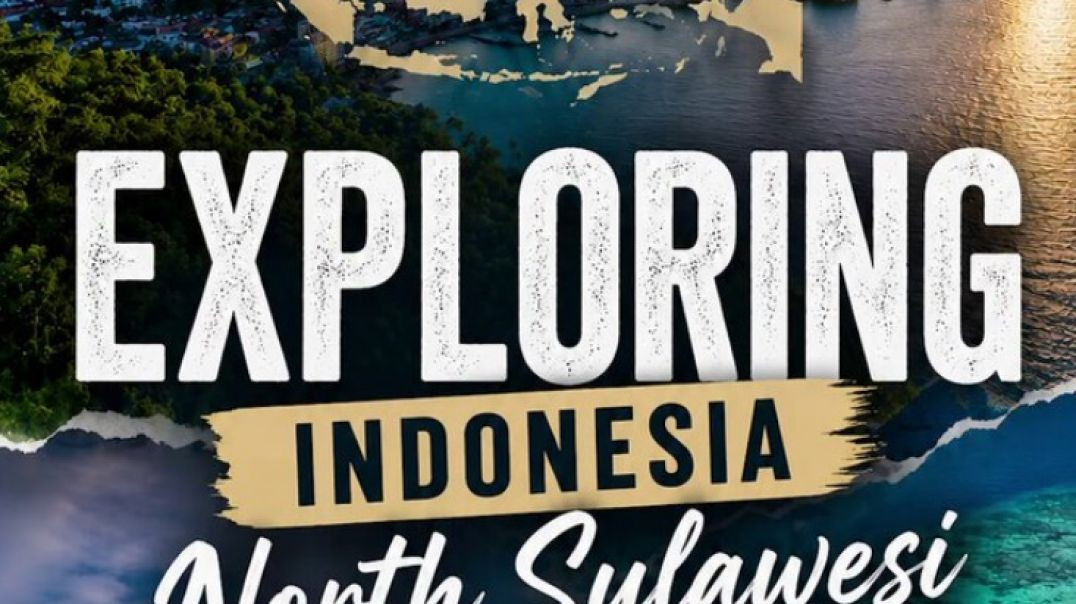
North Sulawesi: The “Great Barrier Reef of Indonesia” Waiting to Be Discovered
By Jamie McIntyre, Chief Editor, Australian National Review, and Founder of LUX Property Group
An Australian National Review Special Report
North Sulawesi may be one of Indonesia’s greatest yet most underappreciated tourism and investment opportunities.
I recently flew to Manado to explore North Sulawesi and assess its potential for future LUX Property Group resort sites. What I discovered was a region of extraordinary natural beauty, vibrant cities,
increasingly impressive infrastructure and enormous potential to become a major international tourism destination.
In many respects, North Sulawesi is the Great Barrier Reef of Indonesia.
Its clear tropical waters, coral reefs, abundant marine life and world-class diving and snorkelling place it among the most compelling marine destinations in Asia. Bunaken and the surrounding islands are
already well known among experienced divers, yet the broader region remains largely undiscovered by the international mass-tourism market.
That contrast is what makes North Sulawesi so interesting. The natural attractions are already there, but the visitor numbers, international awareness, resort capacity and direct air connections have not yet
caught up with the region’s potential.
A Major Destination Hiding in Plain Sight
One reason North Sulawesi attracts fewer foreign visitors than Bali is the perception that it is remote. Yet it is far more accessible than many people realise. A direct flight from Bali to Manado takes only a
little over two and a half hours, while connections through major Indonesian hubs such as Makassar are straightforward.
What is missing is not proximity, but awareness, stronger international marketing and a larger pipeline of high-quality resorts and tourism infrastructure.
For investors and developers with a long-term view, that creates opportunity. Destinations such as Bali did not become global tourism centres overnight. They developed through a combination of natural
appeal, infrastructure, aviation links, hospitality investment and international branding. North Sulawesi already possesses the most difficult element to create: an exceptional natural environment.
The opportunity is to build around that environment intelligently and sustainably, without destroying the qualities that make the region special.
Manado Was Much Bigger and More Vibrant Than Expected
Manado itself was a surprise.
With a population of approximately 463,000, it might appear modest by Indonesian standards. On the ground, however, it feels far larger and more commercially active. Its waterfront, retail precincts,
hotels, restaurants and urban energy reflect a city with confidence and significant spending power.
One of its major shopping malls rivals—and in some respects exceeds—the scale of many Westfield centres in Australia. This is a reminder of how frequently outsiders underestimate Indonesia’s regional
cities.
Indonesia is not simply Jakarta and Bali. It is a vast archipelagic nation with numerous substantial urban economies, a growing middle class and regional centres capable of supporting sophisticated retail,
hospitality, property and infrastructure investment.
The more of Indonesia I visit, the clearer this becomes: many international observers are working from an outdated picture of the country.
Indonesia’s Infrastructure Transformation
I travelled through Makassar, home to one of Indonesia’s most important aviation hubs outside Jakarta. Its scale, modern design and quality demonstrate the level of infrastructure Indonesia is now capable
of delivering. By comparison with many Australian airports, the experience is a powerful indication of how rapidly major Indonesian gateways are expanding and modernising.
North Sulawesi is also benefiting from new freeway and road connections linking Manado with neighbouring cities and development areas. These projects will progressively reduce travel times, open new
tourism corridors and make previously overlooked coastal locations more viable for resorts and other investment.
There is still much work to do. Roads, urban planning, public transport, drainage, waste systems and tourism infrastructure can all be improved. But that is precisely where the next stage of Indonesia’s
growth lies.
Indonesia has the population, resources, strategic location and entrepreneurial energy to modernise its regional cities at extraordinary speed. With disciplined master planning, transparent approvals and
investment in high-quality public infrastructure, cities such as Manado can become more liveable, productive and internationally competitive.
Part of a Broader Vision for Modern Indonesia
My visit to North Sulawesi follows a series of Australian National Review special reports examining Indonesia’s development potential.
Our positive report on Nusantara, Indonesia’s new capital city, reached a large international audience and helped challenge the negative and often poorly informed commentary surrounding the project.
Nusantara represents a rare opportunity to build a modern, green and carefully planned capital from the ground up.
Following my visit, I was invited to submit concepts for a convention centre, eco-resort and five-star hotel to support the new capital’s tourism, investment and events economy.
I have also proposed that Indonesia consider developing six new, properly planned modern cities. One could be positioned on the Indonesian side of the Malacca Strait—not merely to collect value from
trade passing through one of the world’s most important shipping corridors, but to create value by developing a new commercial, aviation, technology and financial hub capable of competing with Singapore
at the other end of the strait.
LUX Property Group is also advancing a major project in South Lombok which, subject to final approvals, is intended to demonstrate how a thoughtfully master-planned city and resort destination can be
created in Indonesia. The vision combines tourism, residential communities, commercial facilities, sustainability and modern infrastructure rather than allowing development to occur in an uncoordinated
fashion.
In Jakarta, I have put forward ideas to elevate the capital’s international identity, including an iconic reimagining of its major central roundabout. Great global cities need memorable symbols and public
spaces. Jakarta has the scale and importance to stand confidently alongside the world’s leading capitals, but it must continue investing in design, branding, public amenity and ambitious civic projects.
These proposals share a central idea: Indonesia should not simply follow development models created elsewhere. It can create its own modern cities, tourism destinations and infrastructure icons—
designed for its climate, culture, population and future.
A Responsible Resort Opportunity
North Sulawesi could become an important part of that future.
Any major tourism development must respect the reefs, coastlines, forests and communities that make the region valuable. Poorly planned construction would undermine the very asset visitors travel to
experience. Sustainable development should therefore include appropriate coastal setbacks, responsible wastewater systems, low-impact architecture, renewable energy where viable, limits on density and
meaningful economic participation for local communities.
The best outcome would not be to turn North Sulawesi into another Bali. It should develop a distinct identity: a premium marine, diving, wellness, nature and adventure destination with its own character.
High-quality eco-resorts, five-star hotels, wellness retreats, convention facilities and carefully designed residential tourism projects could attract visitors who stay longer and spend more, while creating
skilled local employment. Improved direct flights and coordinated international marketing would further unlock the region.
Indonesia’s Next Great Tourism Frontier
North Sulawesi has the ingredients of a world-class destination: spectacular marine environments, tropical islands, dramatic landscapes, a vibrant regional capital, improving transport links and a
welcoming local culture.
What it needs now is vision, disciplined planning and international promotion.
My visit to Manado confirmed that Indonesia’s greatest opportunities are not confined to the places already known to the world. Across this vast nation are cities and regions with the capacity to become
major tourism, investment and lifestyle destinations.
North Sulawesi is one of them.
If developed responsibly, it can become globally recognised as the Great Barrier Reef of Indonesia—and one of Asia’s most exciting new resort destinations.
Source: https://x.com/jamiemcintyre21/....status/2087806436474

OUR DAILY OLDIES

HILLARY CLINTON CAUGHT IN ANOTHER BOLD-FACED LIE about Epstein Ties, here are the Documented FACTS s
HILLARY CLINTON CAUGHT IN ANOTHER BOLD-FACED LIE about Epstein ties, here are the documented FACTS she’s desperately trying to bury
• She claimed: “We have no links… Bill took a few rides on the airplane.”
But the records PROVE otherwise:
1. Bill Clinton flew on Epstein’s Lolita Express at least 26 times (flight logs released in court docs & Ghislaine Maxwell trial evidence).
2. Multiple trips included stops on Little St. James island, Epstein’s infamous pedophile playground.
3. Photos exist of Bill Clinton with Epstein & young girls at various events (widely published & never disputed).
4. Virginia Giuffre (Epstein victim) stated under oath that Bill Clinton was on the island and part of the scene (though she didn’t accuse him of wrongdoing).
5. Hillary herself was photographed with Epstein at multiple events, including one at her own home.
“No links”? Try deep, repeated, documented links, flights, photos, island visits. “A few rides” is the understatement of the century!
Source: https://t.me/LauraAbolichannel/81465

OUR DAILY OLDIES

CLASSIC CARTOONS

OUR DAILY OLDIES

Huge Ukrainian protests against Zelensky continue in Kiev.
Notice that protestors don't fear Russian missile strikes because they know Russia has never intentionally targeted civilians.
Source: https://t.me/AussieCossack/50468

Trump on Europe: Why Should we Carry so Many Countries in Europe? We are Carrying the European Natio
Trump on Europe:
Why should we carry so many countries in Europe? We are carrying the European nations.
All we have to do is say, "You know what? We are not trading with you anymore."
We don't need anything they have.
Source: https://t.me/AussieCossack/51711

CLASSIC CARTOONS

CLASSIC CARTOONS

“China’s Ghost Cities” were Supposed to be a Disaster
Back in the 1990s, much of Shanghai’s skyline didn’t even exist. Critics called it a “ghost city” that would never fill up.
Today, it’s home to 25+ million people.
The strategy was simple:
• Build cities before demand arrives
• Prepare for mass rural-to-urban migration
• Move factories & government offices to new areas
• Use real estate as a status symbol and investment tool
In some cases, developers even offered buyers a SECOND apartment for free.
Shanghai transforming into the bustling, world-class hubs they are today.
Source: https://x.com/jamiemcintyre21/....status/2053031149015

Catherine Austin-Fitts Exposed what’s Really Going on with AI Data Centers
It’s not only about mass surveillance.
They’re laying the foundation for a “full-blown social credit system.”
Globally, the total consumption of data centers reached 560 billion liters of water in 2023, according to the International Energy Agency (IEA) in its Energy and AI report (April 2025). And the trend continues.
The institution anticipates a spectacular rise in the coming years, with volumes potentially doubling to 1,200 billion liters per year by 2030.
According to a joint investigation by Source Material and The Guardian, Amazon, Google, and Microsoft alone plan a 78% increase in the number of their data centers.
Here we're talking about water consumed, which is different from water withdrawn.
The latter accounts for the total amount of water used for the construction, operation, and maintenance of data centers.
According to the IEA, the amounts of water withdrawn are rather on the order of 5,000 billion liters in 2023, and more than 9,000 billion liters projected for 2030.
Meanwhile we can’t water our gardens.
Source: https://t.me/LauraAbolichannel/87536, https://t.me/LauraAbolichannel/87538

IN 2025, A GROUP OF YOUNG MUSICIANS, STILL ENJOY AND PLAY MUSIC FROM THE BEATLES.