Top videos

CLASSIC CARTOONS

CLASSIC CARTOONS
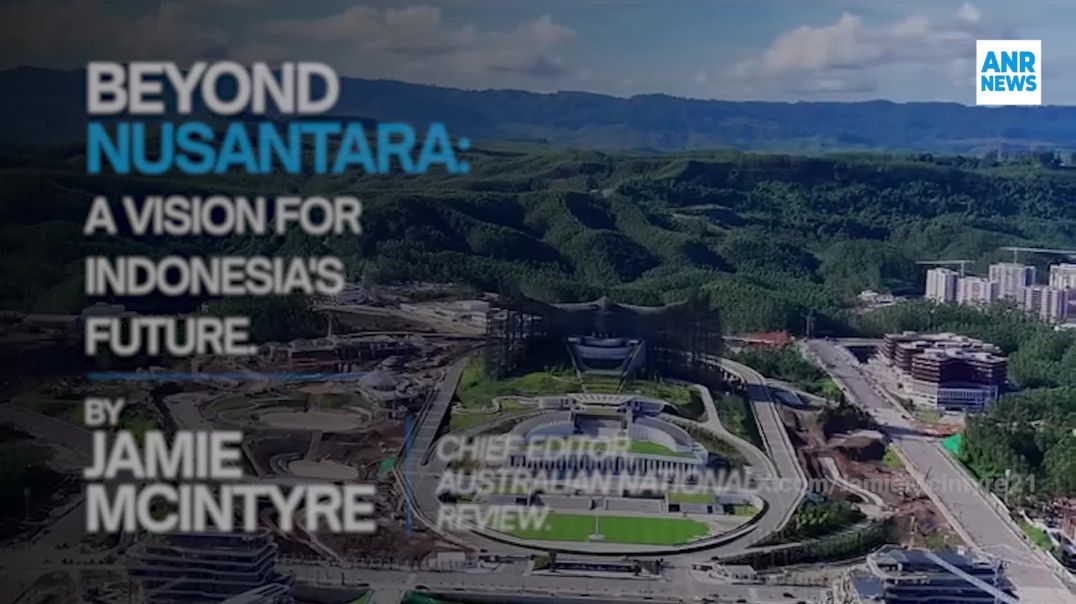
INDONESIA'S NEXT GREAT LEAP: WHY THE NATION SHOULD BUILD SIX NEW WORLD-CLASS CITIES

OUR DAILY OLDIES

CLASSIC CARTOONS

CLASSIC CARTOONS

Professor Jiang Tells Tucker Carlson Secret Societies are Scripting the End of the World with the Ir
Professor Jiang tells Tucker Carlson secret societies are scripting the end of the world with the Iran conflict:
“This is a plan that has been in motion for centuries and it involves different religious groups among the Jews Frankis Shabbat Lubovich but also involves the Freemasons, the Knights Templars, the Rosicrucians, it involves the Jesuits.
You have these different secret societies, different religious organizations working together through the centuries to achieve this plan for the end of the world which heralds the messianic age.
There are different components of this plan but but the basic components are one is the creation of the state of Israel which happened in 1948 and then you need to have the building of the third temple which requires the destruction of the Al-Aqsa Mosque which could happen during this war.
The Israelis have closed off the Al-Aqsa Mosque as well as other religious sites these past few days. There's rumors that for the past two years the Israelis have been conducting these archeological digs under the Al-Aqsa Mosque to basically destroy the foundations of the mosque so that they can conduct a controlled demolition of the mosque and blame it on a missile strike from the Iranians.”
Source: https://t.me/LauraAbolichannel/83544
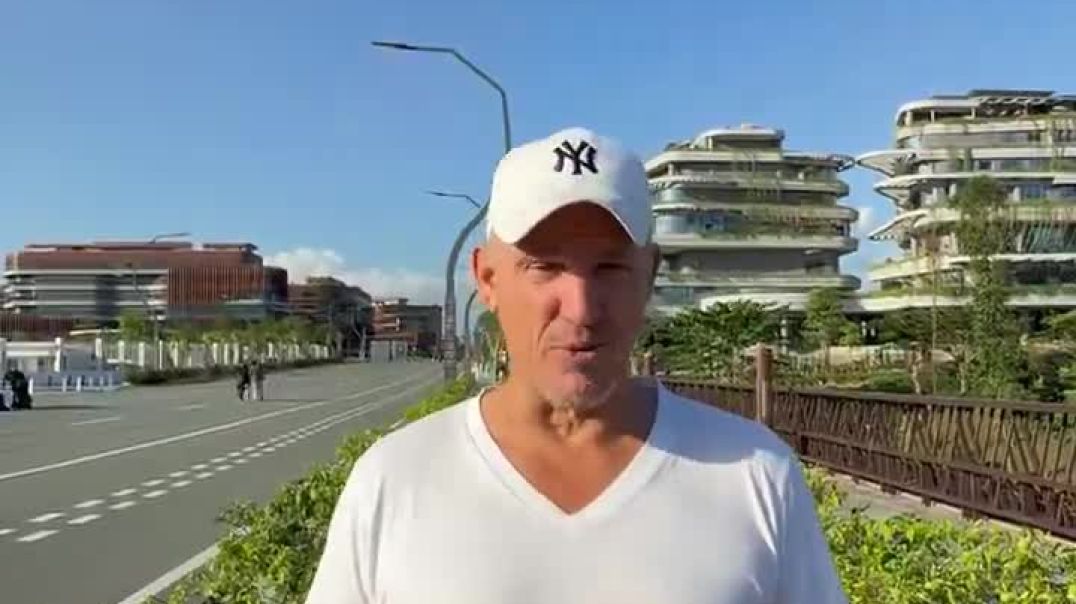
Why Indonesia’s New Capital May Become One of the World’s Most Comfortable Cities to Live In
By Jamie McIntyre - Australian National Review
After spending several days visiting Indonesia’s remarkable new capital, Nusantara, one thing became immediately obvious.
This city feels different.
Unlike many tropical cities that can become hot, humid and congested, Nusantara has an incredibly fresh feel. During my visit in what is currently the drier season, daytime temperatures were warm but
comfortable, while the evenings were surprisingly pleasant, helped by a constant breeze flowing through the surrounding forests.
It prompted me to ask a simple question.
If it’s this comfortable now, what will it be like during the hottest part of the year?
The answer may surprise many people.
Because Nusantara sits close to the equator, it doesn’t experience the dramatic seasonal temperature swings Australians are familiar with. Instead, temperatures remain remarkably stable throughout the
year, generally ranging between 30 and 34 degrees during the day and around 22 to 25 degrees overnight. The wet season brings more rain rather than significantly higher temperatures.
While there will naturally be hotter days that occasionally reach the mid-30s, the city’s location, extensive forest cover and proximity to the coast help generate natural airflow that reduces the oppressive
heat often experienced in large inland cities.
What impressed me even more was the air quality.
Coming from cities where traffic congestion, industrial pollution and urban sprawl dominate the skyline, Nusantara feels like breathing in fresh rainforest air.
That isn’t accidental.
Indonesia has deliberately designed Nusantara as a “Forest City”, preserving vast areas of natural vegetation while integrating urban development into the surrounding landscape rather than replacing it.
Wide boulevards, thousands of trees, electric public transport and the absence of heavy industry nearby all contribute to what could become one of the cleanest capital cities in Asia.
Of course, like much of Indonesia, there remains the occasional risk of regional haze during severe forest fire seasons elsewhere in the archipelago. However, under normal conditions, Nusantara enjoys
significant natural advantages over many of Asia’s major metropolitan areas.
Scientists also believe that although all growing cities eventually create some urban heat, Nusantara’s extensive green planning should significantly reduce the “urban heat island” effect compared with
conventional cities dominated by concrete and asphalt.
Walking around Nusantara today, it already feels more like a modern eco-city than a traditional capital.
Wide landscaped streets.
Beautiful architecture.
Open green spaces.
Clean air.
Minimal traffic.
It’s a striking contrast to many of the world’s older capital cities that are now struggling with congestion, pollution and overcrowding.
As Indonesia continues developing Nusantara over the coming decades, the country has a rare opportunity to build not simply another capital city, but one of the healthiest, greenest and most liveable urban
environments on the planet.
If the current vision is maintained, future generations may well look at Nusantara as the blueprint for how new cities should be built in the 21st century.
Having now experienced it firsthand, I believe the greatest surprise isn’t the futuristic buildings.
It’s how comfortable the city already feels.
Source: https://x.com/jamiemcintyre21/....status/2070657401817

OUD DAILY OLDIES

CLASSIC CARTOONS

SMOOTH JAZZ - MUSIC TO RELAX

CLASSIC CARTOONS

CLASSIC CARTOONS

CLASSIC CARTOONS

OUR DAILY OLDIES

CLASSIC CARTOONS

What is going to happen to the Australian Property Market? Should I sell or should I buy? Part 3

OUR DAILY OLDIES

OUR DAILY OLDIES

OUR DAILY OLDIES