Top videos

The jury was sent, and Rosser argued that the state should show only general character. Attorney Dorsey replied that while the state cannot bring a specific lawsuit, the defendant's statement that he never had a woman in his office cast doubt on that stage of his character. Attorney Rosser disagreed, arguing that witness testimony was submitted to the defense and that James Conley's testimony was refuted. Judge Roan ruled that testimony was admissible if it contradicted the testimony of one of the defense witnesses. Attorney Rosser responded to the ruling by requiring the defense witness to be brought back to the table for cross-examination before the lawyer can testify inconsistently with the defense witness. The jury returned to court and Miss Griffin remained on the witness stand. The most important detail in this audio-video document is the three witnesses who testified against Leo M. Frank. When the first witness, Miss Martis Cato, was asked if she knew Frank's general character about women, she said "no." second witness, Mrs. Asked if he knew Frank's general personality when it comes to relationships, RM Dunigan said, "No." Third witness, Mrs. H.J. Johnson was asked if she was aware of Frank's general reputation for women, but she didn't say much.
The defense was unable to cross-examine all but addresses. Dorsey said one of the women was willing to testify that Frank made a lewd proposal to her in her private room and used a wrench before fleeing her room. Dewey Huwell, who was brought to Atlanta from the Good Shepherd's home in Cincinnati, said Frank knew Mary Phagan and saw him conversing with her. Witnesses were asked how many times they spoke with Mary Phagan and how many times they put their hands on her shoulders. He called her Maria and stood near her when she spoke.
On the afternoon of Wednesday, August 20, both sides were taking a break, and it took less than an hour to submit the rebuttal. Witnesses and doctors' testimony contradicted Dr. Harris and pawnbroker Nathan Sinkowitz vowed that Mie McCoy pawned his watch in January and that it would remain his property until August. Some disputed the tram driver's statement that little George Epps was not with him when he came into town on the day Mary died.
A key fact in the audiobook is that Frank punched Mary Phagan in the left eye and threw her to the ground before dropping her body down an elevator shaft and hovering around the factory until Frank left. Arnold's job was to convince the jury that Mary Phagan's murder was as easily explained by Conley's theory as it was by Frank's. The charges centered on Frank because he was the only man in the factory. And it wasn't until long after Frank was arrested that no one noticed the opening of the elevator, the most crime-prone part of the factory. Stearns may think he's fighting for truth and justice, but it's like the Court of Appeal decision he read out this morning. Evidence obtained through persecution, torture, or third degree is dangerous evidence. A key detail in the document is that Jim Conley, a black man, was able to come up with a story to protect himself from detectives who tried to accuse Frank, and that the detectives feared being criticized if they did not proceed with the case. It means that against Frank. The document also notes that investigators fear criticism if they do not pursue a case against Frank, and that the attorney general has vowed to enforce the law impartially. The document also notes that investigators fear criticism if they do not pursue a case against Frank, and that the attorney general has vowed to enforce the law impartially. The most important detail in this document is that, apart from Dalton, he is the only other male who has been in the factory with a woman between 1:00 and 2:00 p.m. when Frank was always having lunch. The man said he only saw Dalton enter through the front door and did not know where he entered the building. The text also discusses the fact that the Clark Woodworks Company and the Pencil Factory used the same entrance, and that Dalton left a slimy snake trail wherever he went to the factory or the Woodworks Company. . The sentence ends by asking if there is anything else about this factory that makes it different from other factories. The lyrics are about a Georgia factory that had star-piercing eyes, Black's watching eyes, Pat Campbell's eagle-like eyes, and Scott's eyes. The Atlanta riots raid a factory, and the Beavers form a sub-squad to hunt down the bad guys. Would you have run away if the factory had been contaminated? If Schiff and Dalton had left the factory messy, they would be on the run by now.
An important detail in the document is that the evidence showed Schiff and Darley were immoral, and that Attorney Hugh M. Dorsey's speech was the most notable at the trial. He was on site for more than 11 hours, speaking over three days, beginning with the Friday afternoon attorney list deadline. His prosecution against Frank is perhaps the toughest ever against a defendant in a national murder trial. The crime was extraordinary, a horrific crime, a most heinous crime, a diabolical crime, and it required vigilant, earnest, conscientious effort on the part of the detective and defendant. The four Messers who played against us were Arnold and Rosser, and two Messer Haas.
This case was important because of the importance, reputation and skill of the attorneys hired against us, and the manner in which these gentlemen argued this case was exceptional. The main content of the text is that the defendant and his friends were slandered and abused by investigators, and that they used stereotypical expressions such as prejudice and perjury when alleging the case. The defendant's mother has accused the defendant of being a dog, and investigators are disappointed that the case is not based on the fact that the defendant is Jewish. The defendant's ancestors were civilized when our ancestors ate cannibalism, and the defendant respects this defendant's race of origin. Defendant's ancestors praise the race that gave birth to Disraeli and Jeremiah, that our ancestors were cannibalistic and civilized.
Father Benjamin, Strauss, Rabbi Mark, Abe Hamel, and Swartz are all well-known figures in American and British history. Father Benjamin was a great lawyer and Strauss was a diplomat who sank on the Titanic. Rabbi Mark was a business associate of Father Benjamin. Abe Hamel died in New York and Swartz paid a fine for stabbing a girl. These examples show that this great people are subject to the same laws as Africans. David was once a great man, but he put old Uriah at the head of a great battle to take his wife. Benedict Arnold was brave and enjoyed the trust of all his people until he betrayed his country. Oscar Wilde was an Irish knight who had a high reputation until his conviction. His cross-examination should be read with admiration.
The point of this article is that good character is worth no penny in lawsuits, and crime is not just for the poor. Examples include McCune, Richardson, Henry Clay Beatty, and other highly intelligent individuals who have committed serious crimes. These examples show that good character is not worth a penny when you have a criminal record, and that crime is not just for the poor. Good character is not worth a penny when accused. And this crime is not just for the poor. The investigators in the case were vilified and denounced, but a jury of Virginia farmers destroyed Beatty and elevated the federal public to a higher level.
Crippen of England was a doctor of high standing who killed his wife because of an infatuation for another woman. Jim Conley was impeached except by those with their hands in the till of the National Pencil Factory, and his general character was unimpeached except by the words of the hirelings of the National Pencil Factory. His relations with Miss Rebecca Carson were shown to have gone to the dressing room with him, and his own witness, Miss Jackson, sustains Jim Conley and Miss Kitchens, who worked on the fourth floor, as to what they did April 26. Jim Conley, Truman McCreary, Monteen Stover, Lemme Quinn, Dalton, Daisy Hopkins, Ivy Jones, Albert McKnight, and Mignola McKnight are all defendants in the case. Jim Conley is a Negro who gets his living from the pencil factory, and has sustained Truman McCreary, Monteen Stover, Lemme Quinn, Dalton, Daisy Hopkins, the blood on the second floor, Holloway's testimony, Ivy Jones' testimony, Albert McKnight's testimony, and Mignola McKnight's repudiated affidavit. Jim Conley has also written for Truman McCreary, Monthine Stover, Leme Quinn, Dalton, Daisy Hopkins, Blood Upstairs, Holloway's Testimony, Ivy Jones' Testimony, Albert McKnight's Testimony, and Mignola McKnight's Verified rejected affidavits. Jim Conley's story is based on the fact that no black man in the history of the race has ever written a memo reporting a crime. The note stated that Mary had been attacked on her way back from a natural disaster, and that her only restroom she knew was in a metal room upstairs. Frank's testimony was Jim, who said that Frank's mind was troubled by the problem of disposing of the corpse and that he decided it would be better to get a coupon book and have everyone sign for the money they got. This corroborates Conley's description. The fact that there is no record to prove that Frank has paid off the loan supports Jim Conley's account that the problem of disposing of the bodies weighed heavily on Frank's mind.
An important detail in the document is that defendant Jim Conley did not enter the jury room because his heart and conscience were focused on the crime he had just committed. Frank cheered me up when I told him I had relatives in Brooklyn. Mr. Rosser asked Conley whether Minsey was a myth or a diabolical perjury, and if he didn't produce him, why would he produce him for a jury? The defendant's actions, words, and circumstances prove his guilt in the murder of young Mary Phagan, and he failed his duty and broke his oath. woman. Both the defendant's wife, Mrs. Lucille Franck, and her mother, Mrs. Ray Franck, seemed concerned when Coleman interrupted him as he gagged the girl in the petticoat.
BREAKING! American, British Pilots to Fly F-16s in Ukraine
Now, after Joe Biden’s allowed his Western allies to supply Kyiv with advanced fighter jets, including US-made F-16s (https://t.me/uinhurricane/4048), the question is who’ll fly them?
Doug Macgregor expresses his great concern that there’ll be US pilots who “volunteer” to do so, on behalf of Ukraine, cuz it’s unlikely that Ukrainian pilots will be trained in time considering the absence of specific airfields w/ specifically designed runways, ground crews and logistical infrastructure
And indeed, there’s a good many of UK mercenaries as well as retired America's F-16 aces ready to volunteer to fly combat missions (https://www.youtube.com/watch?v=UAM5jrxXzEg) over Ukraine if the chance’s offered. To avoid the direct NATO-Russia confrontation, these pilots would fly aircraft with Ukrainian markings and should be granted dual Ukrainian citizenship so that in the event they are shot down, the political fallout is mitigated
The question’s still the same – what do European and American taxpayers think about this? Let's find out! (https://t.me/uinhurricane/4069)
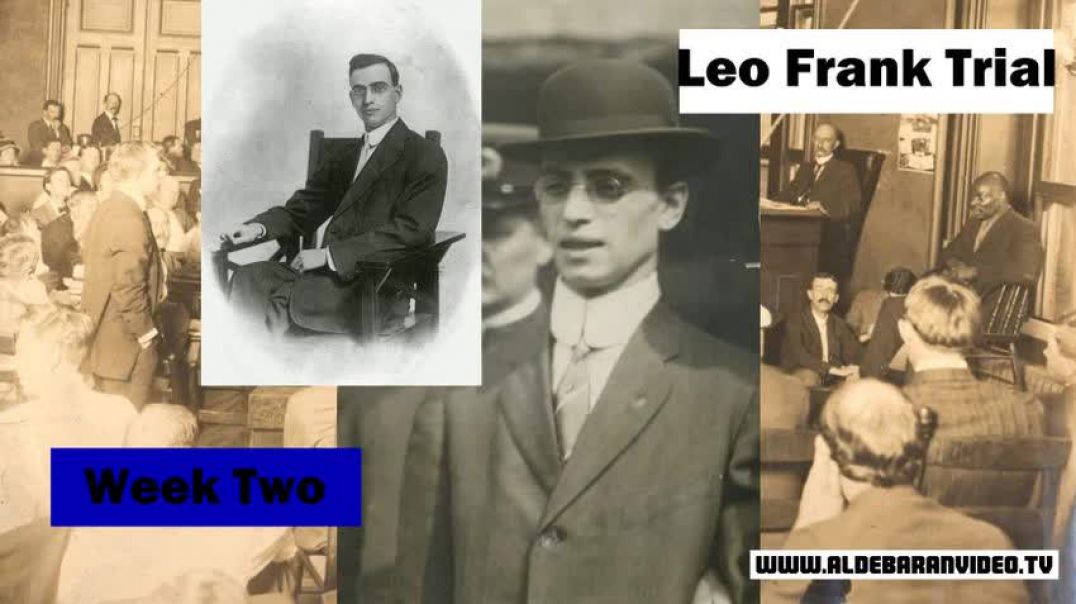
The Leo Frank trial ended its second week 100 years ago today. As the Atlanta trial enters its second week, evidence emerges that National Pencil Company executive Leo Frank killed 13-year-old child laborer Mary Phagan. That afternoon and evening, Newt Lee gave a compelling account of Frank's strange behavior. Jim Conley, a plant janitor, testified that he helped Frank, who stood by, while Frank chatted alone with Mary in the office before Mary died unexpectedly. Then help Frank move her body to the basement. James B. Nevin acknowledged that the case against Frank has been impressive thus far and that Jim Conley's testimony and ability to withstand the defense's innuendoes and statements were critical to the outcome of the case.
The State has suggested that Leo Frank may have murdered Mary Phagan and had the opportunity to do so. Jim Conley made one confession after another during his brutal pre-trial police interrogation. Despite his lowness, reticence and reluctance to confess, as well as the apparent contradictions between his initial testimony, investigators and even some skeptical of Conley's claims were ultimately convinced that they had gotten the truth from him. Accompanied by police and factory officials, when Conley was brought back to the scene of the crime, he recounted and re-enacted the events of April 26, 1913, the day of the murder, step by step, following his experience step by step. The details of the account are so detailed, so consistent with the known facts, so precisely aligned with the evidence that Conley could not have known unless he was actually there, and presented so frankly and honestly, that even skeptics would believe it. On Friday, April 25, James Conley had a conversation with Mr. Frank, where he asked her to come to the pencil factory at 8:30 Saturday morning to work on the second floor. He has been with the pencil company for a little over two years, so it is too early for Mr. Frank to want him to do anything for him.
On Saturday morning, Mr. Frank and the narrator arrived at the door at the same time, and Mr. Frank asked the narrator to watch him. The narrator is always on the first floor watching Mr. Frank while he and a young lady are talking on the second floor. At Thanksgiving, a tall lady arrives, and the narrator becomes Mr. Frank downstairs, watching in the doorway. Last year, April 26, 1912, when a lady came, the narrator was told to lock the door and push with his foot so they would know it was her. When the lady came, he stomped his foot and the narrator went to lock the door. On Thanksgiving Day 1912, the narrator is told to blow the whistle and open the door.
The narrator heard Mr. Frank whistle and unlock the door. He was standing at the top of the stairs with a long rope in his hand and was shaking from everything. He asked the narrator if he had just seen the little girl passing by, and the narrator said he had. The narrator then hits the little girl, who falls and hits her head on something. The narrator is not as resistant as the other men, because they had seen Frank two or three times before Thanksgiving in the office, the lady sitting in a chair covered up to the body, and him kneeling on the ground with his hands in the master.
On April 26, the narrator met Mr. Frank at the door, and he asked the narrator to watch him. The narrator is standing on the corner of Nelson and Forsyth Street when Mr. Frank walks by. The narrator was standing on the corner, and Mr. Frank walked down Forsyth Street to Nelson Street. Mr. Frank asked the narrator if he was there and the narrator said he was. Then Mr. Frank came out of Nelson Street and went down Forsyth Street to the pencil factory. The narrator follows and a young man stands on the sidewalk with a paper bag and takes something out of a box. Mr. Frank and the narrator meet at Curtis' Drugstore on the corner of Mitchell and Forsyth Streets. Mr. Frank stopped the narrator at the door and asked the narrator to push the box over the trash can and sit on it.
Mr. Frank then tells the narrator to close the door and goes upstairs to the master Daly's office to borrow money. The narrator does as he is told and Mr. Frank punches the narrator in the chest. The narrator refuses to let Mr. Daly see her, and the narrator decides not to let him see her. Mr. Frank climbed up and told the narrator to open his eyes. Then the narrator sees Mr. Daly, Miss Maddie Smith, The Lady Who Works on the Fourth Floor, A Black Man, Draymond and Mr. Holloway descends the stairs. Mr. Holloway put on his glasses and walked over to the sidewalk cart, note in hand. The narrator then sees a woman working on the fourth floor, a black man named Draymond, and Mr. Holloway descends the stairs. The narrator then also sees a black man and mr. Holloway descends the stairs. The most important detail in this passage is that when the narrator falls asleep, Mr. Daly, Mr. Holloway, Mary Perkins, Mr. Quinn, Miss Monte Stover and Mr. Frank everyone here. Mr. Daly comes down and leaves, Mr. Holloway comes down and goes, Miss Mary Perkins comes down and goes, Mr. Quinn comes down and goes, Miss Monternstover comes down and goes, Mr. Frank hits the girl on the head. The narrator then locked the door and sat in the box for a moment before Mr. Frank whistled.
The narrator heard Mr. Frank whistle and unlock the door. He was standing at the top of the stairs with a long rope in his hand and was shaking from everything. He asked the narrator if he had just seen the little girl passing by, and the narrator said he had. The narrator then hits the little girl, who falls and hits her head on something. The narrator is not as resistant as the other men, because they had seen Frank two or three times before Thanksgiving in the office, the lady sitting in a chair covered up to the body, and him kneeling on the ground with his hands on the young lady.
Jim and the narrator are walking near the second floor of a building when a man tries to get out of his car and falls on top of them. He then took the key back to his office and left the box unlocked. The narrator follows him into his private office, where he begins to rub his hands and brush his hair. After a while Emma Clarke and Corinthia Hall came in and Jim was put in the closet. Then Mr. Frank came and told Jim that he was in trouble, but that he was all right.
Then he gave Jim a pack of cigarettes and a pack of matches, and Jim lit one and began to smoke. The narrator then hands him a cigarette case, which he puts back in his pocket. Finally he asked Jim if he could write a little. The narrator offers to help Mr. Frank because he is white and is his supervisor. Mr. Frank dictated notes to the narrator, who went out of his way to help him. Mr. Frank asked the narrator to turn it over and write it, and the narrator turned it over and wrote it on the next page. Mr. Frank then pulls out a roll of dollar bills and hands the narrator $200. The narrator asked Mr. Frank if he could burn the package on the stove, and he refused.
The narrator then asked Mr. Frank if he could burn the package on the stove, and he refused. The narrator then asked Mr. Frank if he could burn the package on the stove, and he refused. The narrator then asked Mr. Frank if he could burn the package in front of the stove. Mr. Frank sat back in his chair and turned to look at the money. He folded his arms and looked up at the ceiling. The narrator asks him why he hanged himself, and he replies that he has rich people in Brooklyn. The narrator then asks him to come back tonight and arrange the money. He's going home for dinner and the commentator will be back in about 40 minutes. If the narrator does not return, he will drop these items with the body. The narrator will return in about 40 minutes.
The narrator goes to the brewery across the street and pulls out two bills and two quarters. He bought a doubleheader and asked another colored man if he wanted a beer. He then went south on Forsyth Street to Mitchell, and Mitchell went to Davis, where he owed a penny to the Jew across the street. Then he went home and gave a little girl a crown and a shilling to buy sausage and wood. She stays so long that when she returns, the narrator says that he will make a sausage and eat it, then go back to Mr. Frank's house.
The most important detail in this passage is the dialogue between the narrator and Mr. Frank. The narrator was arrested on Thursday, May 1st, and Mr. Frank told the narrator what to write in the memo on State's Exhibit A. The narrator dumped the girl's body in state document A and was arrested on Thursday, May 1. Mr. Frank told the narrator to come back in 40 minutes and burn the boxes on the second floor. The notes are kept in Mr. Frank's private office, and the narrator never knows what happened to the notes they left at home that morning. On Thanksgiving Day, the narrator notices a clock in a beer hall on the corner of Mitchell Street that reads nine past ten. The narrator is 27 years old and worked for Dr. Palmer's Orr Stationery Company SS. Gordon, Adams Woodward and Dr. Honeywell. He had never seen a cradle or a bed in the basement.
On Thanksgiving, Mr. Frank led him into his office. For the first time, he refused to write a letter to the police and also refused to write a cross-examination. He is 27 years old and worked for Dr. Palmers Orr Stationery Company SS. Dr. Gordon, Adams Woodward and Honeywell found their first job at Mr. SM eleven years ago. Truitt. He could not write his name, nor read, nor write, nor read a newspaper. He could write the words school, collar, shirt, shoes and hat, as well as the simplest words. He does not write father, jury, judge or socks. He never attended school past the first grade and attended school for about a year. The most important detail in this passage is that the narrator can write day, beer, and whiskey.
They can also count to eight and twelve. They have worked for Truitt, Coates, Woodward, Honeywell, Press Club, Stationery Company, Dr. Palm and pencil factory. They were employed by Herbert Schiff in a pencil factory, and were paid their wages by Mr. Gant and Mr. Frank. The narrator often asks others to withdraw money for them, such as Gordon Bailey. This is because the narrator owes some boys around the factory to pay them. The tellers leave the factory at 11:30 a.m. for Snowball to cash out for them. This is because some of them owed it to them, some owed it to the narrator and wanted them to pay it back first and then pay it back. The counter is attracted to what they draw, the counter draws $6.05 and snowballs $6.05. Commenters were asked how much they smoke, but said it was none of their business.
The most important detail in this passage is that the narrator hid their money from Walter Pride, the firemen, and two or three others. Instead of trying not to pay them, the narrator settles with them by taking them to a beer hall and buying twice what they get. If they paid, the narrator would take them to a beer hall, buy them a double liquor, and if they could get out before they were seen, they would disappear. The narrator has never seen a night shift in a factory, and the narrator has never seen a night shift in a factory. The most important details in this passage are that the narrator sees the young Mr. Kendrick came to collect money from Mr. Frank at 2:00 a.m. on a Saturday morning, and the narrator sees Newt Lee coming to collect money from Mr. Frank Saturdayat 02:30.
Another lady went out to fetch a young man, Mr. Dalton and they went upstairs to Mr. Frank's office where they were for 10 or 15 minutes. They didn't go out and James said ok. About an hour later, Mr. Frank downstairs. The most important detail in this passage is that the narrator opens the trap door so that the ladies and gentlemen can descend into the cellar. The narrator knows where they are going because Mr. Frank tells them to watch. Mr. Dalton hands the narrator a quarter, then walks out laughing, and the lady climbs the stairs. After their departure, Mr. Frank descends and hands the narrator a quarter. Next Saturday, the narrator expects him around noon. He asked the commentators what they did for him on Saturday and wanted them to be smart this Saturday.
The most important detail in this passage is that the narrator Gordon Bailey supervised Mr. Frank and Mr. Dalton from their fourth-floor office the winter before Thanksgiving. The narrator was standing by the clock when Mr. Frank extended his finger and bowed to them. He then gives the narrator a half dollar to watch over them. The next time the narrator waits for Mr. Frank and Mr. Dalton is Thanksgiving. The narrator meets Mr. Frank at about 08:00 that morning and is told that a woman will be in the office later and they want to chat.
After about half an hour, the lady arrived. The narrator does not know the woman's name, but she is wearing a green suit. The narrator then searches for Mr. Frank and Mr. Dalton in the fourth floor office in the winter before Thanksgiving. The narrator on Mr. In Frank's office two or three nights before Thanksgiving. When she enters, the narrator closes the door and turns the night lock. After an hour and a half, Mr. Frank unlocked the door and said everything was fine. The narrator then asks if the Negro is the best Negro he has ever met. Mr. Frank called the narrator into his office and gave the narrator $1.25. The lady wears a blue skirt with white spots, white slippers and white stockings, a gray cropped coat with velvet panels on the sides, and a large black hat with a large black feather. The narrator leaves shortly before 12:00.
The most important detail in this passage is the narrator's search for a young man and two women at 7:30 a.m. on a Saturday morning. Gordon Bailey told the narrator that they could make a fortune with this guy. Gentlemen and ladies arrive around 02:30 or 03:00 and stay for about 2 hours. The narrator does not know the two ladies and cannot describe what they are wearing. The man was tall, thin and well built, a large man who had been seen talking to Holloway at the factory. The narrator does not remember what they did on the Saturday before Thanksgiving, the Saturday after Thanksgiving, the Saturday before Thanksgiving, or the Saturday after Thanksgiving. The narrator has no idea what they did the following Saturday. The narrator has been in prison 3 times since working at the pencil company. The first time is in September, the second in October, and the third in November. The narrators have been to prison 3 times since working at the pencil company, and can no longer remember the dates of each. The narrators have been to prison 3 times since working at the pencil company, and can no longer remember the dates of each. The narrators have been to prison 3 times since working at the pencil company, and can no longer remember the dates of each.
The narrator has been imprisoned three or four times in the last four or five years, and seven or eight times in the last four or five years. Snowman and the narrator once drank beer together in the building, but the narrator never got drunk in the factory. Mr. Frank used to laugh at the tellers, the last blacks to find work there. Snowmen, firemen and commentators were the last blacks to find work there. Mr. Frank used to laugh with the narrator, they played with the narrator and kept playing. Mr. Schiff and Mr. Holloway saw him joking with the narrator, who had worked at the factory for two years. Mr. Daly wanted to provoke the narrator and beat him up, while Mr. Schiff told jokes with the narrator. Snowflakes stood next to the narrator when Mr. Frank entered the elevator and told him to follow. Miss Daisy Hopkins worked on the fourth floor in 1912, and the narrator sees her working from June 1912 until around Christmas. Miss Daisy was a short, stout, light-skinned lady, about twenty-three years of age. She gives the narrator a note to write down and give to Mr. Daly. The most important detail in this passage is that the narrator has never seen Mr. Dalton except at the factory, and he has seen him somewhere in January.
The last time he saw him he was in the basement with a woman and the detectives took him to the police building and asked if he had been seen inside. The narrator remembers seeing Mr. Holloway at the factory on Thanksgiving, but he got sick two Saturdays in June. The narrator also remembers seeing Mr. Schiff and Daly at the factory on Thanksgiving, but they don't remember when they left. The narrator does not know if anyone was working at the factory on Thanksgiving. They are back in the metal department, but not to the right where the machines are. They swept the second floor, but not the metal department. They never went to Mr. Quinn's office and didn't put disinfectant in my ladies and gentlemen's wardrobes. They had also washed lead on Mr. Quinn's office and pasted the bill shadows. The narrator has been there 3 times before Christmas and can see people walking up the stairs if he pays attention to them.
The most important detail in this passage is that before the narrator left the factory at 530 on Friday, the factory stopped and beat them as they walked out. He left without taking out the money and owed the guard a dollar, so he asked Mr. Holloway to let Snowball take it out for him. Snow White drew it for him and met him at a shoe store on the corner of Alabama and Forsyth Streets. He gives the narrator $3.75. The narrator was arrested on May 1, and someone was sent to bring Mr. Black down. When they made their first statement on May 18, they refused to visit the factory. The narrator was arrested on May 1, and someone was sent to bring Mr. Black down. They did not question it for two or three hours.
The most important detail in this passage is that the narrator wrote something before the first statement, telling Black that they bought whiskey around 1030 Peter Street and paid $0.40. They also said that they went to Buda's Tavern and saw some negroes throw dice on the table and buy beer. Detectives spoke with the teller almost every day after the initial statement, and on May 24, when the statement was published in the newspaper, the teller sent for Blake. The narrator tells Blake that he will tell him some things, but that he won't tell him everything now, he will tell him some of it and keep some of it from him. Scott and Blake were there.
The most important detail in this passage is that the narrator told Mr. Black on May 24 that they helped move a little girl and that they were hiding something in the lower basement. The storytellers also wrote notes on Friday, but they were never told their stories were inappropriate. They didn't talk to the caller all day about why they changed the announcement from Friday to Saturday. The narrator says that on Saturday because they were at the factory on Saturday and the blame for their absence on Saturday falls on the narrator. The narrator told the officers that they had written a note to Mr. Frank and that they were up at 09:00 because there was nothing to do at the factory that day. They had steak, liver and sausage and a slice of liver for breakfast and were given tea and bread. They get up at 6am and don't remember anything else they were told. The narrator does not want them to know that they have written any notes to Mr. Frank.
The narrator tells about how he goes to Pēteras Street after two beers and then beats a man on the neck for beer. They also talk about buying whiskey between 10 and 30, but that's not true. The narrator also talks about not going out at 9:00 and having four detectives talk to them at the same time. The narrator then tells the detective that he will tell the whole truth. The narrator talks about how they changed history when they broke out of prison and returned to headquarters.
They told stories of how they drank four or five beers and bought two for Mr. Earl's Beer Hall on Saturday morning. They also mentioned that their beer at Mr. Earl's Beer Salon on Saturday morning, but it wasn't any wine. The narrator also mentioned that after they left Mr. Frank at the factory, they went straight from Peter Street to the Capital Laundry. The narrator also mentions that they started doing laundry after they left Mr. Frank at the factory. The narrator also mentioned that after they left Mr. Frank at the factory, they went straight from Peter Street to the Capital Laundry. The most important detail in this passage is that the narrator met Mr. Frank at the corner of Nelson and Forsyth streets before going to the factory, and the narrator told the police saying "Aha!". The narrator also told the officers that he was at the Montagu home for about 20 minutes, and the narrator did not tell Mr. Starnes, Mr. Campbell, Mr. Blake, or Mr. Scott that he was at the Montague home for about 20 minutes. The narrator also told the officers that he was at the Montagu home for about 20 minutes, and the narrator did not tell Mr. Starnes, Mr. Campbell, Mr. Blake, or Mr. Scott that he was at the Montagu home for about 20 minutes. The narrator also told the officers that he stopped by the Montagu house for about 20 minutes and that the narrator did not tell the gentleman. Starnes, Mr. Campbell or Mr. Blake. The most important detail in this passage is that the narrator tells the detectives that they want the narrator to look after Mr. Frank when they return to the factory, and they tell them to move the body, for the first time since returning from the Montagues The person who saw the factory was Miss Maddie Smith .
The narrator also tells the investigators that the first person they saw going to the factory after returning from Montagues was Miss Maddie Smith. The narrator also tells the detectives that the first person they saw coming to the factory after returning from the Montagues was Mr. Daley. The narrator also tells the detectives that the first person they saw coming to the factory after returning from the Montagus was Mr. Daley. The narrator also tells the detectives that the first person they saw coming to the factory after returning from the Montagues was Mr. Daley. They misled the officers when they claimed that they first noticed them going up after returning from Montague's. Mr. Darley left the factory at around 11:30, immediately after they returned from Montagues.
Prior to Mr. Darley's departure, Mr. Holloway and the peg-legged Negro went upstairs and returned. The officers were then told that Mr. Quinn had entered, but this was untrue. The narrator erred because a woman wearing green did ascend before Mr. Darley descended. Mr. Holloway was followed by Mr. Quinn in ascending. The speaker's errors are the most significant details in this text. They erred when they told the police that Miss Monteen Stover arrived after Mr. Quinn.
Additionally, they erred when they informed Mr. Black, Mr. Scott, and Miss Maddie Smith that they were the only ones to go up at all. The speaker also made a mistake by informing Mr. Black and Mr. Scott that only Miss Maddie Smith, Darley Holloway, and the woman in green had actually stood up. In addition, the speaker made a mistake by informing Mr. Scott and Mr. Black that only Miss Maddie Smith, Darley Holloway, and the woman in green had gone up. The speaker also made a mistake by informing Mr. Black and Mr. Scott that only Miss Maddie Smith, Darley Holloway, and the woman in green had actually stood up. Last but not least, the speaker erred by informing the officers that only Miss Maddie Smith, Darley Holloway, and the woman in green had gone up at all. The most crucial information in this passage is that the narrator visited Mr. Dorsey's office three times, and that it took him seven attempts to understand the narrator's testimony. Additionally, the narrator has visited Mr. Dorsey's office three times, and he has spoken with the narrator seven times in order to clarify his testimony.
The narrator also heard the stamping and scream before the door was locked. They heard the stamping and scream as they descended to unlock it. Mr. Frank on both that day and Thanksgiving Day, demonstrated how to lock the door. Each door was unlocked when they descended to leave. When a young woman would eventually be up there to chat, Mr. Frank instructed them not to let Mr. Darley see them around the door so they could keep an eye out for her.
During the hours of ten and ten thirty, Mr. Frank visited Montagues and stayed for about an hour. Why the narrator was to meet him at Nelson and Forsyth Street was not disclosed to the police. The narrator received the signal from Mr. Frank to stamp and whistle on Thanksgiving Day, and he reiterated it that day. About five minutes had passed since they arrived home from Montague's when the woman in the green dress stood up.
The peg-legged black man left the upper level and descended with Mr. Holloway. Five to ten minutes after Mr. Holloway, Darley also descended. Before Montana Stower and Mary Phagan entered, Mr. Quinn and the woman in the green dress descended from the ceiling, followed by Mr. Holloway. The narrator is certain that only Mary Phagan entered after Mr. Quinn. They entered and exited almost simultaneously. Mrs. Barrett, Corinthia Hall, Hattie Hall, Alonzo Mann, Emma Clark, or Mrs. White didn't enter there at any point that day, according to the narrator. The narrator spent the entire time sitting on the box and only got up twice to make water. The narrator heard the scream before they fell asleep, and Miss Montane Stower came down. The narrator then explained to Mr. Starnes and Mr. Campbell about a person who ran back on tiptoes and woke them up stamping. The narrator then informed Mr. Dorsey, Mr. Starnes, and Campbell of Mr. Frank's anxious and trembling position at the top of the stairs. Mr. Frank was holding that cord when the narrator reached the top of the stairs.
The narrator isn't sure when they first came clean about Mr. Frank hitting the young girl. When they revealed to Black and Scott that they were being truthful, they omitted to mention that Mr. Frank had struck the young girl. Returning to the stairs, the narrator discovered the cord around the victim's neck. It was four minutes to one when they turned to face the time. Then, after going back to get some striped bedtick, the narrator spread it out, rolled the young girl in it, and tied it.
They bound the cloth around her before placing her inside it. The narrator gave it their all. The narrator wrote four notes before leaving the factory as opposed to just two, which is one of the text's most crucial details. On white and green pieces of paper, the narrator also wrote three notes, which Mr. Leo Frank folded up as if he wasn't going to use them. Additionally, because Scott and Black had been removed from the case, the narrator didn't inform them of the body's burning. Additionally, because Scott and Black had been removed from the case, the narrator didn't inform them of the body's burning. Additionally, because someone had taken Scott and Black off the case, the narrator didn't inform them of the body's burning. The next most crucial information in this piece is that the narrator does not recall telling the officers that Mr. Frank had told him he was going to send those notes to his family up north if they had made it down there, and that he was going to write to his mother and tell her that he was an honorable black man. On Monday, the narrator avoided reading any newspapers about the crime and instead washed his shirt in the metal room around 01:30 or 02:00 in response to Mr. Frank's explanation of where he wanted to meet him.
The two white men who approached Mr. Frank in his office that day and a man by the name of Mincy at the intersection of Carter and Electric Avenue were not observed by the narrator. The narrator failed to inform Harley Branch that Mary Phagan had been murdered in the second-floor bathroom or that the body was stiff when they returned. Miss Carson, Miss Mary Pierk, Mr. Herbert Schiff, Miss Small, or Miss Fuss were not informed of Mr. Frank's innocence by the narrator. They also don't recall telling Miss Small, Miss Small, or Miss Fuss that they believed Mr. Frank was as pure as an angel in heaven. The narrator has been detained numerous times for rock throwing, altercations with black boys, disorderly behavior involving alcohol, and subsequent altercations; however, he has never engaged in physical conflict with a white person. The narrator was taken by police to the jail and to Mr. Frank's door, but he never got a chance to see him there. The narrator last encountered Mr. Frank in the station house before their conversation. He took the narrator's pencil and instructed them to rub out the word "Negro.".
After Mr. Frank returned from the basement, they observed Mary Phagan's pocketbook or mesh bag in his office. The narrator and Mr. Scott spoke for about three and a half hours. Mr. Frank warned the narrator on a Thursday that if they caught him, he would be expelled from this place. Before meeting Mincy at the station house in Mr. Lanford's office, the narrator had never seen him before. Mr. Frank used to write the word "luxury" for the narrator after he was released from prison because he had known for a full year that he could write.
The most significant information in this passage is that Leo Frank referred to Conley's testimony as "the most vile and amazing pack of lies ever conceived in the perverted brain of a wicked human being.". Conley provided a wealth of new information about Leo Frank's conversations with young women, admitted that he had been occasionally confused, and admitted to lying in his first two statements to protect both himself and Frank.
Conley's new haircut and fresh outfit were described at one point by Luther Rosser, the attorney for Frank, as having been "put on him so the jury could see him like a dressed up nigger possibly inflaming racial feelings among the all white jury." The most crucial information in this text is that Conley was an uneducated, illiterate man who refused to back down from his most damning accusations against Leo Frank, even after being cross-examined for more than 13 hours by the best lawyers money could buy.
In his testimony, he claimed that Frank told him he wanted to be with a young girl, hit her too hard, causing her to fall and hit her head against something, and that she as a result was injured. Frank had a thin, light physique and the implication that he might strike a girl and never imagine the blow could seriously harm her, but later medical testimony would show no physical abnormalities in him. Helen Ferguson testified that Frank refused to give Mary's pay to Mary's friend who had offered to take it to her the day before the murder, indicating that Frank wanted to make sure Mary would come to him personally in his office the following day. On Friday, April 25, at around 7:00 p.m., the narrator approached Mr. Frank and requested Mary Phagan's money.
Mr. The narrator turned around and walked out after Frank said he couldn't let him have it. Some members of the office staff were present when the narrator requested Mary's money, but they can't recall their names. Doctor Henry F. went after Conley. With additional autopsy evidence showing that the murder had occurred around noon on April 26, Harris was called back to the witness stand. The only murderers who could have been Frank o,r were as Dr. Harris' words made abundantly clear, were they and not Newt Lee. Conley and the bloody shirt discovered in Newt Lee's garbage can.
C. B. Dalton's testimony corroborated Conley's claim that he had been watching for Frank during his trysts with young girls. Dalton had been to the office of Leo M. Frank two or three times and the National Pencil Company three, four, or five times. Conley and the night watchman were there when he arrived, but Conley was not there. Though he didn't recognize them, he observed some parties in the office.
Conley had been there a few times on Saturday nights and once this year. When he descended the ladder with Miss Daisy Hopkins, he noticed Conley sitting there at the front door. In the cellar, he observed an old cot and a stretcher. Ten years ago, the narrator moved to Atlanta, and she hasn't left the city for more than a week at a time. Between September and December, they observed a Negro night watchman there and saw Mr. Frank around 2:00 in the afternoon. They have walked home from the factory with Miss Smith and Miss Laura Atkins after 20 years of residing in Walton County. They gave Jim Conley a few quarters and observed Mr. Frank drinking beer, Coca-Cola, lemonade, and lime in his office during the day. The first cousin of John Dalton and the narrator is Andrew Dalton. The narrator is the Dalton who admitted to stealing in Walton County in 1894 and went to the chain gang. Others made payments. How long they were in service is unknown to the narrator.
The most crucial information in this passage is that Dalton was charged with corn theft and put on trial in Gwinnett County for aiding in the theft of a cotton bale. When he got into a fight with a hammer and plow stock in 1899, he and the two Dalton boys were both intoxicated. In Gwinnett County, he was charged with aiding in the theft of a bale of cotton and was also accused of stealing corn, but he was exonerated.
Pinkerton agent Harry Scott was one of many witnesses called or asked to testify again in order to further explain statements made earlier in the trial. According to Harry Scott's account, Conley was keeping an eye out for Frank, who, in accordance with the prosecution's theory, was waiting to attack Mary Phagan, at the bottom of the stairs close to the front door. He provided the police with that information but never asked Frank or any other employee of the pencil factory if Conley could write. He was present when Conley gave his testimony on May 18. The most crucial information in this passage is that Conley, a tall, long-haired black man, wrote a written statement on May 18.
Conley began writing the words slowly on May 18 after receiving a dictation from the author. He was smoking a cigarette while chewing his lips when he was brought before Mrs. White. He vehemently denied both being at the factory and being involved in Mary Phagan's murder. On May 24, he made a second, written statement. On that day, he was carried into Mr. Dorsey's office where they discussed the statement. To everything in the statement, he gave his word. We went there together after he sent for Mr. Black.
We spent about three hours asking him very probing questions. We saw him again on May 27 in Chief Lanford's office, and on May 25 he repeated the narrative he had provided in his May 24 statement. Chief Lanford and the author made an effort to convince Frank that he would not have written those notes on Friday on May 28. Frank said he had spoken the truth and would not add anything. On May 28, Chief Lanford and the author interrogated him for five or six hours in an effort to clarify a few of the outlandish claims he had made. Then, on May 28, Defendants Exhibit 38, Frank made a lengthy statement in which it was stated that his prior statement could not be accepted because it showed deliberation. Montane Stover, Mary Phagan, or Lemme Quinn Conley were never mentioned in any of his conversations with them. Around 11:30 on Tuesday, Frank was taken into custody. Defendants Exhibit 39 is Conley's final statement, which was made on May 29. He asserted that he had never observed the small mesh bag, the parasol, or Frank's stumbling as he exited the elevator on the street level and struck him. The author has not spoken with or seen Conley since that time. He denied knowing anything about the feces that were down in the elevator shaft in the basement, and he never claimed to have gone there himself between the time he first arrived at the factory and went to Montagues.
The most crucial information in this text is that the man never claimed that he believed the young girl's name was Mary Perkins, that he saw the young girl's dead body, that he heard a woman scream, that he did not hear any stamping, that he held a cord in his hand at the top of the stairs, that he appeared odd around his eyes or that his face was red, that he returned there and discovered the young girl with a rope around her neck and a
and a piece of underclothing, or that he went back to Mr Frank and told him the girl was dead, or that he wrapped her in a piece of cloth.
The most crucial information in this passage relates to the conversation Mr. Frank had with Conley on Tuesday following the murder, during which Mr. Frank claimed that there wouldn't have been any issues if Conley had returned on Saturday and followed his instructions. Conley received a paper and a pencil from the narrator on May 18 on a Sunday at Chief Lanford's office. Conley claimed he couldn't write, but the narrator persuaded him otherwise, and he went on to write Redirect Examination. The narrator learned that Conley could write from sources entirely unrelated to the pencil company, with whom they had first spoken about Mrs. White's claim that she had seen a black person there.
The narrator also learned who the pencil company first spoke with about Mrs. White's claim that she saw a black person there from outside sources wholly unrelated to the pencil company. The conversations the author had with Black, Chief Lanford, and Bass Rosser soon after April 28 are the most crucial details in this text. Conley finished speaking, and Chief Beavers, Lanford, and Bass Rosser went to the jail with him to see the sheriff. On Saturday, May 3, the author last saw Frank. Conley had altered his story several times to protect himself and Frank, who had offered to help him flee town if he kept quiet, according to Scott's Grilling, which the defense used to their advantage. Leo Frank took the stand, and as he did so, he made a startling confession that neither the defense nor anyone else in Atlanta was prepared for.

NEW - Republican U.S. Senator Lindsey Graham called the death of Russians the "best money we've ever spent" during a meeting with Ukraine's Volodymyr Zelenskyy.

How to use AI to trade crypto

Extend your education further with a free copy of my book. What I Didn't Learn at school but wish I had - https://21stceducation.com/free-book
The Financial Education Summit produces huge results in peoples lives. Arnold Schwarzenegger is the prime example of actionable learning. You can get full access to all the speakers from the 21st Century Financial Education Summit at https://21stceducation.com/fes-bes-one-last-offer

Instant Clients

Warren Buffett is holding onto US$130 billion in cash in his company, Berkshire Hathaway. Why is he holding onto so much cash? Is Buffett waiting for a market crash to come before he deploys his cash? As retail investors, do we follow the Oracle of Omaha and hoard more cash ourselves? Do we sell our stocks? We discuss this and more in our latest episode.
00:00 Introduction
00:38 Buffett's recent moves
03:50 Why is Buffett holding onto cash?
07:18 Market valuation
09:09 What should retail investors do?
FREE EBOOK - A Quick-start Guide to Winning the Game of Stocks
https://fifthperson.com/ebook/
FREE TRAINING. How to invest in stocks that multiply your money safely
https://TheQuadrantStrategy.com/
FREE TRAINING WEBINAR - How to build a profitable income portfolio
https://TheIncomeStrategy.com
Here are a few more investing tips and tutorials to help you out:
HOW TO INVEST IN DIVIDEND STOCKS
https://www.youtube.com/watch?v=AjpiAx3j8L0
HOW TO INVEST IN REITS
https://www.youtube.com/watch?v=qEzy7HFoEeA
HOW TO GROW YOUR CPF FOR RETIREMENT
https://www.youtube.com/watch?v=bvZ3uH0FA0Q
HOW TO READ A FINANCIAL REPORT
https://www.youtube.com/watch?v=m4WqlILejKs
_________________
Get more investment insights, tips, and company analysis from our blog (100% free).
https://FifthPerson.com
Say 'Hi!' on Social
Facebook: https://www.facebook.com/fifthperson/
Instagram: https://www.instagram.com/thefifthperson

He Makes $11M on TikTok with 0 Followers

The Future is Bitcoin with Michael Saylor | EP #9 Moonshots & Mindsets

Lessons from Robert Kyaski
The System of Money | Documentary | Money Creation Explained

PART 1 OF 2 - How Can There be a Crash Without Anyone Knowing It? At the Beginning Phase of the Fina
Part 1 of 2
How can there be a crash without anyone knowing ?
At the beginning phase of the financial crash prices of stocks and real estate will actually rise, the masses will think they are getting richer and have no idea what’s coming. They are systemically being robbed by the FED and Banking Elites while thinking they are getting richer.
How is this possible, is the question the Australian National Review Founder answers . Australian National Review anrnews.com or for free educational tutorials and financial predictions see 21stCenturyu.com

Australian National Review (ANRNews-com) Independent Media

Should you vote yes or no to the “Voice” ? Jamie discusses the Voice vote with Australian Lawyer and
Should you vote yes or no to the “Voice” ? Jamie discusses the Voice vote with Australian Lawyer and human rights advocate Tony Nikolic - Part 1

Gates and Fauci’s Remdesvir Killed Many Covid Patients Which They Used to Boost Bs19 Deaths. Jamie I
Gates and Fauci’s Remdesvir Killed Many Covid Patients Which They Used to Boost Bs19 Deaths. Jamie Interviews the Scientist Who Reversed Engineered It and he Shares the Shocking Discoveries - Part 2

WATCH: Lahaina looks like a zombie town.
Hawaii wildfire death toll rises to 36.
Questo video è consigliato a tutta la cristianità desiderosa chè il fuoco della pentecoste possa continuare a bruciare nel proprio cuore.Buona Visione

WATCH: How Israeli Intelligence Controls Western Influencers

Journalist: “Biden Accused the Russian Government of Genocide in Ukraine, But Israel, Which He Suppo
Journalist: “Biden accused the Russian government of genocide in Ukraine, but Israel, which he supports, killed more civilians in a month than died in Ukraine in two years. How do you explain this contradiction?”
State Department Spokesperson: "It is incredibly inappropriate to make such a comparison."