Top videos
![Analysis Shows 26% Worse Mortality Among the Vaccinated [MIRROR]](https://truthtube.video/upload/photos/2023/05/4gOtEVyWciUFIfO4eOPy_22_c009cefa44aeee3ac1bbfd5f6ef0dfde_image.jpg)
[CREDIT] The Vigilant Fox 🦊
https://twitter.com/VigilantFo....x/status/16443212032
🧿 RELAY BY 🧿
■ https://germs.truthparadigm.tv
■ https://germs.truthparadigm.news
#mRNA #Vaccines #Covid #Coronavirus #Fluvid19 #Plandemic #Pandemic #Evidence #DiedSuddenly #GermTheory #VigilantFox #Ethics #Cabal #CDC #WEF #NIH #USA #GreatReset #GreatAwakening #God #Jesus

Russian Foreign Minister Sergey Lavrov declares that the west is conducting a war against Russia.

The Russian Coup that never was despite the West so desperately hoping as Ukraine is losing so badly
The Russian Coup that never was despite the West so desperately hoping as Ukraine is losing so badly - Part 2
![#HereIsTheEvidence [MIRROR]](https://truthtube.video/upload/photos/2023/05/QT9Es2jDTeud6mj4WQKD_11_df8f300b5a7f413807cb9d23201585b1_image.jpg)
#HereIsTheEvidence
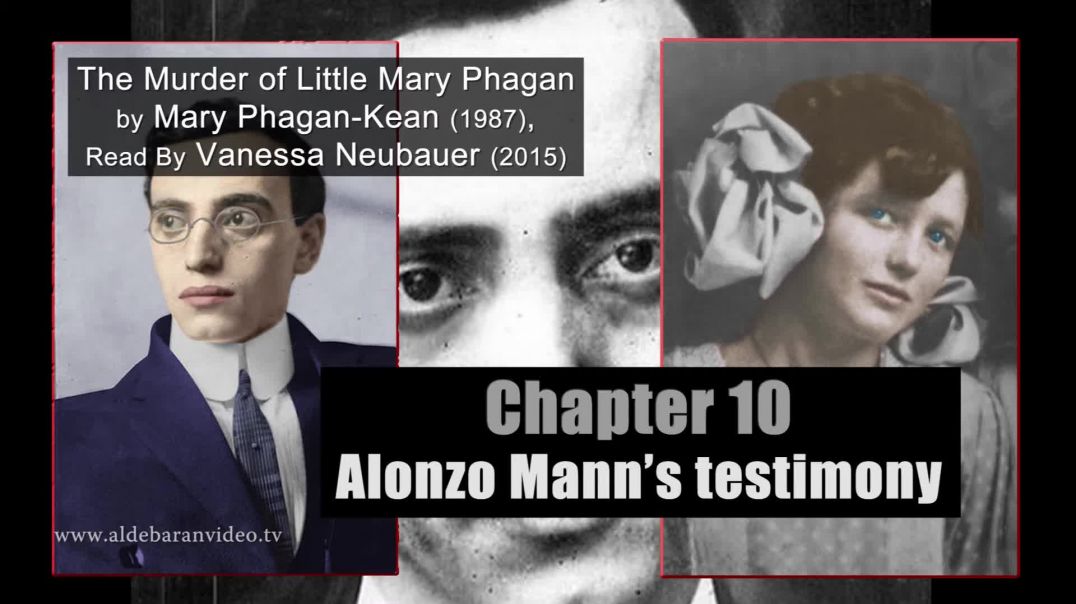
Alonzo Mann's testimony describes his experience when he appeared on the front page of the Atlanta Constitution in February 1978. He and his father noticed some inaccuracies in the article about Mary Phagan and felt it necessary to convey their opinion to the author. John Phagan Durham, son of Lizzie Mary Etta Phagan, went to Atlanta Constitutional Editor-in-Chief Sears and requested that the article be deleted. Mr. Sears replied that he could not stop the article, and that if the article offended the Phagans, he would apologize, and if it was factually wrong, he would correct it. John Phagan-Durham told Sears he would not make corrections because he was confident that the series had made the front page and corrections would not make it to the front page. The series renewed interest in the assassination of Little Mary Phagan and its aftermath. People wanted to know more about the trial and the lynching, and whether anyone from Phagan was involved in the lynching. Alonzo Mann became more eloquent about the incident. Bernard and the narrator had never heard of young Mary Phagan, but one night Bernard told them that a girl named after the narrator had been murdered. The narrator tells him what happened and why the Phagan family has remained silent. Bernard and the narrator drive to Marietta to visit Mary's grave. The cemetery was located in a wealthy area of the cemetery and had a marble headstone bearing her name and an inscription written by Tom Watson. The narrator quickly memorized the inscription and took a picture of Maria for scrapbooking. A middle-aged couple approached the narrator and asked if he knew where Little Mary Phagan's grave was. Her newspaper article rekindled interest in her, and the narrator was impressed by her relatives' refusal to seek public attention and their desire to remain anonymous. That year, 1978, was a year full of beginnings and innovations for the narrator, including when her father contacted a reporter to acknowledge her relationship with Mary for the first time. A few days after the accident, the narrator decides to check on the elderly woman who hit her car and see if she has filed insurance papers. As she opens the door, the narrator explains that it was she who was involved in the accident and is checking to see if she has filed her insurance papers. The narrator meets a woman who is blind and deaf and needs help filling out her form. She asked the narrator if they were related to Little Mary Phagan, and the narrator filled out her paperwork and read it through her magnifying glass. The woman then asked the narrator if she was related to Little Mary Phagan, to which she replied that the narrator was. Her wife then told the narrator about her life at the time and the changes she had undergone in her 92 years. The narrator had a great time and was invited to lunch with the lady. Her lady found the narrator listening to herself carefully, and the next day the narrator again received an invitation to lunch.
The document's most important detail is the events surrounding the assassination of Little Mary Phagan. In 1980, Bernard and the narrator moved to Cobb County, quit their jobs at Griffin Cesa, and began working for the Cherokee County Board of Education in Canton, Georgia. When school started in August, the narrators were introduced to the principals they would be working for. At one school, the principal asked the narrator if they were related to Little Mary Phagan. The narrator is introduced to Alonzo Mann, a man who claims to have seen Jim Conley with Mary Phagan's body. Mann, now 83 and based in Virginia, appeared calm and competent while discussing these events. He claimed that he had been trying to tell what he had seen for years, but no one was interested. Alonzo Mann, a World War I soldier who said he knew Leo Frank did not kill Mary Phagan, got into a heated argument with another soldier who happened to be from Georgia. Over the years he told his wife, relatives and friends his story. He told an Atlanta newspaper reporter in the 1950s that he refused to fuel the anti-Semitism that had gripped Atlanta during the trial. Mann agreed to a lie detector test and a psychological stress analysis, both of which found him to be consistently telling the truth. His story is a new twist on facts presented since 1913, in which he said he was told by Jim Conley that he would kill him if he told anyone. He went home and he repeated to his mother what he had seen and what Conley had told him. After nearly 70 years of silence, he decided to come forward to find peace of mind. His father and I debated the veracity of his statement and decided to remain silent until the sensationalism of this story wore off. In March 1782, Nashville, Tennessee published a special appendix entitled "An Innocent Man Was Lynched," which included quotes from Leo Frank's letter from prison, Alonzo Mann's testimony, Mary - included a photo of him at Phagan's grave. This supplement was nominated for a Pulitzer Prize. During this time, reporters from the Tennessee team began planning the book and spoke with the producers of the TV miniseries "Winds of War." Another local reporter, Cassandra Clayton, reported on interviews with lynch mob member Bernie Ducart's brother, Jasper Yeomans, son of Leo Frank's defense attorney, and Stuart Lewengrab of the Anti-Defamation League. Phagan's family refused the agency's requests for interviews, tired of having their names dragged into the quagmire. On March 8, 1982, a review of the case concluded that a posthumous pardon for Leo Frank was unlikely.
Alonzo McClendon Mann was 83 years old and was Leo M. Frank's clerk when he was convicted of the murder of Mary Phagan. The then 14-year-old was called as a witness in a murder trial. He didn't tell all he knew, and he wasn't questioned about what he knew. He is currently suffering from heart disease and had to undergo surgery to have a pacemaker implanted. He wanted the public to understand that Leo Frank did not kill Mary Phagan and that Jim Conley, the key witness against Leo Frank, lied under oath. ing.
He is convinced that he killed Mary Phagan, not Leo Frank, and that he alone disposed of her body. Jim Conley threatened to kill him if he told him what he knew. His mother insisted he not interfere and told him to keep quiet. He never expected Leo Frank to be convicted. The text's most important detail is the murder of 14-year-old Mary Phagan, witnessed by the narrator on Confederate Day 1913.
The narrator's mother tells Frank that she kept what she saw a secret, and when he testified at Frank's trial, they had no idea what he knew. The narrator was nervous and anxious because of the angry crowds in the streets that day, yelling, "Kill the Jews!" The narrator had a speech impediment and had difficulty pronouncing the "R" in Frank's name. The lawyers looked at me and said that it was obvious that I didn't know and that they would remove me from the witness stand because I was young. After being found guilty, the narrator's mother told him there was nothing she could do to change the jury's verdict.
The narrator remains silent, after which Frank is lynched by mobs in Marietta, Georgia. An important detail in this text is that the narrator, Alonzo, was asked for 10 cents to buy beer from Jim Conley. Alonzo said he had some money in his pocket, but he had previously given Conley nickels or dimes for beer. After telling Conley that he has no money, the narrator climbs the stairs to the second floor of Leo Frank's office, where her desk is located. Leo Frank arrived at the building shortly after the narrator and spoke to the narrator.
He called the narrator Mr. Frank and called the narrator his first name, Alonzo. A deputy secretary was working for Leo Frank that morning, and it was customary for the narrator to be in the office on Saturday mornings. Although the factory portion of the company was closed on Memorial Day, people who worked in the factory that week came to the payroll desk in the office to pick up their paychecks. The narrator had seen Mary Phagan at the factory and she knew her face. When the narrator left the premises shortly before noon, Mary Phagan had not come to pick up her paycheck.
She said the narrator told Ms. Frank that she wanted her mother to meet her to go to the Confederate Memorial Day parade. Mr. Frank agreed that the narrator would leave at this point and return to the office later that afternoon to complete the filing work.
The narrator left the pencil factory just before noon and met his mother outside the shop on Whitehall Street. But when they arrive she is not there. The narrator then returns to work and witnesses key moments in the famous murder. Inside the building, the narrator confronts Jim Conley, the caretaker, holding the body of Mary Phagan in his arms. The narrator doesn't know if Mary Phagan is alive or dead, but he holds her in her arms and around her waist. The narrator cannot remember the color of her clothes, but we have the impression that she was dressed quite nicely. The narrator meets Jim Conley on the ground floor of an office building with the body of Mary Phagan. He was near the trapdoor leading to her basement on her ladder and tried to throw her out of her trapdoor. He said to the narrator, "I'll kill you if you say that," and the narrator rushed out the front door, fled the building, and took a tram home. At home, the narrator tells her mother what they have seen and heard from Jim Conley about the murder. The narrator's mother was very upset by what she saw at the factory that day. She told the narrator to step away from Jim Conley and go about his business as if nothing had happened. When their father came home, the narrator explained to her father what they had seen and what Conley had told them. Her narrator's mother, a strong-willed woman thirty years younger than her father, told her narrator what her mother wanted from her father. He later tells the narrator that Frank will never be found guilty. When investigators later questioned the narrator, he told only the part of the story up to the point where he went out to see his mother that day. Jim Conley was a key witness against Leo Frank. He testified that Frank called him into his office one afternoon that day and told him to take Mary Phagan's body to the basement. He tried to carry the body to the elevator, but it was too heavy and he swore he had dropped Mary Phagan. Conley said Frank lifted his leg and Conley lifted his torso.
A key detail in the document is that Frank pulled the rope to lower the elevator, and that Conley claimed that they carried the body past the ground floor and into the basement without stopping. Mr. Conley said the body was taken from the second floor to the basement because it was on the first floor, but he did not tell the truth. Mary Phagan said she entered the building shortly after the narrator met her mother, and she was entitled to $1.20. Conley was taking money from her and packing her things when her narrator walked in. The narrator thinks her life might have been saved had she screamed for her help when she encountered Conley with her little girl in her arms that day. The narrator secretly spoke this word to a few others. The most important detail of this text is that of Leo Frank's imprisonment. The narrator told his late wife about it, but she insisted that it not be made public. He was convicted of false charges such as letting a woman into his office for immoral reasons and drinking there. Some witnesses lied, and the narrator was in the basement twice. The narrator believes it helps people understand that courts and juries make mistakes and it's good that everything comes out even at this late stage. The narrator believes it helps people understand that courts and juries make mistakes and it's good that everything comes out even at this late stage. On March 19, 1982, the narrator and her father went to Emory University's Woodruff Library to investigate the Mary Phagan-Leo Frank case. The librarian watched them curiously and asked the narrator what he thought of little Mary Phagan. They learned that Alonzo Mann was actually Leo Frank's clerk, working Saturdays two weeks before the murder took place. On March 23, 1982, the narrator wrote to Tennessee librarian Sandra Roberts, requesting two copies of The Tennessean. On March 26th, Ms. Sandra Roberts called me asking if I could come and deliver the newspaper in person before the newspaper staff arrived in Atlanta on March 31st.
The narrator's father was always the one who represented their family's opinion when someone inquired about the Phagans. The narrator called his father to let him know about the meeting and to see if he could be there. His concern was that he wouldn't be able to be there, but wanted to make sure a friend, husband, or other family member would be able to do so as well.
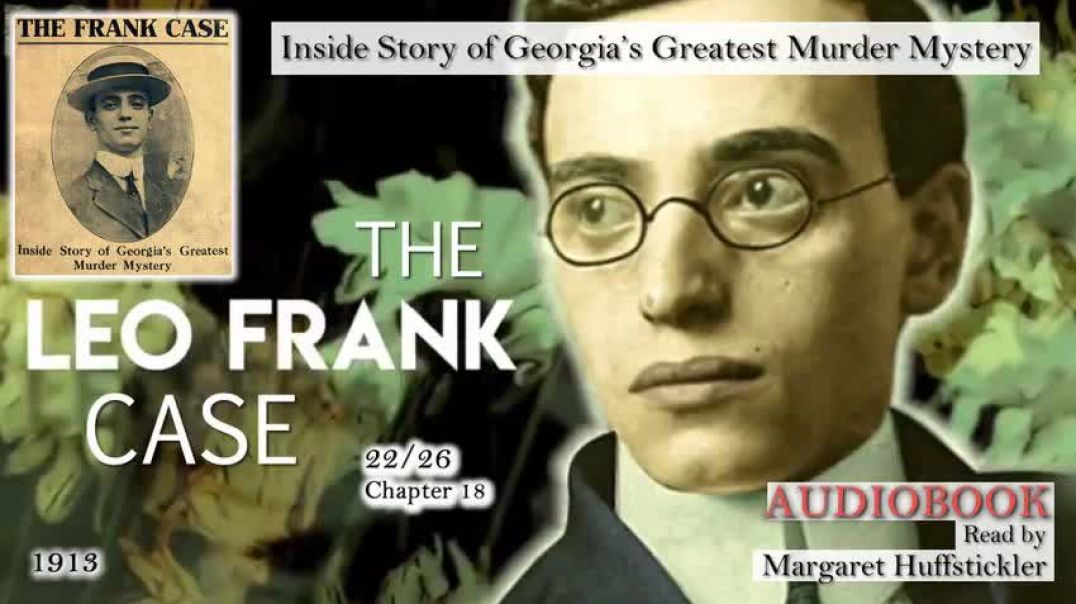
The most important detail in this text is the witness that corroborates Frank's alibi. Helen Curran, who lives at 160 Ashby Street, said she saw Frank outside a drug store on Whitehall and Alabama streets at 1:10 a.m. Mrs. M.G. Michael, from Athens, testified that she met the factory manager around 2:00 p.m. on the day of the murder. Mr. A.B Levy said he saw Mr. Frank get off the streetcar at 1:00 a.m. on Georgia Avenue, half a block from his home. At 1:20 p.m. Cohen Loeb testified that he and Frank had gone downtown in a Washington trolley car and found H. Robb. J. Hinchey testified that he saw him boarding a streetcar shortly after 2:00 p.m. Mrs. Rebecca Carson testified that around 2:20 p.m. she and her sister Frank were seen outside the M. Rich and Brothers store on Whitehall Street. Half an hour later on Whitehall and Alabama streets. Several former factory workers were subpoenaed and testified that they had never seen inappropriate behavior in the factory. The most important detail of this document is that Frank was a guest of his father and mother-in-law, Mr. and Mrs. Selig and he said he was reading a newspaper and drew his attention to a joke he found in the newspaper.
Attorney Dorothy, who cross-examined these witnesses, sought to establish that Frank had attempted to attract the attention of those present by appearing careless that night by laughing out loud. On the afternoon of Saturday, August 16, Mrs. Ray Frank took the witness stand and identified a letter addressed to her son's wealthy uncle, Mr. Frank, who was in New York en route to Europe. The letter was addressed to her wealthy uncle Mr. Frank, who was in New York at the time on his way to Europe. The letter was addressed to his wealthy uncle, Mr. Frank, who was in New York at the time on his way to Europe. The letter was addressed to his wealthy uncle, Mr. Frank, who was in New York at the time on his way to Europe. The letter was addressed to my wealthy uncle, Mr. Frank, who was in New York at the time on his way to Europe. An important detail of the document is that the defense called 100 other witnesses, most of whom were employed on the fourth floor of the pencil factory, to testify about Leo M. Frank's good character. were girls. E.H. Carson, one of the first witnesses called, testified that Frank was a good person and had never heard a word criticized about the factory. Other workers at the factory also testified that the manager's character was beyond doubt. Attorney Arnold asked witnesses if he ever met Leo M. Frank for immoral reasons, and the answer was a resounding no. Miss Eileen Jackson was subpoenaed as a witness by the defense, but the prosecution relied on her astonishing testimony.
She explained that Frank had come to the door of the women's locker room on the second floor of the factory to see the room's inhabitants. Weeks after the killing, Atlanta Journal reporter Harley Branch said Conley denied seeing Lemmie Quinn enter the factory on Saturday, April 26. When James Conley pretended to hide the body on the day of the crime, his aim was to obtain the doctor's testimony. Rebut William Owens. Nearly everyone at the factory said Conley had a bad temper and wouldn't believe him if he swore. Some of the girls reported that they lent him money that he did not return.
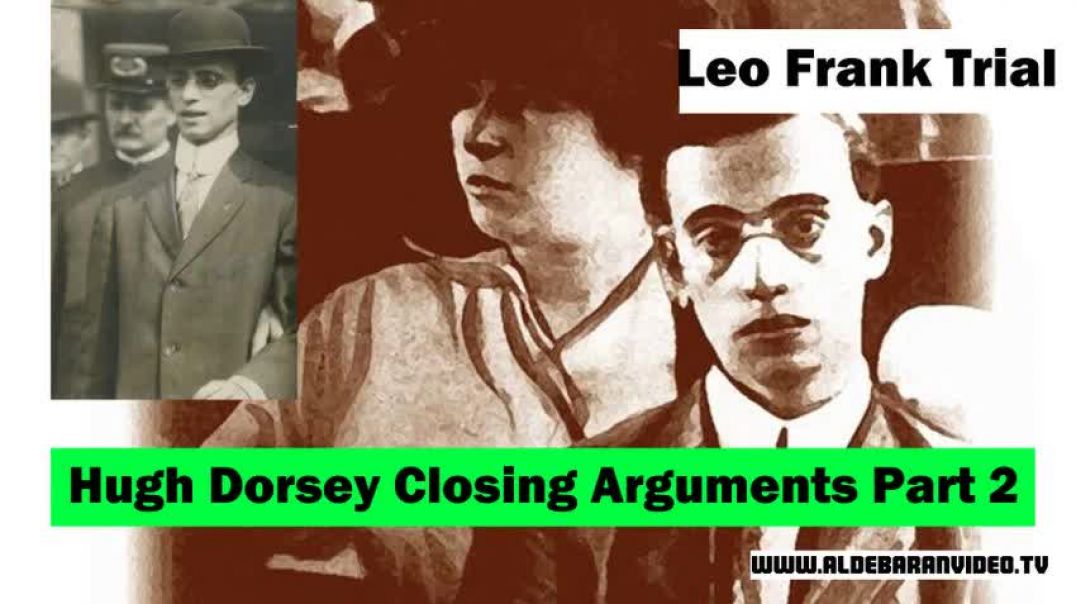
A key detail in the audiobook is that Frank's mother said that anyone who knew his writing should be able to identify it, and that the man put up to prove Frank's writing was so afraid of injury that he wouldn't identify the writing. He also showed nervousness when he went to run the elevator, nail up the door, talk to the police, and ride to the station. He also showed frivolity when he was waiting for Old Jim to come back to burn the body, such as laughing and joking and trying to read a story that resulted in annoyance to the people in the card game. The text ends with a message from Tonte, the German for aunt, wishing Frank and Tonte a safe journey home. The most important details in this text are that Frank wrote a letter to his uncle on Saturday the 26th, which shows that he anticipated that the old gentleman who runs the cigar business had wealthy people in Brooklyn.
He also wrote a sentence that bears the earmarks of the guilty conscience tremulous as he wrote it. This sentence was written when he knew that the body of little Mary Phagan, who died for virtue's sake, lay in the dark recesses of that basement. This shows that the dastardly deed was done in an incredibly short time, and that the phrase penned by the man to his uncle on Saturday afternoon didn't come from a conscience that was its own accuser. The most important details in this text are that Leo M. Frank is an eminent authority who believes that unusual, unnecessary, unexpected and extravagant expressions are always earmarks of fraud, and that the old man cared nothing for the veterans who braved the chilly weather to do honor to their fallen comrades. This is significant because today was Yontif holiday and the thin, gray lines of veterans braved the rather chilly weather to do honor to their fallen comrades.
Leo M. Frank is a statistician and the millionaire, or nearly so, who cared so little about the thin, gray line of veterans but cared all for how much money had been gotten in by the pencil factory. There was something startling in the factory within the space of 30 minutes, and the letter was written in the morning. Do you believe it? The most important details in this text are that a rich uncle, Leo M. Frank, was living in Brooklyn and had at least $20,000 in cold cash out on interest. His brother in law was the owner of a store employing two or three people, and if the uncle wasn't in Brooklyn, he was so near there that even Frank himself thought he was there. On April 28, Frank wired Adolf Montague in care of the Imperial Hotel, telling him that a factory girl was found dead Sunday morning in a cellar of the pencil factory, where he placed her and expected her to be found.
The incidents leading up to the murder of a factory girl discovered dead in a pencil factory cellar on April 28th are the most crucial details in this text. Montague received a call on Monday, April 28th, from a man saying that his company had the case well under control and that the police would eventually crack the case.
Additionally, he informed Montague that Scott could have obtained the slush fund if it had been present because his firm had the case under control. Haas countered that there might have been something else if Scott had accepted that advice. This implies that something else might have happened if Scott had accepted Haas' suggestion.
Despite what Joe Darter Schiff swore when he realized he had to confront Miss Fleming's evidence, this evidence demonstrates that Frank did not fix the financial sheet on Saturday morning. Frank got up on the stand and realized that his case was weak because he wasn't happy with all the evidence that was being presented about what he had done. He wrote that statement, and he was as intelligent as either of his attorneys. With his statement, Frank attempted to introduce something for which they lacked any supporting evidence after realizing that he had to go above and beyond what the evidence showed. He was aware that the claims made about how long it would take to correct the financial sheet were untrue. The jurors' testimony in the case of Frank Arnold constitutes the most significant details in this text. The evidence consists of both documentary proof that a man is guilty and proof that a person lied under oath, as in the case of a man who was called to identify a piece of writing as being by Frank but who was unable to do so despite Frank's own mother swearing that he could have done so.
Mrs. Carson's testimony about her three years of factory work is also included, and Mr. Arnold's testimony is not made under oath. Last but not least, there is testimony from Mr. Arnold who is not under oath regarding the three years of work Mrs. Carson performed in the factory. The text ends by stating that justice must be served and that the man who carried out the heinous act has received the same punishment from God that he received for what he did to this helpless little girl.
The two most crucial facts in this passage are that the woman had a conversation with Jim Conley on Tuesday morning and that she had noticed blood spots in her dressing room three or four times over the course of three years. On Tuesday morning, between 9 and 11:30, she also saw Leo M. Frank on the fourth floor.
Between the same hours, Jim Conley and Leo M. Frank were both on the woman's floor, and she spoke with both of them. Even if these men had intended to suborn perjury, the woman thinks that Conley could not have been made to do it. The most crucial information in this passage is that Jim Conley and Frank were both on the same floor, and that Jim was doing exactly what he claimed he was doing—sweeping.
Frank and Conley were standing in front of the elevator when Frank went down the steps. Conley was still standing there with his hand on the thing when Frank passed him. Mrs. Small testified that the elevator shakes the whole building, but you can't notice it unless you are close to it. She said if there was hammering and knocking, you could still hear the elevator if you got close to it. Nobody disputed that.
The blood on the second floor piqued Mrs. Carson's interest, Miss Rebecca's mother. Jim Conley was anxious to get the newspapers, according to Mrs. Small, because he was aware of some information that he wanted to see how black people looked.
Then Mr. Arnold posed a query to Mrs. Carson that would be addressed to all of the female employees of the fourth floor. The two women named Miss Kitchens and Mrs. Small—each of whom received a raise of five cents four months ago—are the most significant details in this text.
Jim Conley's claim that Mrs. Small was up there on Tuesday between 8 and 9 a.m. is also supported by Mrs.
Small. Mr. Rosser called the assertion that Mr. Frank asked Jim Conley to hide the crime as being a "dirty assertion," but Mr. Rosser accepts it as being true. The text also mentions Mr. Rosser's acceptance of the notion that Mr. Frank asked Jim Conley to cover up the crime and expected him to do so as a dirty suggestion. The most crucial information in this text is that Jim Conley was brought into the courtroom by him, at which point a jury of upright men tied a rope around his neck. Jim claims that when he first saw him down there following the crime, he asked him, "Have you seen anyone go up?".
He claimed to have seen two girls ascend, but only one return. Given that he was aware that Jim was on the lookout for both him and Starnes, Campbell, and Black taken together, this man saw the absolute necessity of confiding in Jim. Jim made an effort to defend himself, but the suggestion was impure. The most crucial information in this passage is that Mrs. Small saw Leo Frank on the fourth floor between 8:00 and 9:00 on Tuesday morning, and the other woman saw him between 9:00 and 11:00. It took some time for the police to gain the nerve and the courage to face the situation and place him where he belonged because of the intimidation and fear Frank's influence caused them to feel when it came to assigning him to a cell like they did Lee and Conley. It took some time for the police force to gather enough courage to deal with the situation and place him where he belonged because they were initially intimidated and terrified by Frank's influence to confine him to a cell like they did Lee and Conley. The most crucial information in this text is that John Black and Mr. Rosser achieved great success thanks to Leo M. Frank; if Black had been given the chance to pursue Frank, this trial might have been avoided and a confession might have been obtained.
This trial might have been avoided and a confession might have been obtained if Black had been given the chance to pursue Leo M. Frank. Black's methods were comparable to Rosser's methods. The Atlanta police department gave this man who killed that young girl undue consideration and allowed shrewd advice and the allure of power and wealth to dissuade them.
They respect the approach they took in tracking down Manola McKnight, but if they believe that apprehending a young girl's murderer in broad daylight is a lady's affair and that detectives should behave like dancing masters, they are ignorant of the nature of the work. The most crucial information in this text is that John Starnes and Campbell were aware that Albert McKnight would never have told Craven what he saw and what his wife had told him, and that if Mr. Dot Haas had approached him on Tuesday morning and asked him to tell the police to let Frank go, he would have responded, "It's none of my business.". He is criticized for entering the situation at the outset and refusing to take a backseat while serving as Solicitor General for the duration of the term for which he was chosen by the people. He respects Mr. Dot Hill and is equally pleased to have succeeded him as he is to have been chosen by the residents of this community for the position of Solicitor General. He obeys his own conscience's directives. The most significant information in this text is that the Solicitor General is proud of the fact that he worked closely with the detectives to find Mary Phagan's killer and that he resolutely refused to yield to the grand jury's pressure to hang an innocent man. Additionally, he wishes that Mr. Dot Hill had been present to deliver the speech he is doing right now, as he was as honorable as any Roman, as brave as Julius Caesar, and as articulate as Demosthenes.
In his final discussion of the subject, the Solicitor General asserts that everyone is a liar and that they are all "crack brain fanatics" without providing any specific examples. On Tuesday between 8:00 and 9:00, according to Mrs.dot Small, she saw Jim Conley and Mr.dot Frank in the factory's back area. When Mr. Conley and Miss Rebecca Carson emerged from the factory's back entrance, Mr. Conley stepped in front of them and enquired as to whether they intended to put him to work. He gave the ticket his approval and continued working.
Frank and Miss Rebecca Carson were approaching the elevator, but Conley was waiting there by the elevator, not sweeping. The African-American man wasn't sweeping while he was there by the elevator.
Conley was in front of the elevator when he descended the stairs, and Mrs. Small testified that the elevator shakes the entire building, which are the two most crucial facts in this passage.
Mrs. Carson had previously sworn that she did not descend to see the blood but rather saw the locations where it was rumored to be. Mrs. Carson observed the alleged locations of the blood, as well as the alleged locations of the blood that appeared to be powder. The text ends by stating that Mrs. Carson had seen the alleged locations of the blood and that she had observed the locations as appearing like powder.
The case of Leo M. Frank, a defendant accused of perjury, is discussed in the text. Although she didn't object to going down, he claims that Mrs. Carson and he were sent there out of curiosity. The letters that were discovered in Frank's office and which clearly show that the author knew about the deal are also discussed in the text. The text concludes by stating that these letters are the will of an all-powerful providence and that they have irrevocably fixed the crime upon Frank. The text says that the letters have inherent signs of knowledge of the transaction in it before it ends. The most crucial information in this text is that Jim Conley, a Black man who killed and stole from a girl in a dark basement, took the time to jot down notes on a scrap of paper outside of Frank's office.
Being as inebriated as a fiddler's bitch prevented him from robbing the girl while being aware that Frank was present. The text also claims that committing a crime is a mistake in and of itself, and that both the criminal and the person trying to cover it up almost always make small errors. The text concludes by stating that crime is a mistake in and of itself, that the person committing the crime makes a mistake, and that the person trying to cover it up almost always makes a small mistake.
The most significant information in this passage is that Scott's testimony was not questioned by the coroner and that Leo M.
Frank informed the girl that he was unsure as to whether the medal had arrived or not before she returned to check.
According to Jim Conley's statement, Frank mentioned wanting to talk to a girl four times before they broke up so that he could go outside and let Scott rest.
In neither the coroner's office nor when Scott appeared before the coroner was Scott's evidence questioned.
In order to expedite the hiring of a detective, he had the man switch the phone three times on Monday night.
According to Jim Conley's statement, Frank mentioned wanting to talk to a girl four times before they broke up so that he could go outside and let Scott rest.
Mr. Arnold's claim to the jury is that old Jim Conley, who had raped and killed a girl, took the time to conceal her body in the pencil factory's basement. The superintendent of the facility, Leo M. Frank, recognized the need for the girl's body not to be discovered on the second floor of the pencil factory and employed the language used in the letter or telegram he sent to Adolf Montague in New York in the cellar.
With all of their ingenuity, Starns and Campbell couldn't have known that old Jim would stand up here and claim that the man looked at him when he ran into the baby as if he had done it, and they couldn't have forced him to say I locked the door like he did told me.
The most crucial information in this passage is that a long, tall, black negro shoved another long, tall, black negro down a scuttle hole, and that the girl returned there to fetch water in the same direction that she would have gone to inquire about the metal. The long, tall, black man did it on his own, according to this note, and the girl went back there to fetch some water in the same direction that she would have gone to inquire about the metal.
The note also claims that the long, tall, black negro struck the girl with a large stick, which is undoubtedly a fabrication—just as Newt Lee's shirt was, for that matter. The most crucial information in this text is that a black man had the cunning to leave a girl's form somewhere other than where he struck her and knocked her to the ground, and that Leo M. Frank felt compelled to write there letters that he thought would clear him but that instead cast doubt on and damn him in the minds of every man seeking the truth. Furthermore, when there is a pad of notes from an elderly Jim Conley, there is nothing in circumstantial evidence that the jury must admit or that they do not dispute.
The most significant information in this text is that Jim Conley, a factory superintendent, was instructed to remain silent and defend Leo M. Frank, the factory superintendent. Leo M. Frank, the factory superintendent, who wired Montague to tell his uncle, was protected by the letter, which was written in his name. Not in the factory, but in the cellar, was where the girl's body was discovered. The letter was written with the awareness and conscience that the poor girl's life had already been taken even as he was writing it. Conley's guilt must be proven beyond a reasonable doubt to the jury; however, this requirement does not apply to the doubts of a crank, a man who has created them to exonerate a friend, or a man who was a friend of a friend.
The most crucial information in this text is that circumstantial evidence is not less reliable than direct and positive evidence, and that it is appropriate to tell the jury that there is nothing about circumstantial evidence's nature that makes it less trustworthy than other types of evidence. The reliability of circumstantial evidence is demonstrated using two examples: the first compares incidental facts surrounding the main facts in issue to links in a chain, showing that a chain is only as strong as its weakest link, and the second compares incidental facts to the strands in a rope, showing that none of them may be sufficient on their own but that when combined, they may be powerful enough to prove guilt. The most significant information in this text is that each of these occurrences forms a chain, cord, strand, or cable, and that when combined, they form a cable that is as strong as can be woven around a human being. Unanalyzed, this man's statement to the jury was brilliant, and if the jury accepts it without questioning it, then of course they will not find him guilty.
A statement has no such inherent strength as the testimony of a witness, which even a jury cannot in all cases ignore. This statement has been skillfully crafted to address the case's requirements. The text concludes by saying that, in contrast to statements, testimony has inherent weight that even a jury cannot, in all cases, disregard.

Best side hustles in 2023

Lessons from Warren Buffet

How a young Australian went from $500 to $500 million within 5 years

3 day water fast

In this episode, Michael and Peter discuss the future of Bitcoin, money as economic energy, how Michael would build a new world, and the future of cyberspace.
Michael Saylor is an entrepreneur and business executive. He is the co-founder, former CEO, and executive chairman of MicroStrategy, a company that provides business intelligence, mobile software, and cloud-based services. MicroStrategy is the world's biggest publicly traded corporate owner of Bitcoin, with 129,218 BTC.
Learn more about Michael’s free education academy, Saylor Academy. https://www.saylor.org/
This episode is brought to you by Levels: real-time feedback on how diet impacts your health. https://levels.link/peter
Consider a journey to optimize your mind and body by visiting http://mylifeforce.com/peter
Timestamps
00:35 - 02:05 Intro
02:06 - 09:30 Money Is Economic Energy.
10:17 - 15:48 What Is The Future Of Bitcoin?
15:49 - 27:47 The Paradigm Shift That Was Bitcoin.
27:48 - 37:00 We've Got To Engineer A Better World.
37:01 - 39:22 Is There Still A Risk With Bitcoin?
39:23 - 51:14 Bitcoin Is The Energy That Will Shape The Future.
51:15 - 59:14 Politics Holds Back Innovation.
59:15 - 1:07:00 How Would Mike Saylor Build A New World?
1:07:01 - 1:08:31 The Next Move Isn't To Space, It's to Cyberspace.
1:09:17 - 1:13:39 Mike Saylor's Opinion On Modern Medicine.
1:13:40 - 1:14:46 There's A World Of Infinite Learning.
1:14:47 - 1:17:59 Trading & Education Is How We Should Improve The World.
1:18:00 - 1:21:22 The 10 Observations So You Can Make The World A Better Place.
1:21:23 - 1:29:14 Taking Back Control Of Your Money.
1:29:15 - 1:29:41 Outro
New to Peter?
Peter is on a mission to solve the world’s greatest problems. Named by Fortune as one of the “World’s 50 Greatest Leaders,” Peter Diamandis is a Father, Founder, Philanthropist, Humanitarian, and best-selling author. Peter has gathered over $100m to solve humanity's greatest problems. This show is Peter’s effort to share everything he knows about changing the world.
Connect with Peter:
Website: https://www.diamandis.com/
Instagram: https://www.instagram.com/peterdiamandis/
Twitter: https://twitter.com/PeterDiamandis
LinkedIn: https://linkedin.com/in/peterdiamandis/
Listen to Moonshots & Mindsets on:
https://www.diamandis.com/podcast
Apple Podcast: https://podcasts.apple.com/ca/....podcast/moonshots-an
Spotify: https://open.spotify.com/show/....5Y1NyT6srGx38f5LINbH
Trailer composed and edited by @abramshaffer

The Future is Bitcoin with Michael Saylor | EP #9 Moonshots & Mindsets

Laziest Way to Make Money Online For Beginners
![[MUST WATCH NOW] MONOPOLY - Who Owns The World [MIRROR]](https://truthtube.video/upload/photos/2023/08/9Kj7zTLao4meE6iseU7C_23_30f0c3a78c442a9ea71ba71387660082_image.jpg)
👁🗨️ CREDIT LINK 👁🗨️
https://rumble.com/vva0s8-must....-watch-now-monopoly-
➖
Great Awakening World - Truths & Secrets Revealed
2022
➖
👁🗨️ LEARN MORE 👁🗨️
https://cabal.truthparadigm.tv
https://cabal.truthparadigm.news
https://threads.truthparadigm.news
https://resources.truthparadigm.net
#CabalElitesNWO #WHO #Globalism #TimGielen #GreatReset

The RICH Habits You Need To Become A MILLIONAIRE In 2023 | Lewis Howes

Jordan Peterson On How To Discipline Yourself | BEST MOTIVATIONAL SPEECH

Top 10 ways to use ChatGPT Code Interpreter

50,000 Australians marched in Melbourne today in support of Palestine

Did Israel committed a False flag attack on itself killing its own people to justify their pre plann
Did Israel committed a False flag attack on itself killing its own people to justify their pre planned invasion of Gaza killing over ten thousand unarmed civilians?