Top videos
OUR DAILY OLDIES

EU, G7 Still Buy Oil From Russia Through Third States Despite Sanctions
The recent revelation by Bloomberg indicates that the EU’s dependence on petroleum products from India has grown recently, but there’s a nuance – it consists of Russian crude.
Many other countries that increased their energy imports from Russia have also become suppliers to Europe, as well as G7 countries.
We hear from Indian foreign policy expert Suvrokamal Dutta, who says that sanctions have simply led to the West buying Russian oil through middle-men – but at a higher price.

BRICSTether, the Alternative to USDT and 100% Asset Backed Stablecoin, Goes Live on Another Exchange
BRICSTether, the alternative to USDT and 100% asset-backed stablecoin, goes live on another exchange - this time Coinsbit, as more look to flee the USD and US collapsing banks
BRICSTether, the alternative to USDT and 100% asset-backed stablecoin goes live on another exchange - this time Coinsbit, after launching recently on Azbit. It will soon be added to even larger exchanges and launch its own in BRICSTX exchange. You can earn up to 10% PA, if held for 12 months, or 5% if held for 90 days. 100% asset-backed.
A release by Coinsbit Exchange was made just now.
“Congratulations, your token is listed on coinsbit.io. This is just the beginning of our fruitful cooperation
https://coinsbit.io/trade_classic/BRICST_USDT “
BRICSTether.com
@tetherbrics on Twitter

Table of Contents.
Preface.
Chronology
Chapter One - Crime Discovered
Chapter Two - Police Reach Scene
Chapter Three - Frank Views Body
Chapter Four - Mother Hears of Murder
Chapter Five - Crime Stirs Atlanta
Chapter Six - Leo Frank Is Arrested
Chapter Seven - The Inquest starts
Chapter Eight - Frank's Story
Chapter Nine - Dictograph Incident
Chapter Ten - Conley Enters Case
Chapter Eleven - Conley in School
Chapter Twelve - Racial Prejudice Charge
Chapter Thirteen - Plants Charge to Frank
Chapter Fourteen - South's Greatest Legal Battle
Chapter Fifteen - The State's Chain
Chapter Sixteen - Perversion Charged
Chapter Seventeen - Salacious Stories Admitted
Chapter Eighteen - Frank's Alibi
Chapter Nineteen - Attorneys Threatened
Chapter Twenty - Frank's Own Story
Chapter Twenty-One - Lawyers Laud and Denounce Frank
Chapter Twenty-Two - Fear Of Lynching Precedes Verdict

In Atlanta and the South, the well-known Leo M. Frank case is arguably the best crime thriller of all time. Young Mary Phagan was brutally murdered when she went to the National Pencil Factory to pick up her paycheck, according to the story. Alas, is understandably intriguing to any working man or woman, as terrifying as its details are. All who hear about a crime mystery find it intriguing. But because this particular case involves the prosecution of an elite Jew, Mary Phagan's crime thriller lost its identity with Leo M. Frank. The Frank case involved Frank, the manager of a sizable factory where a affable little employee had died. No other murder investigation in the South has sparked as much curiosity. There is more to this story than just a respectable man assigned to kill a lust-driven young factory girl. It is more than just a crime thriller.
He claims to be the victim of persecution because he is Jewish, which makes this case crucial. The story of a horrifying crime, significant events that occurred over the following four months, and, finally, the tale of a great trial in which two of the South's top criminal defense lawyers squared off against the astute minds of the Atlanta Attorney General for a month. was finished. However, a lot of the intriguing tales pertaining to the Frank case were never published because the media was afraid to mention them in their articles.
Frank was found guilty by the Fulton Supreme Court, which brings the play to a close. The case was not resolved following the Atlanta County trial. This is because the juvenile defendant will be brought back before a judge soon after receiving a death sentence, and if he is to be hanged, it could take months or even years for that to happen. remain. The battle for Frank's life, however, changed into a complex legal dispute starting on the day of the verdict. The real story concludes with a trial and the author's explanation of all the significant details.

The most important details in this audiobook text are the events leading up to the verdict in the trial of Leo M. Frank. Solicitor Dorsey concluded his speech at 12:00 p.m. Monday and turned to Judge Roan, asking him to charge the jury without prejudice or bias. The gong on the Catholic church a block away from the courthouse sounded with each intonation of guilty, guilty. Guilty. Guilty.
As the final words sounded through the room, the gong on the Catholic church a block away from the courthouse sounded with each intonation of guilty, guilty. Guilty. Guilty. As the final words sounded through the room, the gong on the Catholic church a block away from the courthouse sounded with each intonation of guilty, guilty. Guilty.
Guilty. As the final words sounded through the room, the gong on the Catholic church a block away from the courthouse sounded with each intonation of guilty, guilty. Guilty. Guilty. As the final words sounded through the The most important details in this text are that the jury was taken from the courtroom shortly before 01:00 p.m. and taken across the street to a cafe for dinner.
Ten minutes later, solicitor Dorsey was picked up and carried on the shoulders of the crowd. An hour later, the jury was returned to the courthouse to begin its deliberation. Shortly after 03:00, foreman Windburn of the jury wrapped on the door and told Deputy Sheriff Plennie Minor that a verdict had been reached. On the second ballot, Judge Roan was summoned from his home and solicitor Dorsey was called. The defendant had waved his presence and remained in his cell at the tower to prevent a possible outbreak. When the jurymen took their seats, the solemn expression which interpreted could mean but one thing. The foreman arose in his seat and held the verdict in his hand, reading. We, the jury, find the accused guilty.
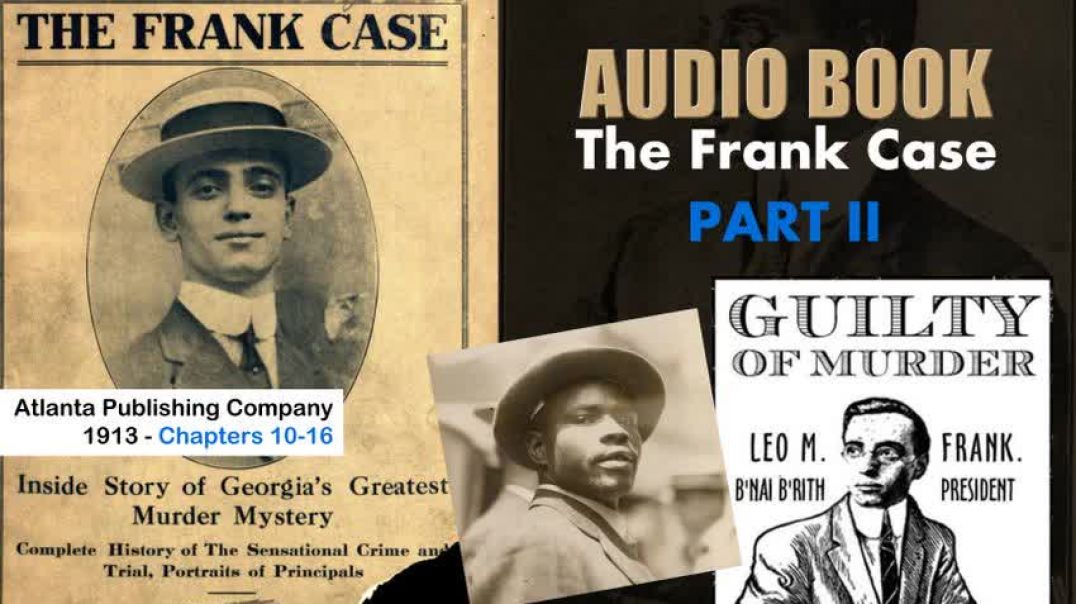
James Conley, a black janitor at the National Pencil Factory, was arrested while the coroner's investigation was still underway. E.F.'s timekeeper. At the factory, Holloway sees Conley washing shirts and calls the detectives. Conley had partially dried his shirt when police arrived, but the clothing on his back was still damp. Conley was also seen washing Mary Phagan's blood off his shirt, a natural black stain.
One day, Detective Harry Scott stopped by Jim's cell and asked him to write some sentences. Investigators were looking for handwritten hints. A key detail in the document is that Jim Conley had a bad reputation, fell into police hands multiple times, and was working on the street in front of the factory behind the town fence on Saturday when the tragedy occurred. is. On May 23, Conley admitted in third degree court that he lied about his inability to write, but he swore he knew nothing about the crime. He gave the police a copy of his handwriting, but they were amazed at the similarity to what was written on the dead girl's body.
About 10:00 a.m. on Saturday, Conley called Detective John Black. An important detail in this document is that Jim Conley was accused of writing a memo to Mr. Frank and did so because Mr. Frank had directed him to do so. On Friday night, Mr. Frank visits Jim and sends a note to his mother in Brooklyn, telling him he will give her the job. Black then calls Harry Scott to write down and sign Black's affidavit. A grand jury is in session over the indictment of Frank Scott, and Black wants to pursue the charges by bringing Jim Conley to the grand jury and allowing the grand jury to hear him out. rice field.
Dorsey, however, refused to bring him to the witness stand, believing that without the black man there would be sufficient evidence to support Frank's accusation. Dorsey felt he could prosecute Frank without mentioning blacks, but within hours it was clear he was right. That afternoon Dorsey had a lengthy meeting with blacks and detectives, and a stenographic report was drawn up of the conversation. Detectives point to Frank's intentions behind it, but Conley sticks to his story. He repeatedly swore to tell the whole truth, but then detectives thought he would never change his story.
In the first state and county affidavit, James Conley, who took the oath, said about four minutes before 1 a.m. Friday night before the holiday: At 12:00 a.m., Mr. Frank came down the aisle and asked me to come to the office. He walked into his office and asked if he could write a little. The statement of facts are about a black black man who was given a notepad and asked to write on it. When he entered the office, he was asked if he smoked, and he brought one. You then ask where Gordon Bailey Snowball is and he replies that he is in the elevator. He then asked if he knew the night watchman and said he had never seen him in the basement. Mr. Frank then told him there were some wealthy people in Brooklyn, and Mr. Frank looked up, stared into the corner of his eye and said, "Why should you hang yourself?" . That's all he remembers when he asks not to take out the money for the security guard. A key detail in the document is that investigators were pleased to have James Conley, the author of the murder note, in custody. A handwriting expert attested that the handwriting on the note was that of Newt Lee, but even a non-expert could not be sure it was written by Jim Conley. Detectives and forensic investigators generally stated that the hand that wrote the memo put a string around Mary Phagan's neck, but detectives remained unhappy with the fact that they kept the author of the memo in custody for weeks. rice field. Frank's defense says that after the first day, Conley went to school instead of a third degree, and that the detectives acted as lecturers to put the words into Conley's mouth. On May 27, Conley again sworn to Scott and Chief Ranford. He admitted writing the note, but said he went to the factory on Saturday afternoon and found Mr. Frank there. Conley also added that while writing the note, Frank nervously walked around the room shouting, "Why are you hanging him?" Frank said he had wealthy relatives in Brooklyn. The detectives were content with Conley's second statement until they had enough time to consider it. Blacks looked them straight in the eye and claimed to have told them everything they knew, even though they knew it could be a criminal. At noon the next day, Conley was in hiding in the Newport Rumford Police Department, but a dozen journalists had gathered outside demanding coverage of the allegations. Police Chief Beavers was repeatedly called to meetings, but officers refused to speak. From the words that leaked through the door, reporters reconstructed black news stories. Chief Rumford decided to release the third black affidavit, and the blacks waited downstairs for Mr. Frank, asking him if he wanted to make a quick buck. He said he picked up the girl there and dropped her head on something. The Negroes screamed and told her that her girl was dead, and the man picked her up and told her to take her to the elevator. The negroes told him to look over there by the cotton box and get a piece of cloth.
As the narrator was carrying the woman to the dressing room, she slipped and fell to the floor. Mr. Frank helps the narrator pick her up on her feet and take her to her elevator. Mr. Frank then helps the narrator take her back to the sawdust pile and her hat and her shoes back to the garbage pile in front of the stove. The narrator then lies prone, with her head facing the elevator, the left side of her face on the floor, the right side of her body facing up, and her arms beside her body. to place. Mr. Frank joins the narrator in the back of the elevator and he says it's a tedious job. The narrator explained that their work was less tiring than Frank's, as they carried Ms. Clarke from her bunk to her dressing room and from the elevator to where she left her in the basement. Mr. Frank then took out a cigarette and asked the narrator if he wanted to smoke. The narrator then took out a box of matches and Mr. Frank gave the narrator a box of cigarettes. The narrator and Mr. Frank then sat in a chair, and Mr. Frank took out a cigarette and asked the narrator if he wanted to smoke. Mr. Frank asked the narrator to write a few lines on the white legal pad that was there. After the narrator wrote, Mr. Frank looked at the paper and said everything was fine. Mr. Frank then asked the narrator to shut up and he would make things right. He then presented the narrator with his $200 and a large dollar bill. The narrator didn't count it.
James Conley was a factory worker in Fulton County, Georgia. On Friday afternoon he was met by Mr. Frank near Montague Brothers and directed to come to the factory for additional work. He arrived around 11 a.m. After he met Mr. Frank, he was told to wait downstairs until he was called. He waited and fell asleep, the audio document says. Mr Conley said Mr Frank told him to meet up near Montague Brothers on Friday afternoon and come to the factory to do additional work. He arrived around 11 a.m. He was met by Mr. Frank and told to wait downstairs until he was called. Subsequently, he waited and fell asleep.
The African-American sweeper named Jim Conley was brought to the pencil factory where he performed his role in the crime in a dramatic way. Detectives questioned him repeatedly as he made his way through the factory, pointing out the locations of the body's discovery, its dropping, the source of the sacks, and other locations. He was carried to the superintendent's office, where he entered the wardrobe following the illustrated lecture on his role in the crime and his recitals of the conversations. The negro denied receiving any unfair treatment while he was a guest at headquarters when Chief Lanford asked him if he had. He was taken from the factory to the county jail, also known as the tower, where the sheriff is in charge and the police and detectives are powerless.
Through his lawyer, the black man alleged that Frank's friends had abused him while they were frequently seen passing by his cell. The court gave the negro's return to police headquarters its blessing after William Smith, a lawyer first hired by a newspaper to represent the negro, won his case. Jim Conley, a black man, made sensational affidavits of his innocence, claiming to be the real murderer and attempting to protect his own skin by accusing the factory manager of the crime. The Solicitor General kicked vehemently about how much attention the negro's statements had received and asked the detectives to keep everyone away from his cell.
Everyone was effectively barred from his cell except the department heads, detectives Starnes and Campbell, who were then directly under the direction of solicitor Dorsey, when an order was passed barring all but city detectives. Jim Conley didn't speak to the public again before testifying at the trial, and it was generally assumed that he had stuck to his third story until he started adding new sensations in response to the solicitor's question. For the first few days after the negro had made his sensational affidavits, hundreds of Atlantans shouted the charge against the Negro, and the friends of Frank shouted it the loudest. In spite of the criticism, Dorsey maintained his composure, and the detectives stuck to their conviction that Frank was the murderer.
The fact that the words Frank, Conley, and Negro are all connected to the Atlanta murder mystery is one of the phrases' most crucial details. The same grand jury sought to indict the black man for the same murder after Frank was charged with Mary Phagan's murder. Conley is imprisoned and has no more chance of escaping now than he would have had if he had been charged with the murder, according to Dorsey, who blocked attempts to indict the black man at every grand jury meeting. Dorsey persisted in his protests because he thought that charging Conley with a crime would be counterproductive and result in a miscarriage of justice while several of the grand jurors were determined to charge the black man. If Frank remained Solicitor General, it was promised that he would stand trial before Conley. The grand jury voted on whether it was wise to hear the evidence against Conley that was presented to them, and Dorsey prevailed. A second grand jury was convened before Frank was actually put on trial, but this time as well Dorsey prevailed again.
The hatred of the Frank supporters for Dorsey was heightened by an incident that occurred soon after Frank was charged. Inadvertently, he learned that Minola Cook, the Selig family's cook, and her husband Albert McKnight were in possession of sensational information about Frank Selig's actions at home and alleged family members' statements. He told one of his bailiffs to bring Minola to his office and sent for Albert. At the conference, Detectives Starnes and Campbell asked the Solicitor General whether they should put her in jail until they were sure that either she or her husband was telling the truth but one of them was lying for certain.
Until June 3, 1913, the Negress was imprisoned in a patrol wagon from Dorothy's workplace. She stayed there until noon, at which point she made an affidavit in front of lawyer George Gordon, who had been hired by an unidentified party to represent her. According to the affidavit, Mr. Frank left his house on Saturday, April 26, 1913, at 8:00 a.m., and Albert was still there when he arrived for dinner. Around 7:00 p.m., Mr. Frank returned to the home. Albert was already there when he arrived that evening.
Mr. Frank ate dinner on that evening around 7:00 p.m. on that evening and at about 8:00 p.m. the narrator left. They left Mr t Frank there on Sunday morning. The narrator observed Mr. and Mrs. Selig upstairs and Miss Lucille, Mr. Frank's wife, downstairs as a man in an automobile obtained a bucket of water and poured it into it. On Sunday morning, Albert and Miss Lucille heard that a girl and Mr. Frank had been discovered at the workplace. Miss Lucille claimed that Mr. Frank told her to get her gun and let him kill himself because he was too inebriated to let her sleep with him. Mrs. Frank hadn't visited her husband in two weeks, and she was at a loss as to what to do.
On Tuesday, Mr. Frank told Minola that it was really unfortunate that he might have to serve time in prison because of the girl. Miss Lucille claimed that Mr. Frank had trouble sleeping on Saturday night and had told her that night that he was in trouble and didn't know why he would commit murder, telling her to get her gun and let him kill himself. The most significant information in this passage is that Minola was being paid $3.50 per week at the time of the murder and that Mrs. Selly had given her $5 as a tip to remain silent.
Additionally, Minola claimed that Miss Lucille and the others had warned him not to talk about what had occurred outside and that he would have preferred to spend last night in jail than divulge this information. Additionally, Detective Starnes claimed that neither Mr. Pickett, Mr. Craven, Mr. Campbell, nor he, Detective Starnes, had any influence over Minola's decision to make this statement. The accused's wife, Mrs. Lucille Selig Frank, who is also the descendant of one of the most prominent Jews in the South, lambasted the detectives and the Solicitor General in no uncertain terms. She claimed that the Solicitor General's decision to arrest and imprison the cook because she refused to voluntarily make a false statement against her innocent husband reached a breaking point and was not the fault of a detective acting to protect his own reputation from criticism in the media. The cook is not accused of any crimes, and Mrs. Lucille Selig Frank acknowledged that he lacked the legal authority to have her detained. According to The Atlanta Journal, the woman was detained at the Selig residence shortly after noon on Monday and transported to the police station in a patrol wagon while hysterically crying and shouting.
Detectives Starnes and Campbell examined her for more than an hour, and she was then subjected to the infamous third degree torture for four hours. She was released from prison just before her husband, who was also taken to the police station at noon. According to The Atlanta Journal, the woman was detained at the Selig residence shortly after noon on Monday and transported to the police station in a patrol wagon while hysterically crying and shouting. Detectives Starnes and Campbell examined her for more than an hour, and she was then subjected to the infamous third degree torture for four hours. She was released from prison just before her husband, who was also taken to the police station at noon. She gave up after being interrogated nonstop to the point of exhaustion. The woman's longest statement since her involvement in the mystery, G.C. Febuary was called to take full note of it.
Upon leaving the examination where the solicitor had sworn to uphold the law and tortured the negress against the law, the negress was cool and collected. The attempts to coerce witnesses into testifying against an innocent man are the most crucial details in this recording. The plan is to continue torturing the victim until the desired affidavit is extracted. It is hoped that no one will ever be found guilty of murder in a civilized nation using evidence obtained through torture from witnesses. It is further stated that the plan is to continue torturing the victim until the desired affidavit is extracted, and that it is hoped that no one will ever be found guilty of murder in a civilized nation using evidence obtained through torture from witnesses. It is also stated that the plan is to continue torturing the victim until the desired affidavit is extracted, and that it is hoped that no one will ever be found guilty of murder in a civilized nation based solely on evidence extracted from witnesses through torture.
The most crucial information in the officially released and worded statement is that the speaker's husband spent the entire Saturday evening and night with her and that he was present at home for lunch and in the evening on the day of the murder. The speaker is aware that there is no other evidence against him besides that which is obtained through torture, and that it can be used to obtain testimony to be published in the media to harm the case of anyone the solicitor chooses to accuse. The speaker is also aware that rumors about his and the speaker's unhappy marriage have been spread throughout the community. She also knows that every conceivable rumor has been spread to harm him and the speaker's reputation. The speaker is aware that their husband is a man motivated by lofty ideals that forbid him from committing the crime that the detectives and the solicitor are trying to pin on him. The most crucial information in this passage is that the wife of the man accused of brutally killing the young factory girl played a significant role in the investigation.
The writer is aware that, despite the solicitor's claim during the trial that she didn't visit her husband for two weeks after his detention, she showed up at police headquarters the day he was arrested. Her husband was encircled by newspaper men and detectives, and friends persuaded her to leave without seeing him. The newspaper camera crew waited outside the location during that time for her to show up. For the first time, the wife of the man accused of killing the young factory girl brutally took center stage in the investigation.
The statement made by Mrs. Leo M. Frank in the Atlanta newspapers prompted the Solicitor General of this circuit to respond as follows. The Solicitor General claimed that a man's wife would probably be the last person to learn all the evidence proving his guilt and the last person to acknowledge his guilt. The Solicitor General also made note of the fact that punishing the guilty invariably causes suffering to family members who are innocent of taking part in the crime, but that the court and its officers cannot allow their sympathies for the defenseless to slow down the aggressive pursuit of those charged with committing crimes. This is a negative aspect of crime, and the court and its officers cannot allow sympathy for the defenseless to impede the vigorous pursuit of those charged. The working class of Atlanta and the state praised Hugh M. Dorsey for his stance, and the opposition to Frank only grew.
Frank's attorney Luther Z. Rosser accused Jim Conley of committing the crime and publicly criticized Chief A. Lanford for being dishonest in his search. Both sides started preparing for Frank's trial, and it was already clear that it would be the biggest legal conflict in the history of the South. Attorney General Dorsey declared that he had hired Frank A. Hooper to aid him in bringing the case. Reuben R. Arnold, arguably the best criminal defense attorney in the South, was hired for a fee of $12,500 to help with the defense. Rosser allegedly received a fee of $15,000 while continuing to serve as the leading attorney.
On June 24, Judge L.S. Roan proposed delaying the case; the trial had been scheduled to begin on June 30. The date of July 28 was set after mutual consent from both parties. Conley had killed the girl on the first floor and thrown her down the scuttle hole, according to the defense's theory, which was made public. On 10th May, when W.D. McWorth and a man named L.P. Whitefield searched the factory, they discovered a pay envelope corner bearing the name Mary Phagan and fragments of two numerals.
They also discovered a bludgeon with what appeared to be blood stains on it. Alleged bloodstains had previously been discovered close to the scuttle hole, and several pieces of twine with knots similar to those found around Mary Phagan's neck had also been discovered nearby. The fines were assessed during the investigation, which was conducted without Pinkertons field chief Harry Scott. Scott was informed upon his return that a pay envelope had been discovered, but nothing else. Asserting that his men had thoroughly searched the factory from top to bottom and would have discovered it if it had been there, Chief Lanford disregarded it as a plant.
The envelope was examined by experts in fingerprints, but no fingerprint traces were discovered. Near the spot where Conley acknowledged waiting in ambush, a bludgeon was also found. Chief Lanford claimed to be unaware of the find, but it was also dismissed as a plant. H received harsh criticism from Lanford. B. Pierce, head of the Pinkerton Agency, for failing to inform the city officials of the alleged discovery.
Pierce was let go by the Pinkertons and had left the city prior to the trial. Prior to the trial, W. was another significant development. Conley confessed to W.H. Mincey that he had murdered a girl that morning, Mincey stated in an affidavit to the defense. According to Mincey, he approached the Black for an insurance policy late in the day while he was near Conley's house at the intersection of Electric Avenue and Carter Streets. The black man warned him that he was in trouble and advised him to follow.
Pierce was let go by the Pinkertons and had left the city prior to the trial. Prior to the trial, W. was another significant development. Conley confessed to W.H. Mincey that he had murdered a girl that morning, Mincey stated in an affidavit to the defense. According to Mincey, he approached the Black for an insurance policy late in the day while he was near Conley's house at the intersection of Electric Avenue and Carter Streets. The black man warned him that he was in trouble and advised him to follow.
Mincey claims that Conley responded that he had killed a girl when asked what his problem was. Only a short time before the trial started and while Mincey was a teacher at Rising Fawn in North Georgia, the main points of Conley's affidavit were made public. Conley was making one of his sensational statements when Mincey called police headquarters and requested to speak with him under the guise of needing to identify a drunken black man, Chief Lanford recalled. The chief claims that he made no confessional hints at the time and claimed he couldn't identify Conley after taking a look at him. Although Mincey was brought to Atlanta pursuant to a subpoena, the defense never asked him to testify.
According to rumors, Dorsey had 25 witnesses who would try to impeach him and was, quote, loaded for him. Mincey has written a number of books on mind reading, and the solicitor had copies available for use during his cross-examination. A case where Jim Conley never admitted to writing all of the notes, but only one of them, is an example of the general value of expert testimony. As a result, the solicitor kept having both of the notes examined by experts. Six experts were prepared to testify under oath that Frank, not Conley, was the author of both notes. When Dorsey finally took them to New York, one of the most renowned experts there affirmed that Jim Conley was the author of both.
The solicitor forced the Negro to admit that he did write both notes when he came back. On the morning of Monday, July 28, at 08:00, an hour before the time set for the opening of court, a crowd started to gather in front of the courthouse shortly after daylight in anticipation of the great legal battle that was to come.
Numerous people poured through the Red Building's entrance and up the one short flight of stairs to the door of the room where the trial was to take place as the intersection of Hunter and Prior streets was packed with people. To keep the air clean and the environment as cool as possible, a dozen electric fans and several ozonators had been installed inside. Only lawyers for the talesmen, journalists, the prisoner's close friends, and a few spectators were allowed entry.
Over 100 witnesses that the state had called to testify were assigned to a courtroom on the second floor to wait for their turn. About ten minutes before seven o'clock, the Fulton County Jail brought Frank from his cell, where he was met by his mother, Mrs. Ray Frank, and his wife. He commented that he anticipated being exonerated and appeared relieved that his lengthy detention was finally over. Just before 9:00 a.m., he was led into the courtroom and directed to the judge's seat.
As Herbert Haas, Ruben R. Arnold, and Luther Z. Rosser, an attorney, arrived, Frank Rostrum, his wife, his mother, and themselves were seated on either side of him. Hugh M. Dorsey, the Solicitor General, and his Special Assistant Frank A. Hooper and the last lawyer to appear was Assistant Solicitor A.E. Stevens. Solicitor Dorsey was prepared to vehemently oppose a motion for a delay after Mr. Arnold declared he was prepared to move forward with the trial.
The famous trial had started when Roan sat down at the bench. The various squads marched into the jury box to present their excuses, if any, as the court clerk started calling the names of the veniremen. Solicitor Dorsey was instructed by Judge L.S. Roan to call the witnesses' names after this formality. Mr. J.W. Coleman and Mrs. Fanny Coleman are significant players in the investigation because they are both Mary Phagan's mother and the murdered girl's stepfather.
W.H. Mincey was one of the additional witnesses that attorney Dorsey called. There were Twenty Five other witnesses such as George W. Epps, Detective for the City, J.M. Starnes. L.S. Dobbs. W.W. Rogers, John Black, a City Detective, Miss Grace Hicks, and L.M. Gantt, Harry Scott, a Pinkerton detective, and B.B. Haslet, E.F. Holloway, M. B. William A. Geesling, Claude Smith, City Bacteriologist Dr. J. W. Hurt, the Coroner's Physician was injured. Dr. Claude Smith. President of the State Board of Health, Dr. H.F. Harris. E.L. Perry. Miss Monteen Stover, Mr. Arthur White, Miss Helen Ferguson, Colored Minola McKnight, E.S.Smith, Albert McKnight, and L. Stanford. Given that Detective Haslett would appear later and that Albert McKnight is the black husband of Minola McKnight, the cook at the Selig and Frank residence, three people on the list that did not respond. Jim Conley, the African-American received an attachment in the form of a subpoena to appear in court on Tuesday for L. Stanford and the third witness.
The twelve witnesses were then called by the defense, who received affirmative responses from all of them. Then, the defense announced the witness' names: Annie Hixon, Mrs. Levy, Mrs. Josephine Selig, Emile Selig, and H.J. Henze, R.H. Haas, W. H. Mincey, J.T. Spear, E.F. Skipper, May Barrett, and E.L. Sentell, C.H. Carson, Mrs. Rebecca Carson, Mr. Harry Denham, Mr. Harry Gotteimer, Miss Corinthia Hall, Miss Hattie Hall, Mary Burke, Lemmie Quinn, Herbert J. Schiff, Ella Thomas, C.B. Gilbert, Frank Payne, Eula Flowers, Alonzo Mann, Joseph Steger, Ike Strauss, and J.C. Loeb, L.J. Cohen, Emma Bibb, Mrs. Bessie White, Joe Williams, Wade Campbell, William McKinley, J.E. Lyons, Mrs. Bessie White, and Dora Lavender Lyons, Jerome Michael Monix, and Mrs. M.W Meyer. The twelve jurors chosen to decide Frank's fate were Meyer, Rabbi Marks, M. Johenning, and W.S. Woodward, J.T. Osbourne, A.H. Henslee , F.V.L. Smith, J.T. Higdon, Data Townsend, W. S. Metcalf, F.E. Winburn, Winburn A.I. Wizby, Chaz J Bossard, A.I. Wizby, Chaz J. Bossard, and W.M. Jeffries. The first panel was disqualified for good reason or due to mandatory challenges. The second and third panels both produced four jurors, which was more successful.
At 11:40 a.m., both sides passed A.H. Henslee, who was the first peer selected. Eleven jurors had been chosen at 11:50 a.m. from the various squads of talesmen who had been interrogated in rapid succession. The eight and final panelists each stated their bias and prejudice one after another or said they already had a predetermined opinion. The final man dialed C.J. Bossard, the 144th Talesman, was accepted.
The three-hour break was mandated by the twelve men chosen by Judge Roan. In the antechamber behind the courtroom, Frank ate the first of several dinners. At noon, he appeared upbeat and expressed his relief that the laborious process of selecting a jury was now complete. At three o'clock, Mrs. J.W. Coleman, the dead girl's mother, was summoned to testify. She spoke slowly and in a voice that was hardly audible outside the jury box while wearing deep black clothing.
Mrs. Coleman recalled the last time she saw her young daughter Mary. Mary had assisted Coleman with housework on the morning of Saturday, April 26, and after helping her prepare a meal of cabbage and biscuits, the two of them had left the house at 11:50 with the goal of visiting a pencil factory to collect their $1.20 for two days of work. The testimony about the later food that the girl had consumed was of little significance at the time. The fact that the state used the girl's stomach contents to demonstrate that she had been murdered is one of the case's most crucial facts. The second witness used by the state to bolster its line of evidence was George Epps, a friend of the murder victim's from childhood and one of the last people to see her alive.
He recalled taking a young child to the intersection of Forsyth and Marietta streets and dropping her off five minutes before she entered the pencil factory. On Monday afternoon, old Newt Lee followed the boy to the stand for two hours and endured Luther Z Rosser's grilling without ever becoming confused or agitated. He left the witness stand three hours later, his account unchallenged. On the afternoon of the murder, he spoke about finding the body, calling the police, meeting Frank, and rubbing his hands in the pencil factory. He was repeatedly asked to repeat his story, but the shrewd cross-examiner for the defense managed to keep him out of every trap. He said of Luther Rosser, "He's pretty terrible."
The State built the framework for its case against the young factory superintendent at adjournment on Tuesday. They had established that she left her house at 11:50 a.m. and named witnesses to demonstrate that she arrived at Forsyth and Marietta streets at 12:07 p.m., or a short while earlier. During the four parts of the trial, a number of the police officers who responded to Newt Lee's initial call and went to the pencil factory were called and informed of the discovery, the location and appearance of the body when they saw it, and the surroundings. Everyone who saw Leo M. Frank was surprised by his quiet assurance. He sat with his arms crossed and his eyes fixed on the jury, the witness stand, or one of the lawyers, between his wife and his mother, whose faces were mostly neutral and emotionless.
He exuded serenity and seemed confident in both his cause and himself. As he sat a few feet from the judge's bench to the left of his attorneys, friends, and family gathered behind him, he showed no more anxiety than any of the onlookers. The most crucial information in this passage is that Frank was the most obedient prisoner there, and that he was never handcuffed during the trips from the jail to court and from the court to the jail. Additionally, he was given an unusual amount of freedom to move around the courtroom, and he never once disobeyed a guardian's instruction. In addition to eating all of his meals—aside from dinner in the evening—in an answering room in the mornings and afternoons, he also regularly entertained anywhere between six and ten friends.
He was believed to be innocent by his employers, the other men he worked with in the factory, and numerous female subordinates. This confidence was unaffected by the moral perversion accusation that was brought against him during the trial. One of the accused man's friends referred to the women who testified late in the trial that he was not of good character as fanatics, and witnesses who accused Frank of having inappropriate relations with factory workers' women were referred to as perjurers. Mary Phagan's coworker, R.P. Barrett, a machinist in the same metal room, reported seeing blood spots close to the water cooler and several hair strands wrapped around the handle of a lathe a few feet away.
A broom that had allegedly been used to spread the liquid across the floor and hide the blood was also discovered nearby, according to him. According to the theory behind the murder, Frank lured his victim back into the medal room when she went into his office to get her pay and killed her when she refused to submit to his abuse. The two key pieces of information in this text are Sargeant L.S. Dobbs testimony and Christopher Columbus Barrett's testimony, who was part of the group that was first led to the dead girl's side the morning the body was discovered.
Sargeant L.S. Dobbs, a member of the group, was the first one to be led to the dead girl's side the morning the body was discovered. The defense tried to prove that the clear track didn't start at the elevator, but rather a few feet away at the bottom of the ladder that led from the first-floor scuttle hole. The solicitor called the City Detective J.N. Starnes, the official prosecutor in the case, to give testimony about a number of crucial details pertaining to the City Police investigation.
The facts of the case are the information that matters the most in this audiobook The Sleuth testified that Frank entered the Pencil Factory's office the morning after the body was discovered and said to General Manager Darley, "You see, I've got another suit.". According to Starnes' testimony, Frank was tense and anxious on Sunday morning. The early days of the case were characterized by numerous disputes, and the jury was dismissed. A dispute arose on the afternoon of Tuesday, July 29, when Solicitor Dorsey attempted to introduce in evidence a diagram of the Pencil factory with a red line indicating the path Conley claimed he took when carrying the body from the metal room to the basement.
"Boots" Rogers claimed that on the morning of April 27, when Frank and City Detective John Black drove to his house in a car to bring the superintendent to the crime scene, Frank was very anxious. The State aimed to establish that Frank refrained from looking at the dead girl's face while she was present at the undertaking parlors. Rogers testified that the superintendent left the room where the body was lying and entered another after arriving at the undertaking parlors. Later, when Frank claimed to have seen the girl's face not just once, but twice, he contradicted other witnesses. The sister-in-law of Rogers, Miss Grace Hicks, testified that the girls in the metal room frequently combed their hair over their equipment and that there was a gas jet a short distance from the lathe where Barrett found the hair strands allegedly belonging to Mary Phagan.
After spending several hours on the witness stand, City Detective John Black was subjected to one of Attorney Rosser's most ruthless cross-examinations of the entire case. Additionally, he corroborated Detective Starnes' testimony in regard to the police's subsequent investigations. Although the Pinkerton Agency had given the defense lawyers access to the information, Solicitor Dorsey pointed out that the discovery of the bloody club and alleged spots on the floor close to the scuttle hole leading to the basement had never been reported to the police. The detective was questioned by Attorney Rosser regarding the bloody shirt that was discovered at Newt Lee's residence. Black recognized the shirt as one that was discovered at the Negro's house in the bottom of a barrel.
The defense's attempt to present evidence pertaining to the shirt was met with a stern legal tilt. According to Solicitor Dorsey, Frank went to the night watchman's house on the Sunday after the murder and hid the shirt there. Frank also claimed that the shirt was a plant. On the morning of July 31, Detective Harry Scott of the Pinkerton Agency took the witness stand and related his visit to the factory on the Monday following the murder and his experience being shown around the facility by the man who would later assist in gathering evidence against him. Through the testimony of this witness, the solicitor sought to establish that Frank had made an effort to cast doubt on Gantt. The key points in this passage are when the witness responded that Frank had not told him that Gantt knew the murdered girl when he worked at the factory, and when Dorsey claimed that the witness had misled him on this point.
Attorney Rosser argued that the prosecutor would need to tell the court that he had been entrapped by the witness before he could continue this line of questioning after the defense attorneys objected to him trying to make this point. When Detective Scott asked Dorsey if he believed the solicitor was withholding information, Dorsey declined to admit that he had been accused of being reticent. The state's representative affirmed that he did not, but argued that the detective had overlooked this information. Then he questioned Scott about any advice Scott had received regarding the withholding of evidence after Scott had left his job.
Pearson and Scott visited Herbert J. Frank's attorney, Haas, will hold a conference to discuss the Pinkerton's role in the investigation. After some discussion, Mr. Haas declared that he would prefer it if we gave our reports to him before the police. Several surprises were unveiled on Thursday afternoon. Young factory worker Mel Stanford testified that he had swept the metal room floor on the Friday before the murder and neither haskelline nor blood stains were present. Luther Z. Rosser was unable to retract his claim.
The metal room's floor chips were identified by Dr. Claude Smith, the city bacteriologist, who declared that he had found blood corpuscles on one of them. William T. Geesling and Palmer, both of whom worked at P. J. Bloomfield. When Bloomfield removed Mary Fagan's body from its hiding place in the basement of the pencil factory, he claimed that she had been dead for 12 to 15 hours. When E.F. Holloway, the factory's day watchman, testified that he had left the switchbox controlling the elevator's motor unlocked on the day of the murder, he was charged with having set him up.
According to Solicitor Dorsey's argument, after Frank had called Conley to assist him in disposing of the body, he went to the office and obtained the key to the receptacle before he could start the machinery. Holloway claimed that he had locked the elevator when he left for home, but after giving the situation more thought, he had forgotten to stall the planks. The testimony of Mrs. Arthur White, who took the stand on Friday, August 1, is where the majority of the text's crucial details are found. She stated in her deposition that she went to the factory at 11:30 a.m. to see her husband and left after a brief conversation. She came back and went into Frank's workplace after a half-hour.
She then went to the fourth floor, where her husband and Harry Denham were working, and stayed there until 12:50 a.m., when Frank showed up and told her that he was going to lock the building before going to lunch. Frank behaved naturally when he arrived on the fourth floor, according to Mrs. White. She also related how, as she was leaving the building, a Negro could be seen skulking in the dim light of the first-floor hallway. Between her first and second visits, the state insisted, the murder had occurred. When called to the witness stand, General Manager M.V. Darley acknowledged that Frank had been anxious on the morning of April 27.
He claimed that the factory's superintendent provided an explanation, stating that he had been summoned from his bed that morning on the spot and had arrived at the facility before he had time to brew his customary cup of coffee. One of the case's surprises was H.F. Harris, secretary of the State Board of Health. When the body was exhumed nine days after the initial burial, he conducted an autopsy on it. He estimated that the girl passed away between 50 and 75 minutes after her noon meal. Dr. J.W. Hurt, the County Doctor, later confirmed his account. and other medical professionals in surrebuttal.
When Dr. Harris tried to determine the time of death using this investigation, the defense aimed to show that he was only speculating. It was a scientific opinion, according to other witnesses, not just a wild guess. Dr. Harris claimed that the victim's eye had been blackened before she passed away, most likely by a blow, and that the wound on her head that caused her to lose consciousness was undoubtedly caused by a sharp object. Dr. Hurt corroborated Dr. Harris' testimony and provided a thorough account of the girl's injuries. The Selig Home's cook, Alfred McKnight, testified that he had been in the kitchen on Saturday, April 26, and that Frank had gone into the dining room and had spent some time looking in the mirror there.
On Saturday, W.F. Anderson called the Detective Department's Stenographer G.C. Febuary. Chief of Police Beavers, Detective Wagoner, and Patrolman Lasseter were also contacted. The testimony of Miss Helen Ferguson, a factory girl, and the head of the police department dominated the first week of the trial. A newspaper with the bold red headline "Adds Links to Chain" was found on Judge Roan's desk, which the defense objected to. After a five-minute conference, the attorneys returned to the courtroom and requested that the jury be dismissed. Attorney Dorsey requested that the jury be forewarned against being swayed by anything they had recently seen or were likely to see in the future. During the first week, a number of additional witnesses were questioned, but nothing new was learned from their testimony that had not already been revealed by the police and private investigators conducting the investigation. On Monday, August 4, the second week of the trial began, and the State introduced James Conley, a Negro who worked as a factory sweeper and was able to directly link Frank to the crime. Conley was the State's most significant witness. When it was revealed that the Negro would be questioned on this day, a crowd larger than any other besieged the courthouse. The public had been waiting impatiently for the Negro to take the stand. By 8:30 a.m, the police had increased to several hundred and had implemented the plan of forcing spectators to form a line to wait for the doors to open.
Before the hearing began, all the women present had to leave, Judge L.S. Roan announced from the bench. James Conley, who had been charged with disorderly conduct in police court, took the witness stand. He related to Glibly how, under the orders of Superintendent Frank, he had carried the dead girl's body to the basement. The witness claimed sensationally that he had once seen Frank kissing a woman in his factory office and that, on other Saturdays and holidays, he had watched from the building's front door as Frank had secret meetings with women on the second floor. The witness claimed Frank had told him to go back to the factory on Saturday morning on Friday afternoon.
When they first met, the witness said he was a little early for what he wanted and that he wanted him to keep an eye out for him like he had on other Saturdays. He promised to watch at the door and let him know when he saw him after keeping an eye out for him while he was upstairs speaking with young women. Mr. Frank was by himself on Thanksgiving Day, and according to the witness, he had been kept on the lookout as on other Saturdays.
The events of the morning of April 26, 1912, when Conley and Dorsey went to the Capitol City Laundry and met Mr. Frank at Nelson and Forsyth streets, are the most crucial details in this text. Conley was asked by Dorsey if he could go to the Capital City Laundry and meet Mr. Frank at Nelson and Forsyth streets after leaving the factory. Dorsey asked him if he could go to the Capital City Laundry and meet Mr. Frank at Nelson and Forsyth streets when he got back to the factory. Dorsey asked him if he could go to the Capital City Laundry and meet Mr. Frank at Nelson and Forsyth streets when he got back to the factory. After arriving back at the factory, Dorsey asked him if he could go to the Capital City Laundry and meet Mr. Frank at Nelson and Forsyth streets.
The most crucial information in this text is that Conley saw Lemmie Quinn, Mary Phagan, and Monteen Stover enter the building in that order, but Mary never left. When he got back to the factory, Dorsey asked him if he could go to the The most crucial information in this text is that Conley saw Lemmie Quinn, Mary Phagan, and Monteen Stover enter the building. Miss Monteen Stover, who was dressed in a red coat and tennis shoes, was the next person he saw ascend. He got up when he heard Mr. Frank stomping over his head and locked the door as Mr. Frank had instructed. He went upstairs as instructed by Mr. Frank when he heard him whistle. He was shivering, rubbing his hands together, and acting strangely at the top of the stairs when Mr. Frank whistled.
The black man stood up, made his legs tremble, clasped his hands, and moved his right hand backward and forward, from the back of his head to his face, and then in the opposite direction. The cord taken from Mary Phagan's body's neck was displayed by attorney Dorsey. In his testimony, the black man claimed that Mary Phagan had resisted Frank's advances and that Frank had returned to the medal room. Frank claimed that after a struggle, the girl had toppled over and hurt herself. Conley claimed that Frank had said he was different from other men, alluding to an earlier incident in which the Negro had interrupted the young superintendent while having strange relations with another girl.
Conley's cross examination was the most notable aspect of the trial, and his direct examination was finished in less than two hours. For three and a half days, Luther Z. Rosser peppered the black witness with inquiries in an effort to trip him up on a particular aspect of his testimony, but the black man never lost his cool. Attorney Arnold entered the room to ask the witness a question as the interrogation devolved into a test of physical stamina. Four stenographers recorded Conley's testimony in 30-minute relays, and as soon as one was done, he hurried to a typewriter to type up his notes.
Two hours after Conley's official testimony was entered into the record, copies of it were given to the defense attorneys. Attorney Rosser questioned the Negro about incidents when he had previously observed while Frank amused his female friends in his office. The Black man responded that in July 1912 was the first performance he saw. Daisy Hopkins was there, along with C.B. Dalton and a woman who worked on the fourth floor. He was sweeping when they entered, but Mr. Frank called him to his office and asked if he wanted to make some money. After asking him if he did, Mr. Frank instructed him to keep an eye out for him at the door.
He sat down and observed as the young woman left and returned carrying Mr. Dalton. The young lady and Mr. Dalton left after they had been there for ten to fifteen minutes. As they descended the ladder to the basement, the Negro took them back and unlocked the trap door. The witness claimed he had no idea how long the couple had been in the basement, but he did know that he had waited by the trap door and had opened it when they didn't emerge to answer questions. Then he declared that while the girl waited at the top of the stairs for a while, Dalton went outside and entered the office.
He received quarters from Mr. Dalton and Mr. Frank. The girls left at around 4:30 p.m. as he was leaving. The cross examiner instructed the witness to describe what happened during the subsequent visit by women to the factory, which occurred on a Saturday about two weeks later. Conley claimed that early in the morning, Frank approached him and said he wanted to put him in charge of the afternoon. About 2:15 p.m., Frank arrived back at the office.
Mr. Holloway entered the office that afternoon, and soon after, he left. After a while, the Negro announced that Miss Daisy Hopkins had arrived; he then followed her up the stairs and watched her enter the office.
The most critical information in this record is that Jim Conley, a black man who had been watching out for Frank for two years, had waited by the door until the woman arrived and Frank snapped his fingers at him to close them. The negro responded that it was early in the winter, before Thanksgiving, when Mr. Rosser asked if it was Thanksgiving Day. The negro responded that it was just before Thanksgiving, early in the winter, when Mr. Rosser next asked him about the last time he served as Frank's watchman. The negro responded that it was just before Thanksgiving, early in the winter, when Mr. Rosser asked him when he last served as Frank's watchman.
The negro responded that the subsequent time he served as Frank's watchman was just before Thanksgiving, early in the winter, when Mr. Rosser questioned him about it. He further added that it was just before Thanksgiving, early in the winter, when Mr. Rosser next inquired about the last time he served as Frank's watchman. Conley was questioned by the detectives regarding his police affidavits, and he acknowledged lying to them. He stated that he arrived at the factory around 8:00 a.m. or 8:30 a.m. and that she entered about 30 minutes later. He claimed that he last saw her in Mr. Frank's office about three days prior and that he hasn't seen her since. She was wearing all-black clothing, he said, and had a good-looking face as he stacked some boxes upstairs. When Mr. Frank stamped his foot on the door, he locked it after her and closed it.
After an hour and a half, she emerged, and as they made their way to the door, the woman asked, "Is that the nigger?," to which Mr. Frank replied, "Yes, that is the best nigger I ever saw.". Conley was questioned by the detectives about every claim he had made in his affidavits to the police, and he eventually admitted lying to them.
The key points of this text are that at the conclusion of the first day of questioning, the state prosecution was ecstatic that Conley was being truthful, and that the defense attorneys unexpectedly moved to strike from the record all of Conley's testimony regarding keeping an eye out for Frank on previous days and the Negro's character-attacking statements. Attorney Arnold argued that the testimony was irrelevant, immaterial, incompetent, and inadmissible.
He also argued that it was appropriate to exclude a section of the Negro's testimony that attacked Frank's character and that was revealed as a result of the solicitor's questions. When the court did not object when this evidence was presented, attorney Hooper said that to allow the calling of witnesses to support Conley would be to play fast and loose with the system.
Additionally, the defense attorneys wanted to have testimony about watching on other occasions withdrawn, but Judge Roan interrupted and said that if their objection had been made at the time this testimony was introduced, it had been well taken. Frank's mother patted him on the shoulder, whispered in his ear, and wrapped her arm around his neck as he bowed his head.
In his speech to the court, solicitor Dorsey argued that the evidence was admissible. It should be ruled out, Mr. Rosser interjected. Attorney Dorsey retorted that it wasn't appropriate to let this man subject this witness to a two-day ordeal of grueling cross-examination before coming along and requesting that particular parts of it be disregarded. This would prevent them from supporting this witness' testimony regarding Frank's behavior.
Other witnesses were awaiting to support Jim Conley, the solicitor announced. In an effort to prove that Conley had told the truth, he requested permission from the court to call witnesses to the stand. The attorney requested fairness and justice from the court after looking into the operations of the National Pencil factory and demonstrating Conley's connections to a half-dozen different men.
The prosecutor also cited Dr. Hurt's testimony, which is pertinent to proving Mary Phagan's murderer. The attorney pleaded with the court for fairness and justice after delving into the operations of the National Pencil factory and demonstrating Conley's connections to a half-dozen different men. The defense was challenged by attorney Dorsey to produce any decision written in the last five years that went against this rule. Mrs. Frank, the accused's wife, got up from her seat during the arraignment of Frank and entered an anteroom.
Fresh tears had just begun to form in her eyes when she entered the court. Mr. Arnold referred to the objectionable evidence as "miserable, rotten stuff," and he continued by saying that the defendant had endured outrageous suffering. The State only wants it kept because they failed to object in a timely manner, which is the only justification. A man may only face trial once in a criminal case. Attorney Arnold argued that introducing erroneous and useless evidence into a murder trial amounted to just as much murder as trying to convict the defendant of a single crime. In his defense, he claimed that the State had called this man to testify and that they were using a lot of unrelated evidence to support his outrageous story. In addition, Attorney Arnold criticized the Supreme Court ruling that Solicitor Dorsey had cited, claiming that it was written in a case involving the legal sale of cocaine rather than a murder case.
In his view, if this evidence were to be accepted, the investigation into the murder would have to be suspended in favor of two other cases because murder is a completely different and more serious matter than the sale of cocaine. The most crucial information in this text is that Judge Roan disregarded all possibilities except for the watching on the specific day, April 26, and ruled that the evidence was inadmissible as an original proposition.
Attorney Hooper asked the judge to defer making a decision until Wednesday so that the state had time to research and submit rulings that were relevant to the issue. Attorney Rosser continued his cross-examining of Conley after the jury was re-called to the courtroom. In the event that his decision was incorrect, Judge Roan said he held himself prepared to change his mind. After the jury was brought back into the courtroom, Attorney Rosser continued to cross-examine Conley.

🦠 WATCH CREDIT LINK 🦠
https://rumble.com/v240xx8-bre....t-weinstein-they-smu
May 2023
🔎 LEARN, READ, WATCH MORE 🔍
■ https://germs.truthparadigm.tv
■ https://germs.truthparadigm.news
#mRNA #Vaccines #Covid #Germs #C19

Money - Man’s biggest illusion

The hectic life of every day causes a lot of tension and stress in the mind and soul. Our spirit, body and soul has an urgent need to stop and enter into relaxation, so that everything that is inside you can be regenerated.
If this music is pleasant to your ears, a comment and a like will encourage me to produce more backgrounds.
In this channel I have produced and continue to produce various videos useful for reflection. I will be grateful if you can help me grow this channel by simply clicking on the "subscribe" button or the bell.
My publications are non-profit as I make what I do available to everyone.
My contacts, channels and social networks:
Mail: eliseo.paterniti@alice.it
Telegram: https://web.telegram.org/a/#-10017219...
Instagram: / eliseopaterniti
TruthTube: https://truthtube.video/@UCsZGjqQvtuL...
Facebook: https://www.facebook.com/profile.php?...
Truthbook Social: https://truthbook.social/EliseoPaterniti
Truth Social: https://truthsocial.com/@UCsZGjqQvtuL...
Video clips and music created by: Eliseo Paterniti
#music #musica #música #musicarilassanteperstudiare #musicarilassanteperstudiare #musicarilassanteperdormire

Crosstalk | Gaza And 'Thought Crimes'
Framing and contextualizing the Israel-Palestine conflict has always been politicized and even weaponized. Today this is on full display. And it is polarizing. Beyond the mass civilian casualties, speaking the truth about the conflict has essentially been criminalized.
CrossTalking with Lionel, Richard Hardigan, and Joe Lauria.
Watch the full episode here:
https://rumble.com/v3yz2yv-cro....sstalk-gaza-and-thou

Russia Will Not Limit Itself to Attacking Ukraine. Poland and the Baltics are Next, Nikki Haley, For
Russia will not limit itself to attacking Ukraine. Poland and the Baltics are next,” Nikki Haley, former US ambassador to the UN.
“Therefore, helping Ukraine is not about inciting war, but about preventing an even bigger war.”
Can we get any big lying war mongerer ?
She’s a pathetic lying joke
Russia has no such plans. It the sick satanic west that has plans to take over Ukraine ( they did in a 2014 legal armed coup by the US State Department) and planned to weaken and destroy Russia
Russia is simply defending itself and Eastern Ukraine which are mostly Russians who will vote to return to Russia
That’s democracy unlike the West that starts wars and blames everyone else.
And who controls the West?

RIFLESSIONI...

Very important analysis from a Community Notes contributor. The video is 28 minutes, I’ve given you a quick snapshot.
They’re using Reuters and government sources, which happened to Media Blackout recently.
I will also add that the Community Notes issue is separate to the issue raised above regarding accounts being censored.

BREAKING: Ukraine destroys Russian warship “Ivanovets” on Lake Donuzlav in Crimea.
Ukriane and the west are very slow learners.
I think Ukriane just lost Kiev’s and Odessa for doing this.
Stupid puppets do stupid desperate terrorist acts.
I think Russia has every right to start attacking US and European assets for their blatant attacks on Russia ships.
Imagine if Russia’ blew up a US Warship.
It would mean WW3.
The criminal elites are desperate to start it to try and maintain control.

Drugs, guns, corruption: Australia paid suspect companies to run offshore detention
Former ASIO boss finds Home Affairs failed to conduct adequate due diligence when issuing contracts that saw public money paid to suspected criminals and corrupt officials.

An American Man On The Ground In Russia Says The Mainstream Media Reporting Of Protests Over Blaming Vladimir Putin For Alexei Navalny’s Death In A Russian Prison Is A Lie
He Says There’s No Protests, Just Members Of The Media
Most likely, it is about members of foreign media trying to create drama so that there is a reason to write.
Before that people left flowers and the police just secured the region

RFK Jr. Warns Against WHO Global Health Takeover, Says Pandemic Treaty Needs to Be Killed
The World Health Organization has been taken over by global elites and foreign powers that don’t have the world's best interests at heart. This is why we need to stop President Biden & all other leaders from signing the W.H.O pandemic preparedness treaty.
“That treaty lays out a blueprint giving the WHO unprecedented authority. Those powers go into effect the moment that the WHO declares a pandemic, which it can do at any moment, even if no true pandemic exists.
“If this is the first time that you’re hearing about this, it’s time for you to do some research. The United States of America has a constitution for a reason. We can’t let it be stripped from us by international bureaucrats and their bosses at the Billionaires Boys Club in Davos. We, the people, still have the power.”
When the time comes Australia, we invite you to STAND UP with us and fight the treaty as hard as possible #EXITTHEWHO

Unlocking the Secret to Lucrative Property Investments in Bali

Candace Owens has ruffled a lot of feathers due to a recent broadcast where she addressed some of the books the Nazi’s were burning, including books exposing children to sexual material, Marxism and transgenderism.