Top videos

‘The idea of renewable energy being some kind of low intensity green economy is a complete fallacy’.
Online editor for the Spectator Australia Alexandra Marshall joins Fred Pawle.
Stream 'Alan Jones' 8pm Monday to Thursday on ADH TV: https://watch.adh.tv/browse
____________________
📖 Read more from ADH TV here: https://adh.tv/
💬 Join in the conversation in the comments.
👍 Like this video if you enjoyed it and want to see more, it really helps us out
🔔 Subscribe to our channel and click the bell to watch our videos first
⏲️ Missed this episode live? Subscribe to ADH TV to be up to date with all our events:
https://watch.adh.tv/checkout/subscribe/signup
🎤 Have your say and contact Alan Jones on alanjones@adh.tv
____________________
Australia's Leading Voice. News and analysis from experienced broadcasters with insightful interviews. Join the debate on the future direction of the country.
Check out ADH TV at - https://adh.tv
Subscribe to the ADH TV mailing list- https://adh.tv/subscribe/
Join ADH TV as a member for free at - https://watch.adh.tv/checkout/subscribe/signup
Follow ADH TV on Socials
Twitter: https://twitter.com/adhtvaus Facebook: http://facebook.com/adhtvaus Instagram: http://instagram.com/adh_tv Spotify: https://open.spotify.com/show/....44ISFXCYFB6zbvOTAjok

OUR DAILY OLDIES

A 1998 Nicolas Cage film, Snake Eyes, appears to mirror a modern-day political tragedy almost frame for frame. Jamie examines the disturbing parallels between fiction and reality, questioning whether these coincidences are accidents or signs of deliberate predictive programming.
This episode explores how narrative, symbolism, and influence can intertwine between media and geopolitics, raising difficult questions about who shapes public perception and how far that influence extends. The discussion turns to the relationship between Hollywood, Western power structures, and the Israeli state’s reach into global media.
Predictive programming? Coincidence? Or a pattern too obvious to ignore?
The McIntyre Report, by @jamiemcintyre21
Chapters:
01:35 – Israel, Hamas, and the Manufactured Conflict
04:36 – Paid Influence and Social Media Propaganda
07:56 – Israel’s Grip on Australia’s Politics
12:17 – Tucker Carlson, Epstein, and Western Hypocrisy
15:46 – China’s Rise and U.S. Decline
18:14 – Free Speech, Antifa, and Global Manipulation
20:04 – Did Hollywood Predict the Charlie Kirk Tragedy
@ANRHeadlines
Source: https://x.com/ANRHeadlines/sta....tus/1977496108235739

‘When we don’t know the elements of the design that will try and ensure that a fair go can be received by whoever comes before it no matter their politics, it could very well end up being an instrument of tyranny.’
Former Senator Amanda Stoker discusses the potential issues of a Federal ICAC with Fred Pawle.
Watch ‘Fred Pawle’ 9pm Monday on ADH TV: https://watch.adh.tv/
____________________
📖 Read more from ADH TV here: https://adh.tv/
💬 Join in the conversation in the comments.
👍 Like this video if you enjoyed it and want to see more, it really helps us out
🔔 Subscribe to our channel and click the bell to watch our videos first
⏲️ Missed this episode live? Subscribe to ADH TV to be up to date with all our events:
https://watch.adh.tv/checkout/subscribe/signup
🎤 Have your say and contact Alan Jones on alanjones@adh.tv
____________________
Australia's Leading Voice. News and analysis from experienced broadcasters with insightful interviews. Join the debate on the future direction of the country.
Check out ADH TV at - https://adh.tv
Subscribe to the ADH TV mailing list- https://adh.tv/subscribe/
Join ADH TV as a member for free at - https://watch.adh.tv/checkout/subscribe/signup
Follow ADH TV on Socials
Twitter: https://twitter.com/adhtvaus Facebook: http://facebook.com/adhtvaus Instagram: http://instagram.com/adh_tv Spotify: https://open.spotify.com/show/....44ISFXCYFB6zbvOTAjok

OUR DAILY OLDIES
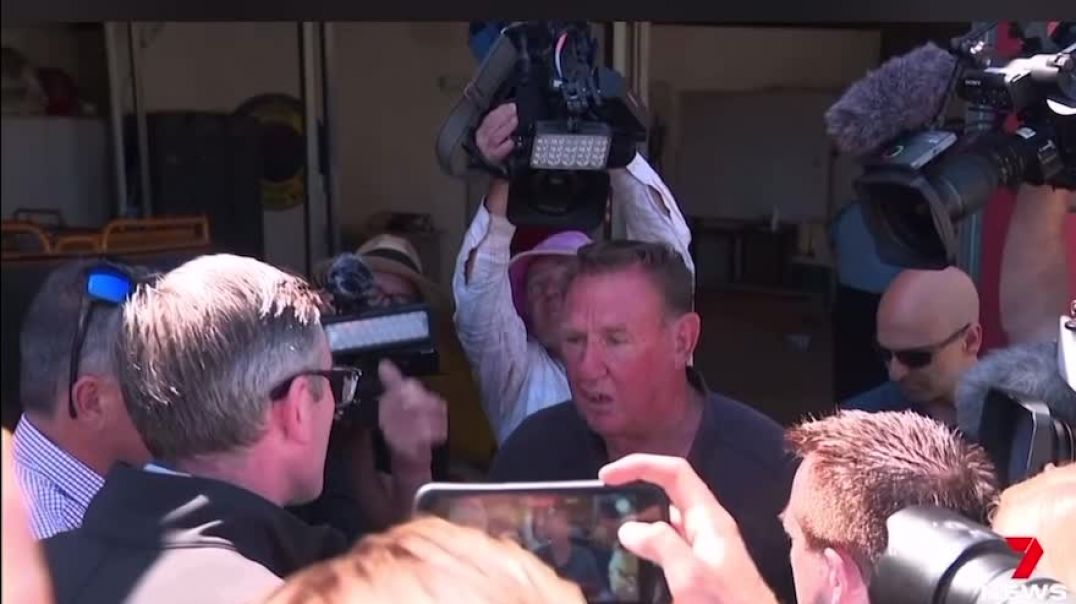
FORMER COP GRILLS PREMIER
Former police officer gives it to a pathetic and baffled NSW premier Perrottet 👮
Perrottet attempts the usual dribble and is promptly put in his place.
This grubberment HATES we the people.
The authorities are a basket case of ineptitude…
and when we showed up to fill the gaping holes in Lismore and SUPPORT EACH OTHER,
they froze my bank accounts,
NO CHARGES!
NONE!
and shut down my ability to help.
This community can be enormously proud that we funded two vessels for the farmers and families of Coraki so they won’t have to be abandoned again.
Good on the brave former copper for speaking up!
Good on him for reminding everyone that we have to stick together and that we cannot rely on this disgusting grubbement for ANYTHING!

“One of the first things that we will do with our new Republican majority is to end every last covid mandate. They’re still around, it’s hard to believe it and we will pass a bill making it illegal for any employer to interfere in personal health decisions or to fire employees simply for not having the vaccine.”
https://www.australiannational....review.com/state-of-

Remember when the silly conspiracy theorists said water was coming?
https://www.australiannational....review.com/state-of-

BLEXIT was LIVE in Greenville SC to an overflow crowd of enthusiastic Free Thinkers! Join the BLEXIT movement and break free! Visit BLEXIT.com

➖ARTICLES TO READ➖
https://threads.truthparadigm.news
➖VIDEO CREDITS➖
https://videocredits.truthparadigm.tv
➖
Proverbs 12:17: He God speaks truth declares righteousness,
But a false witness, deceit
➖
An artist we like Economy does custom, hand drawn designs on prints (and other items): https://linktr.ee/allinthedetailsart
🧿 RELAY BY 🧿
■ http://truthparadigm.news
■ https://shows.truthparadigm.tv
➖
💎TREASURE💎
■ https://tinyurl.com/IvermectinResources
■ https://cspoa.org
■ https://www.j6truth.org/
■ https://thepatriotlight.com/
■ https://www.devolution.link
■ https://covid19criticalcare.com
■ https://reawakeningseries.com
■ https://ministry.truthparadigm.tv
■ https://ministry.truthparadigm.news
■ http://truthparadigm.net
➖
#GrapheneOxideThread #GrapheneOxide #NanoTechThread #NanoTechnology #mRNA #Covid #Vaccines #QuantumDots #GreatReset #Truth #Freedom #Health #Bible #God #Treasuremap

Tecknat Barn Svenska:Kalle Stropp och Grodan Boll på svindlande äventyr (1991) DVDRIPPEN (Svenska) K
Tecknat Barn Svenska:Kalle Stropp och Grodan Boll på svindlande äventyr (1991) DVDRIPPEN (Svenska) Klipptrailer (4D)

Tecknat Barn Svenska:Aladdin (1992 Walt Disney Klassiker AB) DVDRIPPEN (Svenska) Filmtrailer (3D)
CNN Anchor Asks Dr Buttar “I’m Vaccinated. You Think There is a Ticking Time Bomb in Me and I’m Goin
CNN anchor asks Dr Buttar “I’m vaccinated. You think there is a ticking time bomb in me and I’m going to die?”
14 months later the CNN anchor dies.
You can’t make this up! Courtesy of
@IvoryHecker

Tecknat Barn Svenska:Flugsoppan (1999 Tecknade Film AB) DVDRIPPEN (Svenska) Hela Filmen

The most important detail in this audiobook document is that R.P. Barrett, a machinist employed in the metal room where Mary Phagan worked, found blood stains near the water cooler and a hand on a lathe several feet away. He said he had several strands of hair wrapped around him. A broom was also found nearby and was used to spread the liquid on the floor and hide the blood. This was based on the theory that Frank had lured a victim into his office to collect his paycheck into a metal room and murdered her for refusing to comply with her abuse. It was one of the state's most important statements regarding the murder. James Conley also testified that when Frank ordered the girl to be carried from the second floor to the basement, the girl's body was dropped and blood was found there.
The defense wanted to point out that the apparent trail did not begin at the elevator, but at the base of the ladder leading from the hole in the waterway on the ground floor, a few yards away. Sergeant Dobbs testified that signs of bodies being dragged started from the side of the elevator pit. Town detective J.N. Starnes, the official prosecutor in the case, testified many key facts about the city police investigation. Starnes testified Sunday morning that Frank was nervous and shivering. He also described bloodstains on the floor of the metal room and swore he found more bloodstains on nail heads 50 feet from the elevator.
Arguments erupted frequently in the early days of the case, and juries were acquitted. As evidence, Dorsey wanted to provide a drawing of a pencil factory with a dashed line marking the route Conley claimed to have taken the body from the metal room to the basement. Boots Rogers said that on the morning of April 27, Frank drove to his home with town detective John Black and was extremely nervous as he drove the detective to the scene. He said Frank was constantly rubbing his hands, walking around anxiously and asking abrupt questions. The state wanted to prove that Frank had avoided looking into the dead girl's face in the entertainment room.
Rogers testified that although the superintendent walked into the room where the body lay, he could not affirm with certainty that Frank had not seen the body. Other witnesses called by the state also corroborated Rogers' testimony, but Frank later denied them. On Sunday, April 27, Rogers' sister-in-law, Miss Grace Hicks, described a visit to the morgue the morning after the murder. She noted that the girls in the metal room frequently combed their hair on the machine, and that there was a gas jet a few yards from the lathe where Mr. Barrett said the hair was said to belong to Mary Phagan. Admitted to finding a bunch. She also testified that the paint was stored in an adjoining room, but she never saw the paint spill on the floor of the metal room.
Town detective John Black stood on the witness stand for several hours. Attorney Rosser subjected Black to one of the most brutal interrogations in the entire case. Black, Crovolated, Rogers, Starnes, and other witnesses testified that Frank was nervous the morning he was taken to the store and then to the factory. Mr Dorsey, through Mr Dorsey, drew attention to the discovery of the bloody club and the fact that alleged dirt on the floor near the hole leading to the basement had not been reported to the police by the Pinkerton Agency. Frank and others at the pencil factory also testified that they had withheld any information Conley could write from the police. During cross-examination, Rosser asked detectives about the bloody shirt found on Newt Lee.
Town detective John Black stood on the witness stand for several hours. Attorney Rosser subjected Black to one of the most brutal interrogations in the entire case. Black, Crovolated, Rogers, Starnes, and other witnesses testified that Frank was nervous the morning he was taken to the store and then to the factory. Mr Dorsey, through Mr Dorsey, drew attention to the discovery of the bloody club and the fact that alleged dirt on the floor near the hole leading to the basement had not been reported to the police by the Pinkerton Agency. Frank and others at the pencil factory also testified that they had withheld any information Conley could write from the police. During cross-examination, Rosser asked detectives about the bloody shirt found on Newt Lee.
The defense sought to file a statement regarding a shirt found in the bottom of a barrel at a black man's home. Dorsey said the state claimed the shirt was a plant and that Frank went to the night watchman's house the Sunday after the murder and hid the shirt. Pinkerton City Police Detective Harry Scott issued a statement on the morning of July 31 that he visited the factory on the Monday after the murders and was later shown around the factory by a man who helped take evidence. Told. Dorsey said the proposal was misunderstood by witnesses. Detective Scott sharply refuted the suggestion that he was guilty of custody. The state representative said he hadn't done so, but the detective claimed he had forgotten this detail. An important detail in the document is that Scott and Pierce went to the office of Frank's attorney, Herbert J. Haas, to hold a meeting about Pinkerton's position on the investigation. They were told that Frank had serious charges against them and would report him first before going to the police. There were some surprises on Thursday afternoon. Mel Stanford, a young factory worker, said he swept the floor of the metal room on the Friday before the murders and found no blood or Haskell lines on the floor.
City bacteriologist Claude Smith said he identified chips taken from the floor of the metal room and found blood cells in one of them. William A. Gesling, pajama embalmer Bloomfield, said that 12 to 15 hours had passed since her death when Mary Phagan retrieved her body from her hiding place in the basement of the pencil factory. Stated. The most important detail of this text is E. F. Holloway, the factory's day-time warden, was arrested and charged with testifying that he had left the switch box that controlled the elevator motor unlocked on the day of the murder.
This was in direct contradiction to the state's murder theory that Frank had called Conley to help dispose of the body and then entered the office and retrieved the key to the container before starting the machine. E.F. Holloway said he left the elevator locked when he got home, which contradicts the state's murder theory. The witness did not deny his affidavit, but he said he forgot to look at the bulletin board. On May 10, Pinkerton detective McWorth found blood, a baton, and several pieces of string, believed to have been used to strangle the girl.
Ms Arthur White, who commented on Friday, August 1, said she entered the building at 11 a.m. to meet her husband. At 9.30 a.m., after talking for a few minutes, he left the factory. She returned half an hour later and entered Frank's office, who leaned over the office safe. White then went to the fourth floor where her husband and Harry Denham worked, she testified.
An important detail in this document are the testimonies of the lady Ms. White, General Manager M.V. Darley, and Dr. H. F. Harris, Commissioner of State Board of Health. White explained that Frank's behavior was natural when he reached the fourth floor, and said he saw a black man lurking in the shadows of the first-floor hallway as he exited the building. General manager M.V. Darley admitted that Frank was nervous on Sunday morning, April 27. Doctor, and 45 minutes after she had lunch. Dr. H.F. Harris said the girl died 30 to 45 minutes after the noon meal.
Dr. Harris testified that she had been subjected to some form of violence, although she had not been subjected to any criminal assault prior to the girl's death. He said the victim's eyes were likely blackened from the blow before she died, and the scar on her head was undoubtedly unconscious, inflicted with a sharp instrument. said. Upon cross-examination, the defense admitted that Dr. After examining the body, Dr. Harris found evidence of an alleged assault. Hartz may have been shortly after his death. Albert McKnight, the husband of Minora McKnight and the Saleh family cook, said Saturday, April 26, that he was in the kitchen of the house while Frank entered the dining room and looked at himself in the mirror. for several minutes. His testimony was subsequently challenged by his wife, who on the stand rejected the sensational affidavit he had previously filed with the police.
Police Chief Beavers, Detective Wagoner and Constable Lasseter were also dispatched to CID on Saturday. The most important detail in the document is that the police chief said that several days after the murder, he searched around the pit leading to the basement and found the blood cords and clubs that Detective McWorth later found there. can not be displayed. Factory worker Helen Ferguson told jurors that she asked Frank to meet with him on Friday night and hand over Mary Phagan's pay envelope. The defense protested because Judge Roan had a newspaper on his desk with the big red headline "Add Links to the Chain." After five minutes of explanation, the lawyers returned to the courtroom and asked the jury for a pardon.
Rosser said the defense had no intention of seeking miscarriage of justice at this time. Dorsey asked jurors to caution against being influenced by what they have seen or may see in the future. Several other witnesses were called during the first week of the trial, but their testimony did not reveal anything that had not yet been revealed during the course of the investigation by police and private investigators.

Fake News at It Again With MonkeyPox
https://www.australiannational....review.com/health/fa
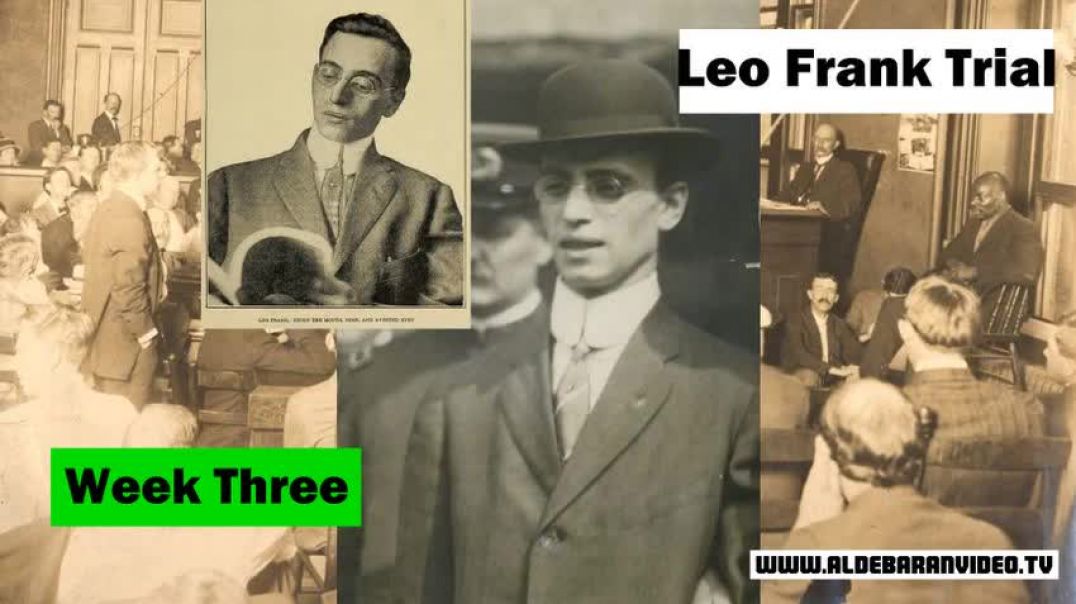
Leo Max Frank, the superintendent of the National Pencil Company, was accused of killing Mary Phagan, a 13-year-old laborer, by the prosecution. Many would contend that the renowned promoter and lawyer in the city, Thomas B. Felder. The defense team was strong, led by Ruben Arnold and Luther Rosser. Felder was secretly working for Frank and his associates as well. Few people anticipated that the defendant, Leo Frank, would soon take the stand and make an admission that was so unbelievable that it was difficult to believe as the defense began its parade of witnesses. Everyone in the audience, including the jury, was still thinking about Jim Conley's prosecution testimony.
Conley acknowledged assisting Frank in moving Mary Phagan's lifeless body from the metal room bathroom on the second floor of the pencil factory to a location in the basement, adding that Frank had asked him to return later and burn the body in exchange for a $200 payment that had been promised. Additionally, he described to a packed courtroom how he had created the "death notes" in the black dialect. The most significant information in this text is that W-W-W. Conley claimed that, at Frank's direction, Frank had acknowledged accidentally killing the girl by hitting her when she rejected his advances. Mary Phagan must have arrived after Montane Stower, not before her, according to Matthews, a motorman for the Georgia Railway and Electric Company who testified that she got off his car at 1210 and was sworn in on behalf of the defense.
To confirm timing, W.T. Hollis, a streetcar conductor, was called W-W-W Matthews. According to Matthews, Mary Phagan boarded his vehicle at Lindsay Street at 11:50 a.m., and their route from Bellwood to English Avenue was followed by Kennedy, Kennedy, and then Gray. To Gray and Jones Avenue and from Jones Avenue to Marietta, Broad Street to Marietta, then out. W-W-W. Matthews was supposed to show up at Marietta and Broad at twelve seven and a half, but they showed up on time and remained on schedule the entire day. Mary Phagan exited at Broad and Marietta; it takes two to three minutes to travel from Broad and Marietta to Broad and Hunter on this busy street. Another motorman took over as the driver at Broad and Marietta, but he remained in the same vehicle and sat down one seat behind Mary Phagan. Around 1210, they arrived at Broad and Hunter. The other young girl and Mary exited the vehicle and made their way to the sidewalk. They got off at Hunter and Broad, which is about a block and a half from the pencil factory. No one got on with Mary at Lindsay Street. The young girl sitting next to her caught the driver's attention for the first time as they were leaving Broad and Marietta streets. Returning to the vehicle, the driver discovered the same young child seated next to her. During the cross-examination, the driver failed to inform one of the detectives that they may have been three or four minutes early that day.
The same girl recognized at the morgue was Mary Phagan, according to the streetcar conductor. When Mary Phagan boarded at Lindsay Street around 11:50 a.m. on April 26, he was on the English Avenue line. He recognized her as the same girl he had seen at the morgue, and several blocks away from where she boarded the bus on English Avenue, he paid her fare. He had no memory of EPS getting into the car that morning. Several blocks away from where she boarded the W.T. Hollis streetcar, on English Avenue, a conductor, recognized Mary Phagan as the same girl he had seen at the morgue and collected her fare.
One of the most crucial information in this audiobook is that Mary Phagan was sitting by herself when she boarded the front end of the car, that Mr. Matthews would inform her that she was late for work today, and that occasionally she would enter the building and express her annoyance at being late. She arrived that morning, and when Mr. Matthews asked her if she was mad, she replied, "Yes, I'm late," and she laughed before getting in the car and sitting down. The other significant information in this text relates to the murder of Mary Phagan, a young girl who was on a car scheduled to arrive in town at seven seven. The text also mentions that Mr. Matthews would tell Mary when she boarded the vehicle, "You are late today," and that occasionally she would come in and comment that she was angry that she was late. Although it is against company policy to arrive early in the city, arriving late is not prohibited. Harry G. Leo Frank's immediate assistant superintendent, Schiff, testified that he had never seen women brought into the office and that Conley had never been seen keeping an eye on Frank.
He claimed that Helen Ferguson had been paid off by him, not Frank, on the Friday before the murder, and that Ferguson had not requested Mary Phagan's pay. This situation demonstrates how crucial accurate watches and clocks were in 1913 and 2013, as well as how accurate they were then. The most significant information in this text is that witnesses like public accountant Joel Hunter and C. backed up Leo Frank's claim that his own testimony was adequate defense. C.E.Pollard. The plant stenographer, Hattie Hall, confirmed that she had worked with Frank until around noon and had clock-out at 2:00. As a result, Jim Conley's testimony that they arrived at the factory at 1245 and that he had gone into Leo Frank's wardrobe to hide from them while they spoke to Frank was refuted by Emma Clark Freeman and Corinthia Hall, who both stated that they had arrived at the factory for a brief visit at 1145. If the women were telling the truth, it would seem that Conley was off by a few hours. The timing of their visit is not important in any way because even its complete absence would have allowed Frank and Conley to move Mary Phagan's body and write the death notes in a few more minutes. The most significant information in this text is that Jim Conley repeatedly changed his story and contradicted himself, and Miss Magnolia Kennedy disputed the assertion that Helen Ferguson had requested Mary's pay. She also stated that she had never seen blood on the floor there prior to the homicide and that the hair that was discovered on the lathe in the metal room matched Mary. In order to demonstrate that Jim Conley had altered his story and repeatedly contradicted himself, the defense also called in Pinkerton detective Harry Scott. Miss Magnolia Kennedy denied Helen Ferguson had requested Mary's pay, but she did concede that Mary's hair matched that found on the lathe in the metal room and that she hadn't noticed any blood on the floor there until after the murder.
The most crucial information in this passage is that Helen Ferguson and Mary were close friends and neighbors, and that Helen didn't ask Mr. Schiff for Mary's money while he was there paying off. Following the swearing-in, Wade Campbell was informed of his interactions on the day of the murder. His testimony about how happy and playful Frank was before noon casts doubt on the bloodspot evidence and Frank's interactions with Conley, contrary to the defense's hopes that he would do so. His testimony about how upbeat and playful Frank was before noon casts doubt on the evidence, contrary to what the defense hoped he would do. This raises questions about the bloodspot evidence and Frank's interactions with Conley.
On Monday, April 28, Wade Campbell, a worker at the Pencil factory, spoke with his sister, Mrs. Arthur White. When she entered the factory on Saturday at 12:00 a.m. and left at 12:30 p.m., she saw a black person sitting at the elevator shaft, she told him. Although she couldn't see anyone, she could hear low voices. On April 26, she arrived at the factory around 9:30 and found Mr. Frank in his exterior office. She had never seen Mr. Frank converse with Mary Phagan. She and Mr. Frank went to the fourth floor on Tuesday, the day after the murder, but she missed seeing the Negro Conly interact with him. When she entered the factory after hearing low voices, she saw the Negro, according to a cross examination. A second look revealed that she visited Mr. Dorsey's office and signed a document that was about 21 pages long. Jim Conley has been seen by the woman twice since the murder reading newspapers on the fourth floor. The most significant information in this text is that Leo Max Frank appeared carefree and jocular in the morning of April 26, 1913. At four o'clock in the afternoon, Newt Lee arrived, unaware that Mary Pagan had passed away and only concerned about a potential downpour.
Lemme Quinn, a factory worker, testified that he had visited the facility and seen Frank in his office around 12:20. However, he hadn't mentioned this visit to anyone until days later, and even Frank had forgotten about it until Quinn came forward. Quinn acknowledged having promised Frank he would bring up the visit if it would be helpful. Indirectly, he indirectly confirmed the time of Miss Halls' and Mrs. Freeman's visit to the factory. Leo Frank was not agitated or tense when he was seen by Harry Denham, who was working on the fourth floor of the pencil factory the day of the murder.The Franks' black cook, Manola McKnight, had earlier admitted in a statement that she had overheard a conversation between the Franks and their wife in which the Franks admitted to killing a girl earlier in the day. Police were alerted to her statement by her husband, but she later recanted it, claiming that her husband was lying and that the only reasons she had signed it were a fear of going to jail and the detective's "third degree" tactics. Several of Frank's friends and acquaintances were called by the defense to attest to his overall good character.
A number of prosecution witnesses testified that Frank had made inappropriate sexual advances toward girls and young women, which gave the prosecution the opportunity to address Frank's character. The jury was given the impression that the defense did not dare to cross-examine any of the young women who gave evidence by their decision to forego doing so. One of the character witnesses for the defense had a pleasant surprise in store: "Miss Irene Jackson, sworn for the defendant, worked at the pencil factory for three years. Mr. Frank's character, as far as I know, was excellent. The only thing the girls ever mentioned about him was that they appeared to be scared of him. He simply approached the door and pushed it open. On two or three occasions, I overheard comments about Mr. Frank using the restroom, but I don't recall anything about it.
My sister was lying down in the room when I learned about his second visit to the changing area. He simply entered, made a turn, and left". The fact that Mr. Frank entered Miss Mamie Kitchen while the narrator was inside and kept quiet is one of the most crucial details in this statement. He kept staring at the girls without ever entering the room but not from the inner office, where he could have seen the girls sign up. The claims that Frank was very direct with the girls who worked for him were supported by Miss Jackson's account. The fact that Mr. Frank never entered the room and simply observed the girls is one of the text's most crucial details. From the outside office, he could have observed the girls signing up, but not from the inside. The accounts of Frank being frank with the girls who worked for him were supported by Miss Jackson's account. The fact that Mr. Frank never entered the room and simply observed the girls is the most crucial information in this passage. Leo Max Frank, the defendant, took the stand on August 18, 1913, to address the jury in his own defense.
He selected the final option, making an untrue statement that could not be cross-examined. Frank made that decision and his top-notch legal team either concurred with it or accepted it weeks in advance, despite the near certainty that it would be viewed negatively by the jury. Frank's speech was a mind-numbing nearly four hours long, and an astounding three of those hours were devoted to recounting the minute particulars of his office work on the day of the murder, primarily his financial entries and accounting book calculations in excruciating detail.
Even though it was almost certain that such a decision would be viewed negatively by the jury, Frank made it anyway, and his top-notch legal team either supported him or agreed with him weeks in advance. Leo Frank had three and a half hours to complete his office work and was the last person who had seen Mary Phagan alive. He had three more hours starting at three thirty, according to both the defense and the prosecution and anywhere from 3:00 p.m. to 06:00 p.m. to perform the necessary work. The goal of Frank's lengthy speech was to persuade his audience that the six and a half hours he had allotted for his calculations would not be sufficient, and that he would also need the noon hour. Why, if this were the case, did he initially intend to depart at 4:00 p.m. with his brother-in-law, to watch a holiday baseball game?
The claim made by Leo Frank that he never knew Mary Pagan's name is absurd. For the entire 52 weeks that Mary Pagan worked for the National Pencil Company, Frank oversaw the payroll and entered the amounts in his accounting books each week. He also wrote Mary Phagan's initials, MP, next to her employee number and pay amount in these books each week. The entire 52 weeks that Mary Phagan worked for the National Pencil Company, he added his own handwritten initials, MP, next to her employee number and pay amount in these books. The factory's floor plans indicate that Mary Phagan worked in the middle room, and the only bathroom on the second floor, where Frank's office was, was in the metal room. In order to get to the restroom, Leo Frank, a frequent coffee user, had to walk directly past Mary Phagan's desk.
During the little over a year that Mary had worked for Frank, the employees put in at least 2860 hours working eleven-hour days, five days a week, and 52 weeks annually. Even if he only went to the restroom once every three hours, he would have passed Mary Phagan over 953 times in that time. Leo M. Frank mentioned quite a few female employees by name when asked by prosecutor Dorsey if he or she knew them or her by name. He also recommended that if he didn't know Mary in some way, J.M. Gantt would be unlikely to know that she was friendly.
In his unsworn statement, Frank continued, "The Author's Note: Mary Phagan left my office and apparently had made it as far as the door from my office leading to the outer office when she evidently stopped and asked me if the medal had arrived, and I told her no. Leo Frank had claimed that he overheard Mary talking to a different girl, a girl who had never shown up. No girl was found who had spoken to or met Mary Phagan at that time despite extensive research and interviews with everyone known to be in the area. The only other girl present, Monteen Stover, testified that she only saw an empty office. According to Frank's unsworn statement, Mary Phagan was fired because some ordered metal had not yet arrived at the factory. Mary Phagan had apparently worked in the metal department based on her question. Frank actually had the gall to imply that Mary Phagan had likely worked in the metal department based on her query. Everything Leo Frank said about the case is seriously called into question by his admission that he didn't know the dead girl by name or by sight.
When first questioned, Frank allegedly confessed to responding "I don't know," according to detectives. If it was I don't know, Leo Frank might have asked Mary Phagan to go with him to the Medal Room, where the prosecution, the police, and the detectives hired by the pencil company claimed the murder occurred. Leo Frank made the most shocking admission of all, or at least the most shocking admission he could make short of a detailed and humbling confession.
The most crucial information in this text is that Leo Frank attempted to lessen the impact of Monte Stover's testimony by speculating that he might have gone to the bathroom or been concealed behind the safe door when she entered. This defense was unconvincing because, even if Frank had been perfectly situated behind the door, a young woman looking for work would probably just glance around it. Additionally, Frank was speculating that he might have been using the restroom—the one in the metal room—when Monte Stover discovered his office vacant and the evidence points to Mary Phagan's murder occurring there very same moment. This was also surprising because only a few weeks prior, Frank had adamantly asserted to the coroner's jury that on the day of the murder, he had not used the restroom once all day. Leo Frank was charged with killing Mary Phagan in the metal room's bathroom.
He acknowledged that he might have visited the restroom the following Monday, when Mary Phagan-looking hair strands and a five-inch bloodstain were discovered. He also acknowledged that he might have gone to the restroom where Conley claimed to have discovered Mary Phagan's battered, strangled, and lifeless body. He also acknowledged that he may have dropped Mary Phagan's body in the hallway where another bloodstain was later discovered after wrapping it in a sack and preparing to carry it to the basement. Although the stain was thought to be very old by the defense, Frank acknowledged that he might have been present at the scene when Mary Phagan was killed. Leo Frank changed his mind because of the impending rain, and his wife was present to see him on April 29, the day he was taken into custody at police headquarters, are the two most crucial facts in this text. He asked Rabbi Marks for advice on whether it would be wise to let his wife visit him on the top floor where he was surrounded by police officers, reporters, and photographers.
Following her husband's arrest, Frank didn't see him for 13 days, which might have been a reaction to her outrage over what she believed to be his alleged infidelity.
Since there are no reports of her making an attempt to see Frank again during those initial days, Frank's claim that she had to be restrained from actually moving into his cell is too extreme to be believed. Despite later retracting her claim, Mrs. Manola McKnight had claimed that Leo Frank told his wife that he had killed a girl the night of the murder.
On his way home that evening, Leo Frank bought a box of candy to reassure his wife Lucille Selig of his love for her despite what he had done. Years later, it was discovered that she left clear instructions for her cremation and scattering of her ashes in a public park rather than being buried in Queens, New York, next to her husband. Frank continued by claiming Conley was never present at the factory or anywhere else on April 26, 1913, that he had no involvement in Mary Phagan's death, and that he had never seen him before. Leo Frank's admission of an "unconscious bathroom visit" was entirely ignored by The Atlanta Constitution and The Atlanta Georgian, which were adopting a pro-Frank editorial stance. It is unlikely that the words "call of nature" or "urinate" were deemed too shocking for the public to read about a brutal, strangulation murder since The Atlanta Journal did include the admission. The allegations that antisemitism was used as justification for Frank's prosecution and conviction will be examined in The Leo Frank Trial's upcoming episode.

Australian National Review Chief Editor, Property Millionaire, and Co Founder of 21st Century U Answ
Australian National Review Chief Editor, Property Millionaire, and Co-Founder of 21st Century U answers the question “What's going to happen to the Bitcoin price particularly with the US Government trying to destroy it“?
For further free valuable education and resources visit 21stcenturyu.com or support Independent Media at the Australian National Review anrnews.com

Changing World Order with Ray Dalio and Tony Robbins
Patrick Bet-David Interview: From $49k In Debt To $200M+ | Andrew Tate | God | Success