Top videos
CLASSIC CARTOONS
CLASSIC CARTOONS
CLASSIC CARTOONS
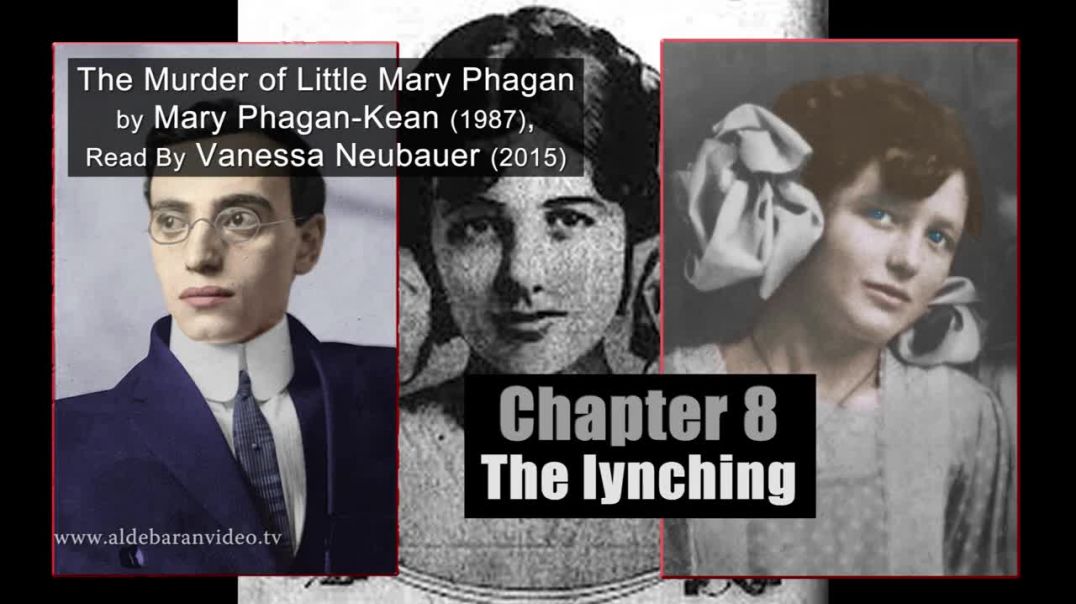
Leo Frank's move from Fulton Tower to Mirageville Prison Farm was done with utmost secrecy and efficiency. He went to work in the fields and his health improved. Mirage Building superintendent James T. Smith told reporters he could protect his prison from attacks. On the night of July 17, twice-convicted murderer William Crean cut Frank's throat with a butcher knife, nearly severing his carotid artery. Director Smith called J. W. Smith investigates the case. Physician Leo Frank, serving a life sentence in Mirageville, was there for two weeks until his death. His two letters to his mother and his brother (one to his mother and one to his brother) give an idea of his state of mind. Leo largely denies rumors that he is dead and alive. Simon Wolf has been very interested in Leo since he came here.
Leo is nearing his goal of good health and his wounds continue to heal rapidly. His appetite is still good and he steams apples for me. All that's left now is to get my strength back. He sits on his bed, but it will be a while before he can walk. An important detail in this text is the details of the incident that put the Order of Mary Phagan's plan to kidnap Frank on hold.
Tom Watson discussed the governor's pay cut order in Watson magazine, further fueling feelings about the order and against Slayton himself. Watson said that the arrogant governor of high society, gilded club life, and palatial surroundings proved to be lazy Pippin in the barrel of great honesty. The incident put on hold the well-conceived plan to kidnap Frank by the Knights of Mary Phagan. An important detail in the document is that Luther Rosser had been a partner of the Slayton Law Office since May 1913, and that the governor held a secret late-night meeting with Rosser before issuing the order. Late one night, Rosser drove down a side street, parked a block or two away from the governor's building, and walked down an alleyway.
He writes that Rosser went to Slayton's house and stayed there for hours until after midnight. According to Henry Borden, members of the public willingly acted as informants in the case. Operators, operators, elevator ladies, telegraph operators, and many others occupied the phones in Dorsey's home and office, and spoke few facts from work. One morning at 6:00 am: 12:00 a.m.: Dorsey spots the streetcar driver sitting on his doorstep and has all the information by the time Luther Rosser arrives at Governor Slayton's house the night before issuing the diversion order. rice field. Watson argued that Governor Slayton did not cross-examine Leo Frank or Jim Conley. Watson claimed there was unparalleled excrement in the elevator shaft, no bed mites in the pencil factory, no bed mites in the pencil factory, and hair on the second floor.
Barrett found her hair on the lathe handle early Monday morning and almost immediately attributed it to Mary Phagan because there was only one other girl with hair like Mary's Magnolia Kennedy. It turns out there is. Governor Slayton made it clear to the nation: Mr. Harris denied the merit of the state lawsuit. Ten days after Mary Phagan's death, her grave was opened and her hair removed from her head. Dr. Harris conducted a microscopic examination and found that the two specimens looked so similar that it was impossible to form a definite and definitive opinion as to whether they were taken from the same person's head. It turned out to be impossible. Mel Stanford, who worked for Frank for two years, testified that he cleaned the entire floor of the metal room on Friday, April 25.
He found a white hazelnut spot on the second floor near the dressing room that wasn't there on Friday. Deputy Commissioner and sworn attorney for the defendant, Herbert Schiff, testified that he saw the speck, as did other witnesses. Governor Slayton confirmed that the white substance Haskerin was found spread throughout the patch. Conley's Affidavit Conley was reluctant to betray his white superiors and denied any knowledge of his crimes. When he finally confessed, there was blood on Mary Phagan's panties and her vagina, suggesting some form of violence and sexual penetration prior to her death.
Governor Slayton claimed the bloodstains were due to a monthly illness. Annie Maud Carter's affidavit was rebutted, and both Conley and Carter swore that the letter had been tampered with and that the unprintable filth contained therein was a forgery. Philip Chambers and Herbert Schiff testified that the order forms were in the office next to Frank's and that the papers with the notes could be found throughout the factory. Monteen Stover's testimony indicates that Frank gave the exact time that the stenographer left at about 12:00 p.m.
00:00, or between 125:00 and 1210:00, or perhaps about 127:00, shortly after Mary Phagan arrived. Frank was unaware that Monteen Stover had entered his office, claiming he would be there at any moment.
Governor Slayton claimed that Frank must have been in the second office while Monteen Stover waited for him for five minutes, but she was looking for Frank in both the outside and inside offices, I swore the metal room door was closed. Where was Mary when Monteen was in the office from 12:05 to 12:00? Bloody fingerprints on the door. Why didn't Frank's attorney ask Jim Conley, the state's star witness, for fingerprinting? Judge Roan's statement that Judge Roan requested a reduced sentence.
Judge Roan's enthusiastic take on the facts and speculation of the case fueled fear, prejudice, and anger among the people of Atlanta, especially the working class, who were deeply affected by the tragedy of Mary Phagan's death. Watson's enthusiastic views of the facts and speculations about the case fueled fear, prejudice, and anger among the people of Atlanta, especially the working class, who were deeply affected by the tragedy of Mary Phagan's death. A group of about twenty men from the Order of Mary Phagan was selected to resume the mission to kidnap Leo Frank. Each was a husband and father, a wage earner and a churchgoer, all with well-known names from Cobb County. The mission was set up like a military operation, with a skilled electrician cutting prison wires, an auto mechanic keeping cars running, a locksmith, a switchboard operator, a paramedic, an executioner, and a common preacher. board. The route the hijackers would take was driven, measured and timed. The Lynch party left Marietta on August 16, 1915, arriving at the prison just before midnight. They cut the phone line and split into four groups. One group went to the garage and drained gas from all the cars, another went to Superintendent Burke's house and handcuffed him. A fourth group rushed to Frank's cell, woke him up, handcuffed his hands behind his back and took him to the back seat of the prison car. The kidnappers had the prison blueprints, cell locations, security posts, telephones and power lines. No effort was made to resist the group that kidnapped Frank. But his next two incidents occurred.
The man entrusted with guarding the Overseer was left behind, and the long-distance line to Augusta was not cut. The convoy returned to Marietta after a seven-hour, 150-mile journey along Roswell Road. One had to be abandoned due to a puncture on the way, but the rest were repaired. The original plan was to hang Frank from a tree in the Marietta City Cemetery or Marietta Square, but as night fell they headed for a more remote part of town. Frank demanded that the gold wedding ring be removed and returned to his widow, but they prepared to hang him. A brown khaki cloth was wrapped around Frank's waist, and a white handkerchief was pinned over his eyes. He was placed on a table and a 3/4 inch long rope was draped over the branch and around his neck. The impact of falling from the makeshift gallows opened his neck wound. Rumors quickly spread that on August 17, 1915, that Leo Frank had been hanged, dozens of people rushed to the place of execution on foot, on bicycles, on horseback, and in the few vehicles that were available at the time.
The most important details in this text are the events leading up to the lynching of Leo Frank. One of the first to arrive was a prominent young Mariettan who had been rejected as a lyncher due to his high temper and drinking habits. People with cameras snapped his picture as his body swayed in the breeze, and picture postcards of the lynching were sold for years as souvenir items in Georgia stores. When Frank's body was cut down, a citizen tried to grind his shoe into Frank's face. Newt A. Morris, a former judge of the Blue Ridge Circuit, stepped forward to stop him and to quiet the crowd.
John Wood, a Canton attorney, helped Morris load the body into a basket and place it in a WJ black funeral home wagon that hauled it to the National Cemetery gate, where it was placed in Woods car and rushed to Atlanta. A crowd gathered around the funeral home demanding to view the dead man's body, and police persuaded Mrs. Frank to consent. The crowds were allowed to view the body later. Leo Frank's body The Latin phrase "symphare edom" is carved on Leo Frank's tombstone. Ex Governor Slayton and Mayor Woodward of Atlanta were in San Francisco on the day of the lynching.
Ex Governor Slayton declared he preferred to have Frank lynched by a mob rather than by judicial mistake. Mayor Woodward declared that Frank had suffered a just penalty for an unspeakable crime. A Cobb County coroner's jury heard witnesses and ruled that Frank was hanged by persons unknown. Tom Watson sent a telegram to Mary Edden Robert E. Lee Hole, who applauded the hanging in putting the sodomite murderer to death. The vigilance committee has done what the sheriff would have done if Slayton had not been of the same mold as Benedict Arnold.
Georgia is not for sale to rich criminals in the Jeffersonian, he raged, and the priest wants the illiterate papal slave of Italy, Poland and Hungary. The capitalist wants cheap labor and the Jew wants refuge from race hatred. The south has not yet been deluged by the foreign flood, but native stock predominates and the old ideals persist. Employers of young girls may assume that they buy the girl when they hire her, but this can lead to trouble if they act as though they have a right to carnally use the persons of the girls who work for them. This was the mistake made by Leo Frank, and it cost him his life.
Jews throughout the Union made Frank's case a race issue in total contemptuous and aggressive disregard of the question of guilt. They arrogantly asserted that he had not had a fair trial without ever offering a scintilla of evidence to prove it. They tried to run over and quote the people and the courts of Georgia and we wouldn't let them do it. Leo Frank's wedding ring was delivered to OB Keeler, Marietta reporter for the Atlanta Georgian, at his Marietta home the following evening. On Thursday, August 19, Keeler's account of the incident was published in the Atlanta Georgian.
The banner headline read "Frank's wedding ring returned" and a two column, three line readout said "dying wish of mob's victim carried out by unknown messenger". The story was in twelve point type and occupied the two right hand columns of page one and continued on page two. Keeler's first person account read quote "old books say if you put beneath your pillow an object that has been associated with tragedy or any scene of great stress and profound emotional excitement, if such an object be placed near you while you sleep, you will dream the thing that gave the object its most terrible significance."
An important detail in this document is that on April 26, 1913, Leo M. Frank wore his wedding ring at the National Pencil Factory and during his dreadful voyage to sinking at Eichenhain, outside Marietta. . Mr. Keeler, who covered every session of the Atlanta Georgian man's trial, said several times during the trial and during Frank's nearly two years of service at the Fulton County Tower that the ring was on Frank's finger. I told you what I saw. Mr. Keeler told how the ring came to be obtained. He was in the vestibule of a small house at 303 Polk Street, Marietta, and had just begun a selection of Victorara, which his two very young members of the family passionately love. The band reached its climax when they heard footsteps and knocks on the porch in front of the open door.
He spoke clearly and clearly and handed me the envelope. He turned and went down the stairs and left in the darkness. Keeler opened an envelope containing a wedding ring and a typed note from his wife, Mrs. Leo M. Frank. The next day, Ms. Keeler gave her ring to Mrs. Frank in Atlanta. Mrs. Frank accused Keeler of being one of the group of men who had her husband hanged. Mr. Keeler received the trust with mixed feelings, but he knew how badly the in-state press was saying, and he had an idea of what the out-of-state press would say. When the rain came, a young woman from Kansas City, Missouri came north to read an article about the Frank case in the Kansas City newspaper. She made every effort to prove Frank's innocence. Her experience of getting her ring shortly after the tragedy of the previous day had a huge impact on her. She searched for an unbiased point of view and found an intellectual point of view. She read about the upcoming lynching against Frank on the train from Nashville and wondered what she was getting into. She arrived in this town exactly twelve hours after her execution, and she found it the quietest, most peaceful little place she had ever visited. She met more friendly and helpful people than at this afternoon's party. The most important detail in this document is that Keeler has lived in Marietta for her 25 years, and that she learned what happened to Leo M. Frank in that oak grove on the morning of August 17th. It means that He also knows what people in Marietta did for him and his family when he nearly died of pneumonia last spring.
Regarding this event, Mr. Keeler's son, George Keeler, told the speaker that his father, the late OB Keeler, was on the staff of the Atlanta Georgian in 1913, where he covered every session of the Frank trial. He said he was. George Keeler said he had no doubts about Frank's guilt.
An important detail in the audio recording is that the defense did everything it could to pin the blame on black janitor Jim Conley, and that Frank had the best attorney in the state. Two years later, this Georgian called his father that a group of men were heading to Mirageville State Penitentiary to arrest Frank, take him to Marietta, and hang him on Mary Phagan's grave. The following evening, a stranger showed up at the Keeler home in Polk Street, presenting his father with an envelope containing a typed note and a wedding ring. The father gave the ring to Mrs. Frank, and how it came to her and what she did with it was published on the front page of the Georgian newspaper, written in an article that day under the eight column headline.
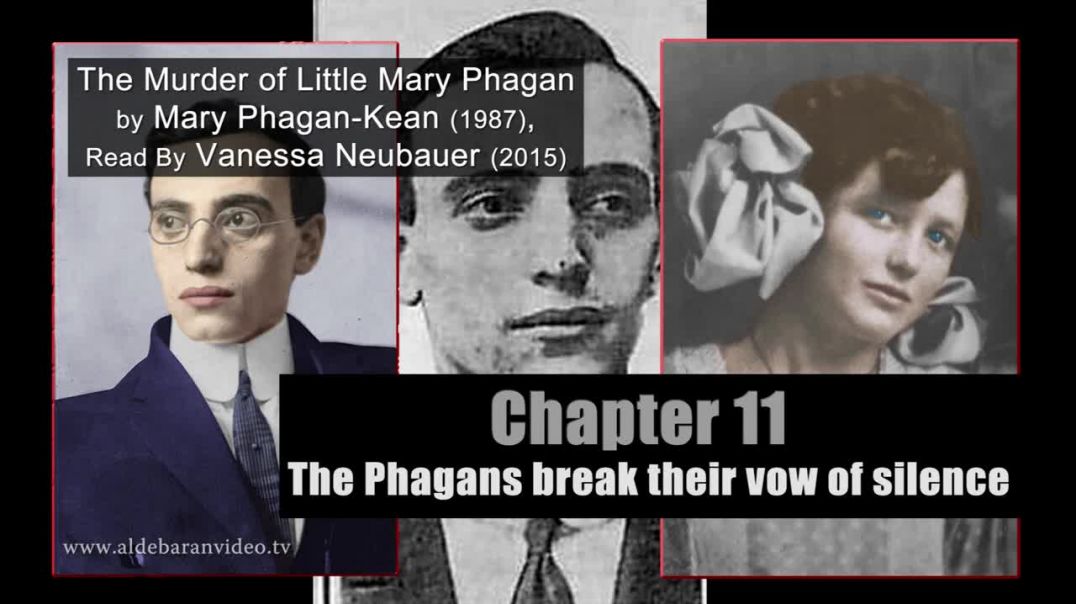
The narrator was nervous and excited as he waited for the Tennessee staff to arrive. They discussed the Mary Phagan Leo Frank case and how the evidence came to light. One of the reporters, Jerry Thompson, explained that he worked undercover with the KKK for over a year and crafted a story about the current KKK. When they found out he was a reporter, they hired security guards to protect him and his home. Alonzo Mann's nephew, Bob Mann, told Jerry that his uncle had witnessed a murder in Atlanta in 1913, but gave no further details. Intrigued, Jerry consulted a publisher, who agreed to publish a series of stories about the sentencing of innocent people. At the time, the series was considered low profile, but Jerry had never heard of Mary Phagan or Leo Frank. Jerry met a rabbi who mentioned Leo Frank and the story took precedence. Alonzo Man liked Leo Frank and was relieved by Frank's commutation. Newspaper staff invited the author to a press conference on April 1 at the Jewish Community Center in Atlanta. The authors agreed but requested anonymity. The room was a typical conference area, filled with reporters who were either invited to be present or interested in the case. The state of Tennessee and its officials were skeptical that the author would make any statements and had no idea what he was going to present to the Jewish community, so they agreed that anonymity was best. As they entered the room, the Tennessee staff asked the author to sit next to them. Tennessee reporters Jerry Thompson and Robert Sherborne introduced the Jewish community to a review of the evidence of Leo Frank's innocence. Most of the questions concerned the effect of Alonzo Mann's affidavit as the missing evidence conclusively proving Leo Frank's innocence. One of the questions concerned the Phagan family, and Jerry Thompson said that some members of the Phagan family continued to believe in the guilt of convicted Leo Frank, while others tried to be objective. Stated. The author tried to be objective, but found it difficult to do so because of the emotion involved. The meeting was called off on the grounds that Leo Frank's posthumous pardon would likely cause problems for the gubernatorial election. The speaker acknowledged that Jerry Thompson and Robert Sherborne, in presenting evidence to the Jewish community, concluded that Alonzo Mann's conclusions were true and could not be so objective. rice field. The speaker's grandfather and father kept telling the story of young Mary Phagan, and always told of Leo Frank's conviction for murdering her. How could the speaker reconcile her two opinions?On April 4, just three days after the press conference, her youngest brother Michael died. The speaker was the oldest and he was the youngest, but they both respected each other more than he thought.
Michael went through many difficult times in his life, but his family supported him. His death devastated his family, but they never stopped loving him. Michael was buried next to his grandfather and the family laid flowers at each grave. An article appeared in the East Cobb Neighbor newspaper near Marietta on April 6. Jewish leaders are seeking ways to secure the posthumous innocence of Leo Frank, a fin-de-siècle Atlanta businessman who was convicted and lynched in the murder of Marietta. Witnesses in the case now say Frank killed. don't commit. One of the three journalists who covered the apparent new developments in the 69-year-old's case said he was willing to help clear Frank's name. Tennessee revealed in a copyright filing released last month that 82-year-old Bristol, Virginia resident Alonzo Mann said Frank's employees actually killed 14-year-old Mary Phagan. made it The April 1913 murder of a young girl at the National Pencil Company in Atlanta started her one of the most sensational legal episodes of the century. A key detail in this text is the twist in the Frank case that has once again thrown the Atlanta community into turmoil. Sherry Frank, who is independent of Leo Frank, the regional director of the American Jewish Commission, said Jewish leaders want Frank's possible innocence to be an issue in this year's gubernatorial election. said there is.
Gerald Cohen, vice president of the Atlanta Jewish Federation, said the new twist in the Frank case has set the Atlanta community back on its heels. Sherry Frank, no relation to Leo Frank, area director of the American Jewish Committee, said Jewish leaders would like to make a possible exoneration of Frank an issue in the gubernatorial race this year. Gerald Cohen, vice president of the Atlanta Jewish Federation, said the new twist in the Frank case has set the Atlanta community back on its heels. Sherry Frank, no relation to Leo Frank, area director of the American Jewish Committee, said Jewish leaders would like to make a possible exoneration of Frank an issue in the gubernatorial race this year. Gerald Cohen, vice president of the Atlanta Jewish Federation, said the new twist in the Frank case The most important details in this text are that the speaker witnessed two conflicting cultures in the Jewish Community Center in Atlanta: a mass of people convinced that one of their brothers was brutally and unjustly lynched, and a small woman who bears not only the name but also the face and figure of an aunt that she will never know. The speaker also felt her devotion to her family and heritage, which would always carry the burden of the senseless slaughter of a beautiful girl. The speaker also met with Mr. Siegon Thaler, who expressed concern and curiosity about the speaker's response to the recurrence of the Phagan-Frank affair. He promised that if the chair decided to issue a public statement on the matter, he would respond immediately around the world. An important detail of this text is that Tennessee reprints the narrator's or father's statements, such as Frank's belief in guilt or innocence and his reaction to new evidence in Alonzo Mann's testimony. The narrator is surprised when John makes a final suggestion that breaks the cardinal rules of journalism.
The narrator was convinced he had a new friend in Nashville who wanted to feel this story in his heart. The narrator felt sorry for the narrator and knew not to ask anything that would make them uncomfortable. This letter also made the narrator see something else in himself.
Mary Phagan was fighting her legacy at the Atlanta Jewish Community Center when she read and reread her brother's letter. She wrote Sandra to tell her of her brother's death and reiterated that she would not make a public statement concerning Alonzo Mann's affidavit at that time. Sandra responded with a warm and sympathetic letter. Sherry Condor, a librarian at Georgia State Library and Archives, did her master's thesis on Governor Sleighton and knows a lot about the case. Mary apologized for Michael's death and asked if and when she decides to say something, please let the Tennessean have a little warning.
While reading through the newspaper articles she'd collected, she came across the name Mike Wing, a member of the Georgia State Board of Pardons and Paroles. Mike Wing was shocked to learn that there were surviving close family members of Mary Phagan, and that the family was anxious to be notified of any information brought before the media. He asked to be informed if an application for a posthumous pardon for Leo Frank was received, as it would ensure that if the story broke, he was responsive during the conversation. He was curious about the fact that the Phagan family had never publicly acknowledged themselves, and explained that the murder had been a deeply traumatic event whose reverberations still felt. He said he felt certain an application would be filed.
He took Mary Phagan's address and phone number and those of her father's. The most important details in this text are that the narrator had called Mike Wing and felt confident that if he did indeed receive a posthumous pardon application for Frank, he would inform them. However, the narrator's brother's death continued to cloud their life and they began to ask themselves questions about why he died and what the true value and purpose of their life was. In August, the narrator was the matron of honor and Amy's wedding. Amy and the narrator had remained close friends after the narrator left Florida, and Amy was there for the narrator when Michael died. The wedding was a beautiful Jewish ceremony, and the narrator learned many new things. The love and happiness shared was a healing force for the narrator.
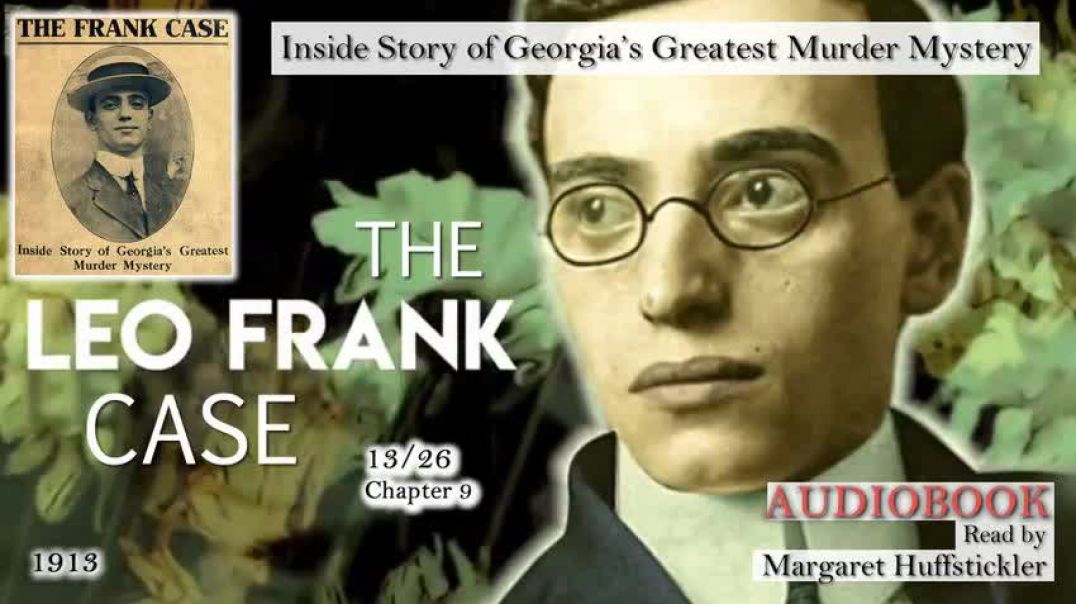
The words persecution and prejudice characterized Frank's trial. It is revealed that Attorney General Hugh M. Dorsey hired a private investigator to independently investigate the tragedy and was convinced Frank was guilty. The town detectives and friends of the defendant were also convinced of Frank's innocence. Town detectives are adamant that Frank is the culprit, but he said he was open to a conviction and would follow through on any leads. Rumor has it that a girl overheard them talking on a street corner and said that they had met Mary and had been waiting outside the factory while she went to pick up her salary from Frank.
Investigators eventually located the woman in question and found she had been to the factory the Saturday before the tragedy involving the girl, where she died a week later. Colonel Thomas née Felder, a prominent Atlanta attorney, was hired by residents of Bellwood, Georgia to find and prosecute a girl murderer. He said the killer was Leo M. But Frank said to the Georgians they need to hire detectives who can solve the mystery and secure enough evidence to convict Frank if he is guilty, convict another man if Frank is innocent. said there was a need. Felder was a personal friend of William J. Burns and intended to get Burns to come to Atlanta and join the search for Factory Girl Slayer if the public donated to the fund.
Subscribers quickly grew, and Special Counsel C.W. Toby has come to Atlanta to clear a dead end and smooth his way to a famous boss. Shortly after his arrival, Toby gave an interview, stating that his theory of crime was exactly the same as the theory held by the town detectives at the time. For about a week, Felder and the Burns family were prime candidates for the investigation.
A New Yorker at the time, Flack frequently claimed, whether guilty or innocent, that a large corruption fund had been set up to save Frank. It has also been suggested that Felder and the Burns family were actually hired by Frank's friends to protect him. The suspicions of the town's detectives culminated in a dictation by the investigator and Chief of Rumford's clerk to Colonel Felder. On May 23rd, the Atlanta Journal sensationalized the famous dictator and devoted an entire front page to this scoop. Secretary Ranford accused Colonel Felder of bribing CG.
Organists are alleged to have stolen certain affidavits and documents in the Phagan case in February. Dictatorship records show Felder was negotiating the purchase of certain affidavits that were to be submitted to the city's Criminal Investigation Department, alleging that the boss and some of his members had engaged in corruption as proved. The Felder and Ranford Controversy was between the two main characters of Phagan's crime novels, Felder and Ranford. The exposure of the dictator caused a violent altercation between Felder and Ranford, but the sheriff's deputies prevented the actual altercation. A grand jury investigation into the high-profile dictator case, in which Felder was indicted for defaming Ranford, who was also charged with publicly attacking Felder, raised public awareness of the crime. , Rumors of an invisible hand at work spread further and are difficult to dispel. A war of words reached a climax, and the town detectives followed the Burnsmen's meal.
On Friday, May 23, a Fulton County grand jury considered a bill to indict Frank for murder. The witnesses heard on the first day of the session were Dr. J. W. Hart, LS. Dobbs, Sergeant P. Barrett, Detective J.N. Starnes and W. W. Rogers. Despite hundreds declaring that Frank would never be found guilty, the actual bill was introduced during the second day of deliberations. Key witnesses from the second session included Harry Scott, the Pinkerton family, and Miss Montene Stover. The girl told the grand jury that when she went to pick up her paycheck on Saturday, April 26, she entered Superintendent Frank's office at exactly 12:00 pm. At 10pm she waited for 5 minutes without seeing Frank or office staff.
Shortly after she discovered Montine Stover, Harry Scott of the Pinkertons and John Black of the City Police visited Frank in the Tower, and she left her office between noon and 12:50 p.m. I asked if it came out. Frank The girl's testimony, which came in just as the state claimed Frank had returned to her metal room and strangled Mary Phagan's body, was considered very important by the attorney. Monte Stover's story was considered conclusive, speaking of Frank's repeated allegations that Scott followed her to her witness stand and did not leave her office within her stipulated period. When the grand jury remanded her truthful account. Five Jews participated in the grand jury, an unusual number for Fulton County, and there were many rumors that the indictment would be blocked before the indictment was returned. But even if one vote was cast against the bill, that fact would not be made public because each lawmaker would sign the indictment.

How to make money with AI

7 Untapped AI Businesses To Start Right Now

The_10_best_ways_to_profit_from_AI_right_now
Kennedy: "YouTube Deplatformed Me... I Was Shut Down"

SUNRISE
Giovanni Allevi
Tucker’s trailer for his documentary ‘Let Tem Eat Bugs
Australian National Review
http://Anrnews.com

What about taxes if i invest in Bali? - Part 1



Vivek Ramaswamy: “I will, as a Republican Candidate, voluntarily remove myself from any GOP Primary ballot, where any of my competitors, Donald Trump included, is forcibly removed through this unconstitutional maneuver.”
Ukrainian Ministry of Defense Just Announced they Bought Uniforms for Women - TikTok is Already Full
Ukrainian Ministry of Defense Just Announced they Bought Uniforms for Women - TikTok is Already Full of Advertising How "Cool" It is to be a Soldier.

For those who aren’t aware you can purchase real estate with Truthcoin
Less then 100 crypto currencies have enough intrinsic value to be accepted to acquire real estate.
Truthcoin has real value as you can acquire real assets with it and many are.
In fact someone recently purchased a Penthouse with Truthcoin.
Turning crypto into a cashflow asset.
Truthcoin.social
To learn more about what properties developers accept for Truthcoin or other cryptos access a Free Report and info at
https://property.21cuniversity.....com/optin1692252625

At Luxury Property Care, we do more than just manage real estate. Luxury Property Care, is a joint endeavor founded by Sivan Gerges and Liran Koren that brings several different business entities owned by each into the ultimate property management concierge service. We are here to consolidate all the separate property care service that investors need into one all-inclusive package so we can deliver next-level profits and peace of mind to our clients. With all these resources under one roof, we offer unparalleled service at unbeatable prices to satisfy every property owner’s and investor’s wildest dreams..
For Quick Support:
Web: https://luxurypropertycare.com
Email: outreach@luxurypropertycare.com
Phone: (561) 944-2992
Address: 950 Peninsula Corp Circle, Boca Raton, Florida 33487, United States

Before his death in 2022 Zhirinovsky predicted that "there would be no US elections in 2024 because America would cease to exist in 2024".
PS. Zhirinovsky was right about everything else so far. Hundreds of his predictions have been fulfilled over the years.