أهم مقاطع الفيديو

Trump Wants MBS to Serve on the Board of Peace for Gaza
‘UN Security Council formally adopted my peace plan and endorsed the Board of Peace’.
‘It’ll cover Gaza and large portions of the world, and I was honored to be chosen as chair’.
Source: https://t.me/rtnews/121511

OUR DAILY OLDIES

CLASSIC CARTOONS

OUR DAILY OLDIES: (INTERNATIONAL EDITION) RARE VERSION OF THE ROLLING STONES' "IT'S ONLY ROCK AND ROLL BUT I LIKE IT", IN SPANISH (LIVE).
OUR DAILY OLDIES

OUR DAILY OLDIES

OUR DAILY OLDIES

CLASSIC CARTOONS

The United Kingdom's Secretary of Defense, John Healy, announces NATO's commitment to donate new military aid worth 35 billion dollars to Ukraine.
They just want to keep the money laundering operation going on forever…
Source: https://t.me/LauraAbolichannel/81252

OUR DAILY OLDIES

CLASSIC CARTOONS

OUR DAILY OLDIES - MEMORIES FROM THE VIET NAM ERA.

CLASSIC CARTOONS
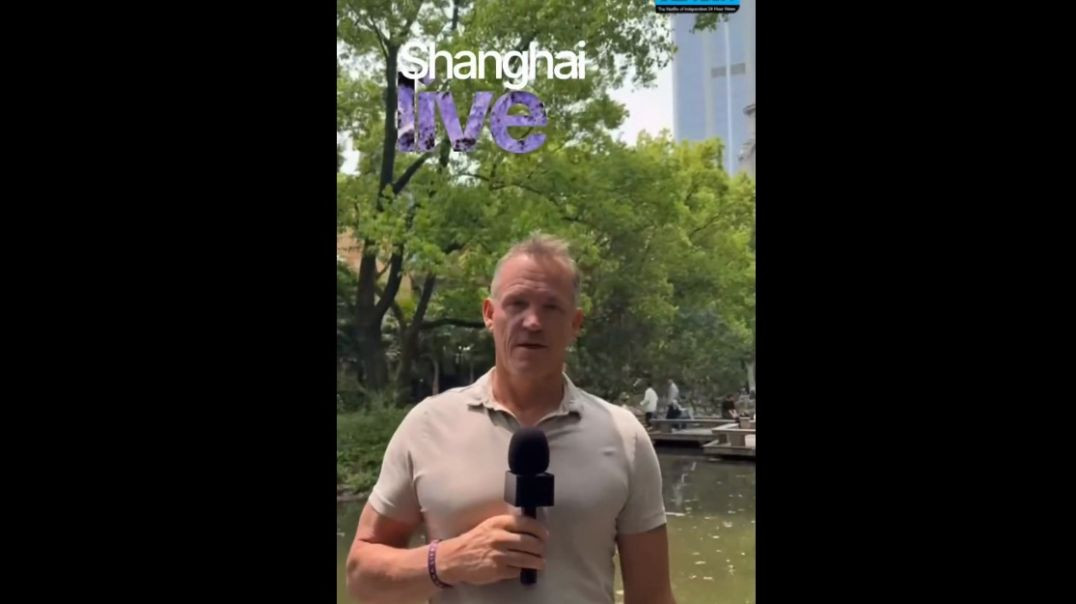
Is the Western narrative about China’s surveillance state just a wall of propaganda?
In a city of 25 million like Shanghai, the view on CCTV and monitoring looks very different from the inside.
While Western media often paints Chinese surveillance as nefarious, the local perspective focuses on the creation of an orderly society and the elimination of crime.
China has achieved historic success in moving from a third-world nation to an emerging first-world power by pulling millions out of poverty, supported by a culture that values following rules for the greater
good.
Much of the fear surrounding platforms like TikTok is arguably a distraction from the globalist agendas and digital ID tracking being pushed in the West.
To understand the modern world, we must look past the propaganda and recognize that what the West calls "spying" is often a system designed to reduce corruption and improve the betterment of society.
Perspective matters when navigating the truth about global powers.
Source: https://x.com/jamiemcintyre21/....status/2052692788513
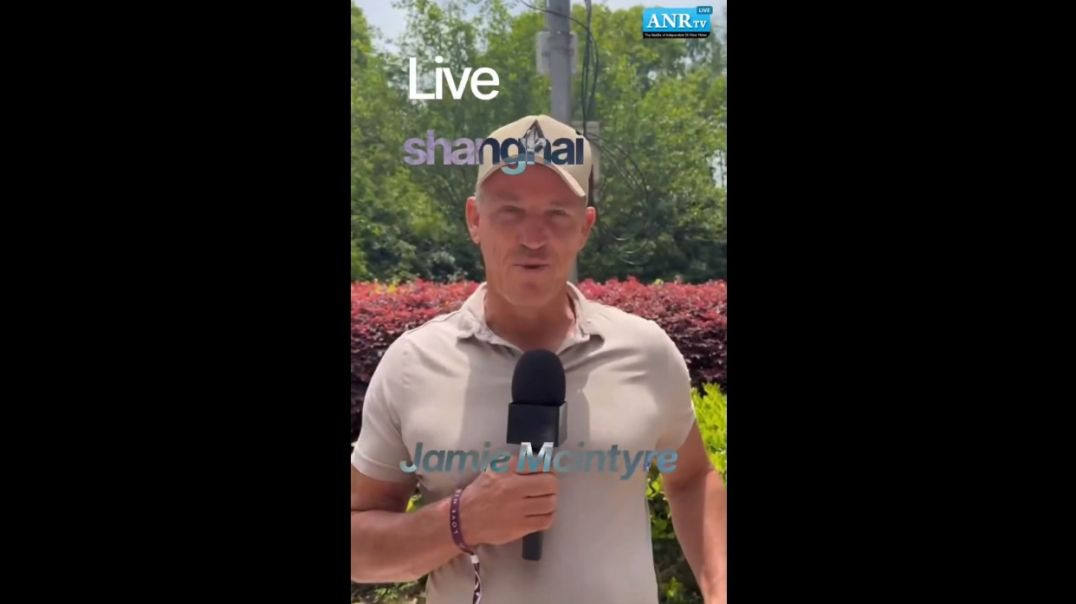
Why does china has entire "ghost cities" and people advertising themselves for dates in public parks?
it’s all connected by a wild obsession with social status.
1. the dating market: in shanghai parks, people post signs with phone numbers and family backgrounds to find partners because the shortage of women makes competition fierce.
2. property = love: owning at least two properties is a massive social status symbol; a man’s chances of finding a wife are much higher if he's a multi-property owner.
3. the "free" apartment trap: many ghost cities (like forest city) exist because developers gave away free secondary apartments to mainland buyers to drive sales.
While many of these developments remain 90% empty, some—like shanghai’s iconic new bund area—prove that even "ghost cities" can eventually transform into successful, bustling hubs.
Source: https://x.com/jamiemcintyre21/....status/2052692386304

CLASSIC CARTOONS
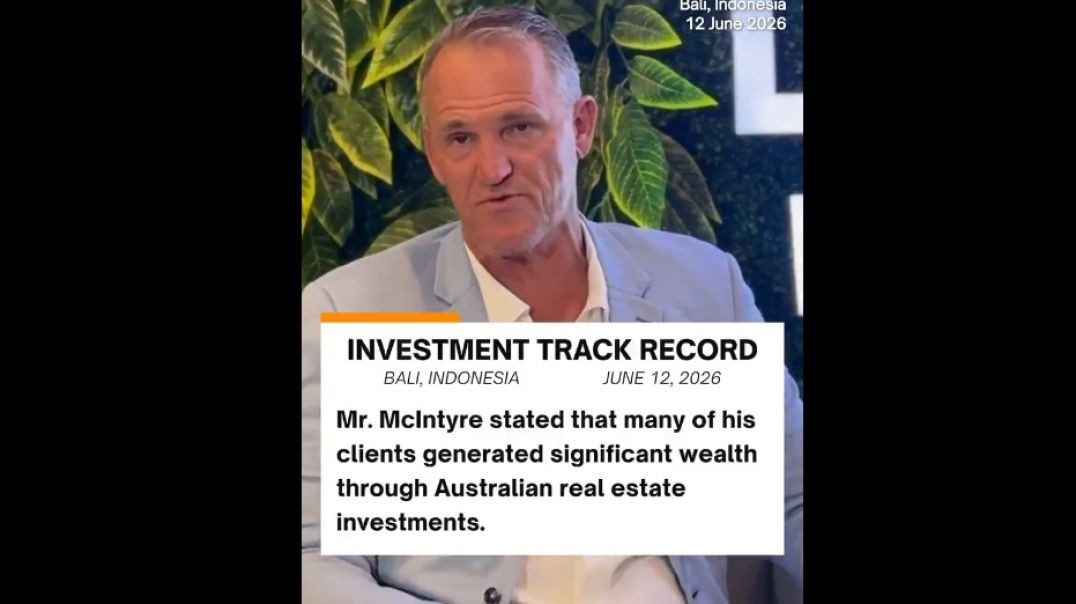
Jamie McIntyre Defends Investment Record and Criticizes Media Coverage
BALI, INDONESIA — LUX Property Group founder Jamie McIntyre has defended his long-term investment track record, arguing that many investors who followed his advice over the years achieved
substantial financial gains through real estate, precious metals, and cryptocurrency investments.
According to Mr. McIntyre, a significant number of his clients built wealth through Australian property investments during periods of strong market growth. He maintains that his investment
recommendations have consistently focused on identifying undervalued opportunities before they gained mainstream attention.
Mr. McIntyre pointed to his early support of Bitcoin as one example. He stated that he began promoting the cryptocurrency more than a decade ago when Bitcoin was trading at approximately US$75. He
also claims to have organized one of Australia's earliest Bitcoin conferences and to have been involved in launching the country's first Bitcoin ATM company.
Beyond cryptocurrency, Mr. McIntyre said he encouraged investors to consider assets including gold, silver, U.S. real estate, and Bitcoin during periods when he believed they offered exceptional long-term
value. According to him, many investors who adopted those strategies generated significant returns over time.
Mr. McIntyre also criticized sections of the Australian media, accusing some outlets of publishing what he describes as misleading reports regarding his business activities and investment history. He argues
that the coverage creates an inaccurate impression that investors associated with his projects suffered widespread losses.
In addition, Mr. McIntyre referred to a long-running dispute involving the Australian Securities and Investments Commission (ASIC). He alleges that actions taken against him more than a decade ago
resulted in substantial personal financial losses and continue to influence public perceptions today.
Despite ongoing criticism, Mr. McIntyre maintains that his investment record should be assessed on the outcomes achieved by investors who followed his recommendations over many years. He argues that
the performance of assets such as Australian real estate, gold, silver, and Bitcoin demonstrates the value of the investment strategies he has advocated throughout his career.
Source: https://x.com/jamiemcintyre21/....status/2067115161094
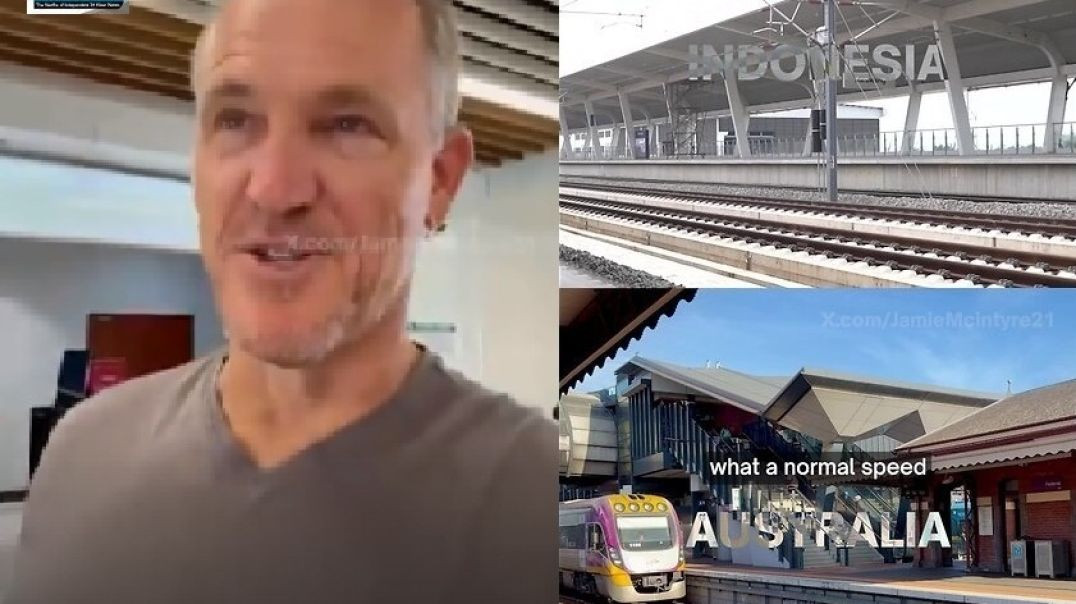
Why Does Indonesia Have a 350 km/h Fast Train While Australia Still Struggles With Average-Speed Rai
Why Does Indonesia Have a 350 km/h Fast Train While Australia Still Struggles With Average-Speed Rail?
One of the biggest surprises of my recent visit to Indonesia wasn’t the new capital city of Nusantara or Jakarta’s relentless pace. It was boarding the Whoosh high-speed train between Jakarta and Bandung.
The experience was extraordinary.
In just around 30 minutes, we travelled between two major cities at speeds reaching approximately 350 km/h. The journey was smooth, quiet and every bit as impressive as the high-speed rail systems I’ve
experienced elsewhere in Asia.
What struck me wasn’t simply Indonesia’s achievement.
It was Australia’s failure.
Indonesia is still commonly described as a developing nation, yet it has managed to build one of Southeast Asia’s most advanced transport systems while Australia, one of the wealthiest countries in the
world on a per capita basis, still cannot deliver even ordinary passenger rail between many of its major population centres.
Perhaps before politicians start talking about futuristic high-speed rail, Australia should first learn how to build an average-speed train.
Take the Brisbane to Gold Coast corridor.
The two cities are only around 70 kilometres apart.
An ordinary modern passenger train travelling at about 120 km/h could complete much of that journey in around 30 to 40 minutes, transforming daily commuting for hundreds of thousands of people.
Instead, commuters often spend 70 to 90 minutes on today’s rail services, and considerably longer if travelling by car during peak-hour gridlock.
That isn’t simply inconvenient.
It is an enormous drag on productivity, quality of life and economic growth.
Every extra hour spent sitting in traffic is an hour not spent with family, running a business or contributing to the economy.
Meanwhile, Indonesia has leapfrogged into the future.
The country’s Whoosh high-speed railway demonstrates what can be achieved when governments decide that modern infrastructure is an investment rather than merely another political announcement.
Australia has spent decades discussing high-speed rail.
We’ve commissioned study after study, produced glossy reports and made election promises.
Yet little changes.
Australians deserve to ask an uncomfortable question.
How can Indonesia build a 350 km/h railway while Australia still struggles to provide reliable, average-speed rail between nearby cities?
Infrastructure should not be viewed through a political lens.
It should be viewed through an economic one.
-Faster transport means higher productivity.
-It expands labour markets.
-It reduces congestion.
-It increases property values around transport hubs.
-It attracts investment.
-It improves tourism.
Most importantly, it gives people back something increasingly valuable: time.
Australia has the engineering expertise.
It has the financial capacity.
What appears to be missing is the political will.
Watching Indonesia’s sleek high-speed train glide effortlessly across Java was inspiring.
It also served as a reminder that Australia’s infrastructure ambitions have become far too modest.
Perhaps it’s time to stop debating whether Australia can build world-class rail and instead start asking why nations with fewer resources are already doing it.
Until then, Australians will continue watching other countries race ahead while we remain stuck in traffic.
Source: https://x.com/jamiemcintyre21/....status/2070407794503

OUR DAILY OLDIES
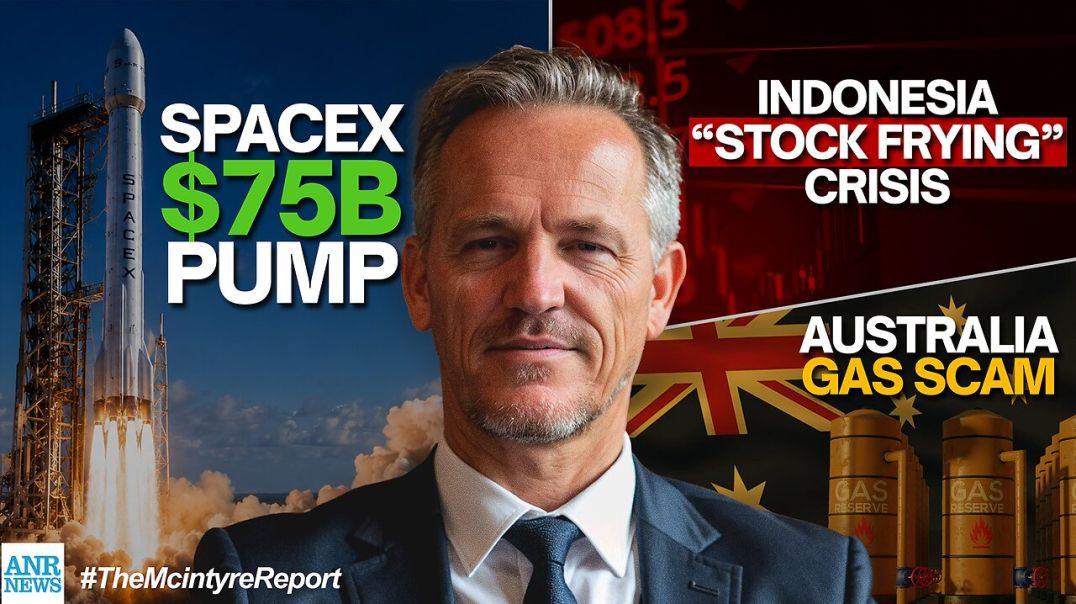
SpaceX's $75B Pump, Indonesia's "Stock Frying" Crisis & Exposing The Australian Gas Scam | The McIntyre Report
In this episode of The McIntyre Report, we dive deep into the massive globalist plays, financial maneuvers, and geopolitical shifts that the establishment wants to keep hidden.
From Elon Musk’s unconventional trillion-dollar SpaceX IPO to the economic warfare playing out in Southeast Asia, we pull back the curtain on the corporate cartels running the West. We also break down
the parody vs. reality of Australia's gas export tax loops, skyrocketing property markets, and the draconian new hate speech laws designed to silence dissent.
The McIntyre Report, by @jamiemcintyre21 (https://x.com/jamiemcintyre21)
Chapters:
00:00 Musk Is Now A Trillionaire
06:24 Why Indonesia's Markets Are On Fire
11:47 Shell Steals Australia's Gas Tax Free
20:01 Hate Speech Laws Hide War Crimes
@ANRHeadlines (https://x.com/ANRHeadlines)
Source: https://x.com/ANRHeadlines/sta....tus/2068111348765278