Top videos

‘There is often no right or wrong answer in the study of history’.
Alan Jones says Australians are tired of the divisive debates surrounding Indigenous affairs.
Watch 'Alan Jones' 8pm Monday to Thursday on ADH TV: https://watch.adh.tv/browse
____________________
📖 Read more from ADH TV here: https://adh.tv/
💬 Join in the conversation in the comments.
👍 Like this video if you enjoyed it and want to see more, it really helps us out
🔔 Subscribe to our channel and click the bell to watch our videos first
⏲️ Missed this episode live? Subscribe to ADH TV to be up to date with all our events:
https://watch.adh.tv/checkout/subscribe/signup
🎤 Have your say and contact Alan Jones on alanjones@adh.tv
____________________
Australia's Leading Voice. News and analysis from experienced broadcasters with insightful interviews. Join the debate on the future direction of the country.
Check out ADH TV at - https://adh.tv
Subscribe to the ADH TV mailing list- https://adh.tv/subscribe/
Join ADH TV as a member for free at - https://watch.adh.tv/checkout/subscribe/signup
Follow ADH TV on Socials
Twitter: https://twitter.com/adhtvaus Facebook: http://facebook.com/adhtvaus Instagram: http://instagram.com/adh_tv Spotify: https://open.spotify.com/show/....44ISFXCYFB6zbvOTAjok

Watch 'Alan Jones' 8pm Monday to Thursday ADH TV: https://watch.adh.tv/browse
#agedcare #Australia #government #election #politics #ADH #AlanJones

‘No one’s talking about what the real issue is and that is how much will it cost and who’s paying? We know it’s the Australian people that will have to pay.’
MP Keith Pitt joins Alan Jones to discuss the enormous cost of net zero emissions.
Watch ‘Alan Jones’ 8pm Monday to Thursday on ADH TV: https://watch.adh.tv/
____________________
📖 Read more from ADH TV here: https://adh.tv/
💬 Join in the conversation in the comments.
👍 Like this video if you enjoyed it and want to see more, it really helps us out
🔔 Subscribe to our channel and click the bell to watch our videos first
⏲️ Missed this episode live? Subscribe to ADH TV to be up to date with all our events:
https://watch.adh.tv/checkout/subscribe/signup
🎤 Have your say and contact Alan Jones on alanjones@adh.tv
____________________
Australia's Leading Voice. News and analysis from experienced broadcasters with insightful interviews. Join the debate on the future direction of the country.
Check out ADH TV at - https://adh.tv
Subscribe to the ADH TV mailing list- https://adh.tv/subscribe/
Join ADH TV as a member for free at - https://watch.adh.tv/checkout/subscribe/signup
Follow ADH TV on Socials
Twitter: https://twitter.com/adhtvaus Facebook: http://facebook.com/adhtvaus Instagram: http://instagram.com/adh_tv Spotify: https://open.spotify.com/show/....44ISFXCYFB6zbvOTAjok

‘Labor needs to explain how it’s going to force us into 82% renewables by 2030.’
Fred Pawle slams Labor’s climate policies.
Watch ‘Fred Pawle’ 9pm Monday on ADH TV: https://watch.adh.tv/
____________________
📖 Read more from ADH TV here: https://adh.tv/
💬 Join in the conversation in the comments.
👍 Like this video if you enjoyed it and want to see more, it really helps us out
🔔 Subscribe to our channel and click the bell to watch our videos first
⏲️ Missed this episode live? Subscribe to ADH TV to be up to date with all our events:
https://watch.adh.tv/checkout/subscribe/signup
🎤 Have your say and contact Alan Jones on alanjones@adh.tv
____________________
Australia's Leading Voice. News and analysis from experienced broadcasters with insightful interviews. Join the debate on the future direction of the country.
Check out ADH TV at - https://adh.tv
Subscribe to the ADH TV mailing list- https://adh.tv/subscribe/
Join ADH TV as a member for free at - https://watch.adh.tv/checkout/subscribe/signup
Follow ADH TV on Socials
Twitter: https://twitter.com/adhtvaus Facebook: http://facebook.com/adhtvaus Instagram: http://instagram.com/adh_tv Spotify: https://open.spotify.com/show/....44ISFXCYFB6zbvOTAjok

‘Coal is continuing to help people around the world build things, power industries and improve lives.’
Fred Pawle discusses coal’s role amid the global energy crisis.
Watch ‘Fred Pawle’ 9pm Monday on ADH TV: https://watch.adh.tv/
____________________
📖 Read more from ADH TV here: https://adh.tv/
💬 Join in the conversation in the comments.
👍 Like this video if you enjoyed it and want to see more, it really helps us out
🔔 Subscribe to our channel and click the bell to watch our videos first
⏲️ Missed this episode live? Subscribe to ADH TV to be up to date with all our events:
https://watch.adh.tv/checkout/subscribe/signup
🎤 Have your say and contact Alan Jones on alanjones@adh.tv
____________________
Australia's Leading Voice. News and analysis from experienced broadcasters with insightful interviews. Join the debate on the future direction of the country.
Check out ADH TV at - https://adh.tv
Subscribe to the ADH TV mailing list- https://adh.tv/subscribe/
Join ADH TV as a member for free at - https://watch.adh.tv/checkout/subscribe/signup
Follow ADH TV on Socials
Twitter: https://twitter.com/adhtvaus Facebook: http://facebook.com/adhtvaus Instagram: http://instagram.com/adh_tv Spotify: https://open.spotify.com/show/....44ISFXCYFB6zbvOTAjok

Herein, I discuss the priesthood of Christ, comparing it to the priesthood of Antichrist. I discuss the history of the spirit of Antichrist in Caesarian Rome and the revelation of Antichrist in Papal Rome. I reference Foxes Book of Martyrs regarding the persecution of Christians. And I discuss Papal's rise to power; it's masses and the Council of Trent. Get the book: https://app.thebookpatch.com/B....ookStore/antichrist-

http://www.21stcenturyeducation.com.au Lou Harty sits down with CEO and Founder of 21st Century Education Jamie McIntyre. Part 2 http://www.21stcenturytv.com.au

MUST SEE Australian Global Bitcoin Conference Melbourne March 28-29 - 2014 (By Jamie McIntyre)
The Philosophy of Liberty
Trump/patriot-friendly free speech social media & video sites... - https://xephula.com/blogs/4062....13/Trump-patriot-fri

Herein we discuss Counter Reformation primarily from the perspective of the Protestant Reformation. However, we also talk about the concept of reformation and counter reformation from the Old Testament. John provides an excellent overview of the Protestant Reformation from the 14th century to the present.

AUTUMN - VIVALDI

Israeli PM Netanyahu Says Israel Currently Occupies 60% of Gaza and has Instructed the Army to Expan
Israeli PM Netanyahu Says Israel Currently Occupies 60% of Gaza and has Instructed the Army to Expand that to 70%
CLASSIC CARTOONS
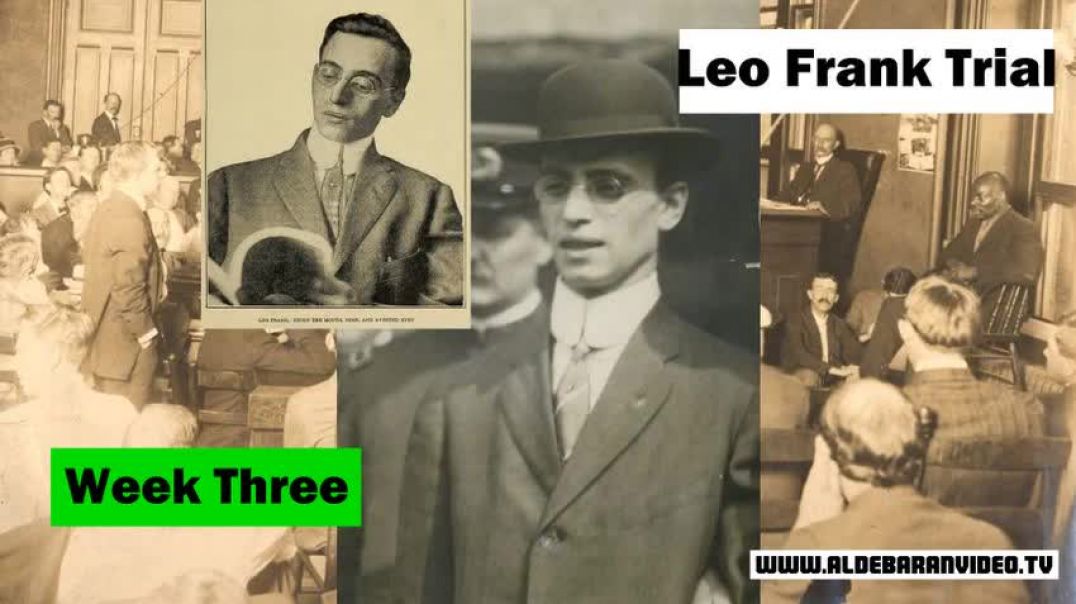
Leo Max Frank, the superintendent of the National Pencil Company, was accused of killing Mary Phagan, a 13-year-old laborer, by the prosecution. Many would contend that the renowned promoter and lawyer in the city, Thomas B. Felder. The defense team was strong, led by Ruben Arnold and Luther Rosser. Felder was secretly working for Frank and his associates as well. Few people anticipated that the defendant, Leo Frank, would soon take the stand and make an admission that was so unbelievable that it was difficult to believe as the defense began its parade of witnesses. Everyone in the audience, including the jury, was still thinking about Jim Conley's prosecution testimony.
Conley acknowledged assisting Frank in moving Mary Phagan's lifeless body from the metal room bathroom on the second floor of the pencil factory to a location in the basement, adding that Frank had asked him to return later and burn the body in exchange for a $200 payment that had been promised. Additionally, he described to a packed courtroom how he had created the "death notes" in the black dialect. The most significant information in this text is that W-W-W. Conley claimed that, at Frank's direction, Frank had acknowledged accidentally killing the girl by hitting her when she rejected his advances. Mary Phagan must have arrived after Montane Stower, not before her, according to Matthews, a motorman for the Georgia Railway and Electric Company who testified that she got off his car at 1210 and was sworn in on behalf of the defense.
To confirm timing, W.T. Hollis, a streetcar conductor, was called W-W-W Matthews. According to Matthews, Mary Phagan boarded his vehicle at Lindsay Street at 11:50 a.m., and their route from Bellwood to English Avenue was followed by Kennedy, Kennedy, and then Gray. To Gray and Jones Avenue and from Jones Avenue to Marietta, Broad Street to Marietta, then out. W-W-W. Matthews was supposed to show up at Marietta and Broad at twelve seven and a half, but they showed up on time and remained on schedule the entire day. Mary Phagan exited at Broad and Marietta; it takes two to three minutes to travel from Broad and Marietta to Broad and Hunter on this busy street. Another motorman took over as the driver at Broad and Marietta, but he remained in the same vehicle and sat down one seat behind Mary Phagan. Around 1210, they arrived at Broad and Hunter. The other young girl and Mary exited the vehicle and made their way to the sidewalk. They got off at Hunter and Broad, which is about a block and a half from the pencil factory. No one got on with Mary at Lindsay Street. The young girl sitting next to her caught the driver's attention for the first time as they were leaving Broad and Marietta streets. Returning to the vehicle, the driver discovered the same young child seated next to her. During the cross-examination, the driver failed to inform one of the detectives that they may have been three or four minutes early that day.
The same girl recognized at the morgue was Mary Phagan, according to the streetcar conductor. When Mary Phagan boarded at Lindsay Street around 11:50 a.m. on April 26, he was on the English Avenue line. He recognized her as the same girl he had seen at the morgue, and several blocks away from where she boarded the bus on English Avenue, he paid her fare. He had no memory of EPS getting into the car that morning. Several blocks away from where she boarded the W.T. Hollis streetcar, on English Avenue, a conductor, recognized Mary Phagan as the same girl he had seen at the morgue and collected her fare.
One of the most crucial information in this audiobook is that Mary Phagan was sitting by herself when she boarded the front end of the car, that Mr. Matthews would inform her that she was late for work today, and that occasionally she would enter the building and express her annoyance at being late. She arrived that morning, and when Mr. Matthews asked her if she was mad, she replied, "Yes, I'm late," and she laughed before getting in the car and sitting down. The other significant information in this text relates to the murder of Mary Phagan, a young girl who was on a car scheduled to arrive in town at seven seven. The text also mentions that Mr. Matthews would tell Mary when she boarded the vehicle, "You are late today," and that occasionally she would come in and comment that she was angry that she was late. Although it is against company policy to arrive early in the city, arriving late is not prohibited. Harry G. Leo Frank's immediate assistant superintendent, Schiff, testified that he had never seen women brought into the office and that Conley had never been seen keeping an eye on Frank.
He claimed that Helen Ferguson had been paid off by him, not Frank, on the Friday before the murder, and that Ferguson had not requested Mary Phagan's pay. This situation demonstrates how crucial accurate watches and clocks were in 1913 and 2013, as well as how accurate they were then. The most significant information in this text is that witnesses like public accountant Joel Hunter and C. backed up Leo Frank's claim that his own testimony was adequate defense. C.E.Pollard. The plant stenographer, Hattie Hall, confirmed that she had worked with Frank until around noon and had clock-out at 2:00. As a result, Jim Conley's testimony that they arrived at the factory at 1245 and that he had gone into Leo Frank's wardrobe to hide from them while they spoke to Frank was refuted by Emma Clark Freeman and Corinthia Hall, who both stated that they had arrived at the factory for a brief visit at 1145. If the women were telling the truth, it would seem that Conley was off by a few hours. The timing of their visit is not important in any way because even its complete absence would have allowed Frank and Conley to move Mary Phagan's body and write the death notes in a few more minutes. The most significant information in this text is that Jim Conley repeatedly changed his story and contradicted himself, and Miss Magnolia Kennedy disputed the assertion that Helen Ferguson had requested Mary's pay. She also stated that she had never seen blood on the floor there prior to the homicide and that the hair that was discovered on the lathe in the metal room matched Mary. In order to demonstrate that Jim Conley had altered his story and repeatedly contradicted himself, the defense also called in Pinkerton detective Harry Scott. Miss Magnolia Kennedy denied Helen Ferguson had requested Mary's pay, but she did concede that Mary's hair matched that found on the lathe in the metal room and that she hadn't noticed any blood on the floor there until after the murder.
The most crucial information in this passage is that Helen Ferguson and Mary were close friends and neighbors, and that Helen didn't ask Mr. Schiff for Mary's money while he was there paying off. Following the swearing-in, Wade Campbell was informed of his interactions on the day of the murder. His testimony about how happy and playful Frank was before noon casts doubt on the bloodspot evidence and Frank's interactions with Conley, contrary to the defense's hopes that he would do so. His testimony about how upbeat and playful Frank was before noon casts doubt on the evidence, contrary to what the defense hoped he would do. This raises questions about the bloodspot evidence and Frank's interactions with Conley.
On Monday, April 28, Wade Campbell, a worker at the Pencil factory, spoke with his sister, Mrs. Arthur White. When she entered the factory on Saturday at 12:00 a.m. and left at 12:30 p.m., she saw a black person sitting at the elevator shaft, she told him. Although she couldn't see anyone, she could hear low voices. On April 26, she arrived at the factory around 9:30 and found Mr. Frank in his exterior office. She had never seen Mr. Frank converse with Mary Phagan. She and Mr. Frank went to the fourth floor on Tuesday, the day after the murder, but she missed seeing the Negro Conly interact with him. When she entered the factory after hearing low voices, she saw the Negro, according to a cross examination. A second look revealed that she visited Mr. Dorsey's office and signed a document that was about 21 pages long. Jim Conley has been seen by the woman twice since the murder reading newspapers on the fourth floor. The most significant information in this text is that Leo Max Frank appeared carefree and jocular in the morning of April 26, 1913. At four o'clock in the afternoon, Newt Lee arrived, unaware that Mary Pagan had passed away and only concerned about a potential downpour.
Lemme Quinn, a factory worker, testified that he had visited the facility and seen Frank in his office around 12:20. However, he hadn't mentioned this visit to anyone until days later, and even Frank had forgotten about it until Quinn came forward. Quinn acknowledged having promised Frank he would bring up the visit if it would be helpful. Indirectly, he indirectly confirmed the time of Miss Halls' and Mrs. Freeman's visit to the factory. Leo Frank was not agitated or tense when he was seen by Harry Denham, who was working on the fourth floor of the pencil factory the day of the murder.The Franks' black cook, Manola McKnight, had earlier admitted in a statement that she had overheard a conversation between the Franks and their wife in which the Franks admitted to killing a girl earlier in the day. Police were alerted to her statement by her husband, but she later recanted it, claiming that her husband was lying and that the only reasons she had signed it were a fear of going to jail and the detective's "third degree" tactics. Several of Frank's friends and acquaintances were called by the defense to attest to his overall good character.
A number of prosecution witnesses testified that Frank had made inappropriate sexual advances toward girls and young women, which gave the prosecution the opportunity to address Frank's character. The jury was given the impression that the defense did not dare to cross-examine any of the young women who gave evidence by their decision to forego doing so. One of the character witnesses for the defense had a pleasant surprise in store: "Miss Irene Jackson, sworn for the defendant, worked at the pencil factory for three years. Mr. Frank's character, as far as I know, was excellent. The only thing the girls ever mentioned about him was that they appeared to be scared of him. He simply approached the door and pushed it open. On two or three occasions, I overheard comments about Mr. Frank using the restroom, but I don't recall anything about it.
My sister was lying down in the room when I learned about his second visit to the changing area. He simply entered, made a turn, and left". The fact that Mr. Frank entered Miss Mamie Kitchen while the narrator was inside and kept quiet is one of the most crucial details in this statement. He kept staring at the girls without ever entering the room but not from the inner office, where he could have seen the girls sign up. The claims that Frank was very direct with the girls who worked for him were supported by Miss Jackson's account. The fact that Mr. Frank never entered the room and simply observed the girls is one of the text's most crucial details. From the outside office, he could have observed the girls signing up, but not from the inside. The accounts of Frank being frank with the girls who worked for him were supported by Miss Jackson's account. The fact that Mr. Frank never entered the room and simply observed the girls is the most crucial information in this passage. Leo Max Frank, the defendant, took the stand on August 18, 1913, to address the jury in his own defense.
He selected the final option, making an untrue statement that could not be cross-examined. Frank made that decision and his top-notch legal team either concurred with it or accepted it weeks in advance, despite the near certainty that it would be viewed negatively by the jury. Frank's speech was a mind-numbing nearly four hours long, and an astounding three of those hours were devoted to recounting the minute particulars of his office work on the day of the murder, primarily his financial entries and accounting book calculations in excruciating detail.
Even though it was almost certain that such a decision would be viewed negatively by the jury, Frank made it anyway, and his top-notch legal team either supported him or agreed with him weeks in advance. Leo Frank had three and a half hours to complete his office work and was the last person who had seen Mary Phagan alive. He had three more hours starting at three thirty, according to both the defense and the prosecution and anywhere from 3:00 p.m. to 06:00 p.m. to perform the necessary work. The goal of Frank's lengthy speech was to persuade his audience that the six and a half hours he had allotted for his calculations would not be sufficient, and that he would also need the noon hour. Why, if this were the case, did he initially intend to depart at 4:00 p.m. with his brother-in-law, to watch a holiday baseball game?
The claim made by Leo Frank that he never knew Mary Pagan's name is absurd. For the entire 52 weeks that Mary Pagan worked for the National Pencil Company, Frank oversaw the payroll and entered the amounts in his accounting books each week. He also wrote Mary Phagan's initials, MP, next to her employee number and pay amount in these books each week. The entire 52 weeks that Mary Phagan worked for the National Pencil Company, he added his own handwritten initials, MP, next to her employee number and pay amount in these books. The factory's floor plans indicate that Mary Phagan worked in the middle room, and the only bathroom on the second floor, where Frank's office was, was in the metal room. In order to get to the restroom, Leo Frank, a frequent coffee user, had to walk directly past Mary Phagan's desk.
During the little over a year that Mary had worked for Frank, the employees put in at least 2860 hours working eleven-hour days, five days a week, and 52 weeks annually. Even if he only went to the restroom once every three hours, he would have passed Mary Phagan over 953 times in that time. Leo M. Frank mentioned quite a few female employees by name when asked by prosecutor Dorsey if he or she knew them or her by name. He also recommended that if he didn't know Mary in some way, J.M. Gantt would be unlikely to know that she was friendly.
In his unsworn statement, Frank continued, "The Author's Note: Mary Phagan left my office and apparently had made it as far as the door from my office leading to the outer office when she evidently stopped and asked me if the medal had arrived, and I told her no. Leo Frank had claimed that he overheard Mary talking to a different girl, a girl who had never shown up. No girl was found who had spoken to or met Mary Phagan at that time despite extensive research and interviews with everyone known to be in the area. The only other girl present, Monteen Stover, testified that she only saw an empty office. According to Frank's unsworn statement, Mary Phagan was fired because some ordered metal had not yet arrived at the factory. Mary Phagan had apparently worked in the metal department based on her question. Frank actually had the gall to imply that Mary Phagan had likely worked in the metal department based on her query. Everything Leo Frank said about the case is seriously called into question by his admission that he didn't know the dead girl by name or by sight.
When first questioned, Frank allegedly confessed to responding "I don't know," according to detectives. If it was I don't know, Leo Frank might have asked Mary Phagan to go with him to the Medal Room, where the prosecution, the police, and the detectives hired by the pencil company claimed the murder occurred. Leo Frank made the most shocking admission of all, or at least the most shocking admission he could make short of a detailed and humbling confession.
The most crucial information in this text is that Leo Frank attempted to lessen the impact of Monte Stover's testimony by speculating that he might have gone to the bathroom or been concealed behind the safe door when she entered. This defense was unconvincing because, even if Frank had been perfectly situated behind the door, a young woman looking for work would probably just glance around it. Additionally, Frank was speculating that he might have been using the restroom—the one in the metal room—when Monte Stover discovered his office vacant and the evidence points to Mary Phagan's murder occurring there very same moment. This was also surprising because only a few weeks prior, Frank had adamantly asserted to the coroner's jury that on the day of the murder, he had not used the restroom once all day. Leo Frank was charged with killing Mary Phagan in the metal room's bathroom.
He acknowledged that he might have visited the restroom the following Monday, when Mary Phagan-looking hair strands and a five-inch bloodstain were discovered. He also acknowledged that he might have gone to the restroom where Conley claimed to have discovered Mary Phagan's battered, strangled, and lifeless body. He also acknowledged that he may have dropped Mary Phagan's body in the hallway where another bloodstain was later discovered after wrapping it in a sack and preparing to carry it to the basement. Although the stain was thought to be very old by the defense, Frank acknowledged that he might have been present at the scene when Mary Phagan was killed. Leo Frank changed his mind because of the impending rain, and his wife was present to see him on April 29, the day he was taken into custody at police headquarters, are the two most crucial facts in this text. He asked Rabbi Marks for advice on whether it would be wise to let his wife visit him on the top floor where he was surrounded by police officers, reporters, and photographers.
Following her husband's arrest, Frank didn't see him for 13 days, which might have been a reaction to her outrage over what she believed to be his alleged infidelity.
Since there are no reports of her making an attempt to see Frank again during those initial days, Frank's claim that she had to be restrained from actually moving into his cell is too extreme to be believed. Despite later retracting her claim, Mrs. Manola McKnight had claimed that Leo Frank told his wife that he had killed a girl the night of the murder.
On his way home that evening, Leo Frank bought a box of candy to reassure his wife Lucille Selig of his love for her despite what he had done. Years later, it was discovered that she left clear instructions for her cremation and scattering of her ashes in a public park rather than being buried in Queens, New York, next to her husband. Frank continued by claiming Conley was never present at the factory or anywhere else on April 26, 1913, that he had no involvement in Mary Phagan's death, and that he had never seen him before. Leo Frank's admission of an "unconscious bathroom visit" was entirely ignored by The Atlanta Constitution and The Atlanta Georgian, which were adopting a pro-Frank editorial stance. It is unlikely that the words "call of nature" or "urinate" were deemed too shocking for the public to read about a brutal, strangulation murder since The Atlanta Journal did include the admission. The allegations that antisemitism was used as justification for Frank's prosecution and conviction will be examined in The Leo Frank Trial's upcoming episode.
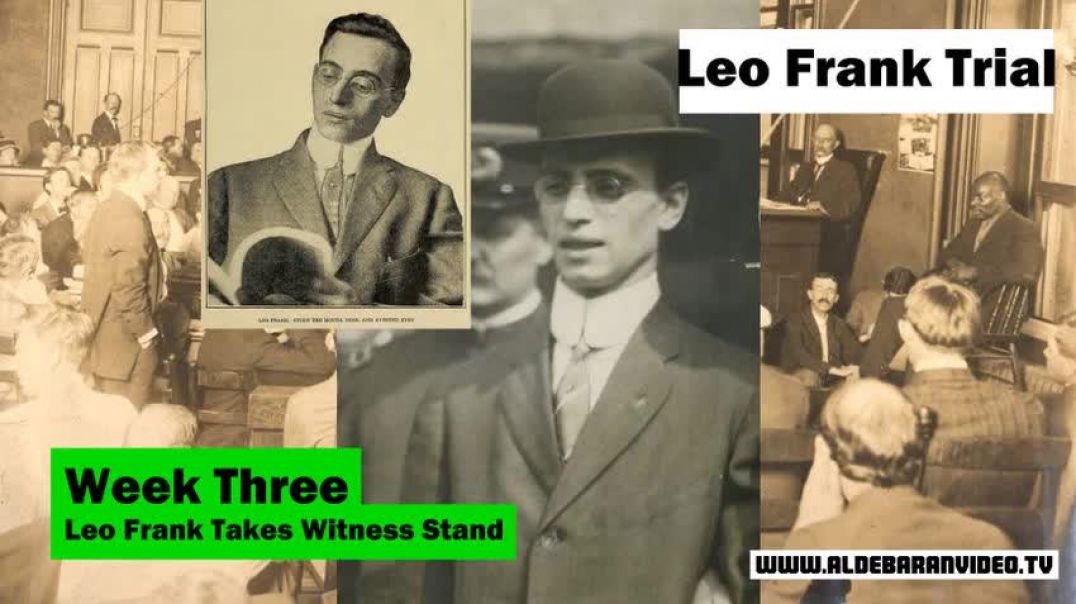
The Leo Frank trial was the most unconventional occurrence in US legal history. The defendant's admission at the trial's conclusion amounted toward emulating a confessional session that had taken place earlier. The People versus Leo M. Frank murder trial, which lasted a month and took place in Georgia's Fulton County Superior Courthouse in the summer of 1913, included this admission. Leo Frank served as a National Pencil Company executive in Atlanta and as the 500-member Gate City Lodge's 500-member B'nai B'rith official president in 1912. The B'nai B'rith established the Anti-Defamation League, or ADL, as a result of the conviction, which has become now well-known andboth politically influential and extremely significant. The grandstand seats of the most spectacular murder trial in Georgia history were filled with spectators.
Eight defense attorneys were led by Luther Z Rosser, while the prosecution team was made up of three people under the direction of Hugh M. Dorsey, the solicitor general, and Frank Arthur Hooper. As well as Ruben Rose Arnold and Rosser. The Leo Frank trial started on July 28, 1913, and continued for several days, resulting in a series of horrifying revelations. The presiding judge, the Honorable Leonard Strickland Roan, was separated from the jury of twelve white people by the witness stand. Leo Frank's testimony on Monday, August 18, 1913, in the afternoon marked the most intriguing day of the trial, which took place three weeks later. Leo M. Frank's sworn statement would be subject to special conditions and rules, according to Judge Roan. Leo M. Frank's sworn statement was to be made under special circumstances, and Judge Roan outlined those conditions and applicable laws.
250 spellbound people closed ranks and leaned forward in expectation as soon as he climbed the stand. He had a reputation as a gas jet from his college days, and he lived up to it now with verbose, monotonous speech, interruptions for three out of almost four hours, and endless pencil calculations to drive home his main points. Leo Frank showed the jury original pages from his accounting books throughout his almost four-hour speech. The Leo Frank trial, where he was found guilty of killing Mary Phagan on April 26, 1913, is where the majority of the text's most significant details are found. Leo Frank was charged with detailing the accounting calculations he had made on the afternoon of April 26, 1913, in an effort to convince the court that he had been far too busy to have killed Mary Phagan on that day, nearly 15 weeks earlier.
The defense emphasized how long it took Frank to complete the accounting books, but the real issue was: where was Leo Frank between 12:05 and 12:10 p.m? Monteen Stover testified that she discovered Leo Frank's office empty during this five-minute time period on Saturday, April 26, 1913, and the evidence had already established that Mary Phagan was killed between 12:05 and 12:15 p.m. Leo Frank was present in the same factory's metal room, which housed the metals.There weren't many suspects in the building because April 26, 1913, Confederate Memorial Day, was a state holiday in Georgia and the factory and offices were shut down, with the exception of a few workers who came in to collect. Two investigators testified that Leo Frank had never left his office from noon until after 12:45, and if his alibi held up or was valid, he couldn't have killed Mary Phagan. However, April 26, 1913 was a state holiday in Georgia, commemorating the holiday and the factory and offices were closed. Frank claimed that he might have used the restroom during that time after talking about almost irrelevant topics for hours, putting him in the only publish washroom on that floor of the building—the metal room bathroom. This was even more remarkable considering that weeks earlier Leo Frank had firmly and asserted and continuously insisted to the seven-person panel, chaired by Coroner Paul Donohue, that he did not use the restroom during the time of the murder.
Paul Donahue, a coroner who is both visually impaired and a prodigious savant, expressed his expected shock. He was surprised as one might expect. Leo Frank appeared to be attempting to physically and mentally get away from the bathroom where Jim Conley claimed to have discovered the body. Frank finally admitted that he might have used the restroom during that time after rambling on about near-irrelevant topics for hours. This put him in the metal room bathroom, the only restroom on that floor of the building. This was even more remarkable considering that Leo Frank had insisted, weeks earlier, to the seven-person panel, chaired by Coroner Paul Donohue, that he did not use the restroom throughout the day. It appeared as though Leo Frank was making an effort to get as far away as possible from the restroom where Jim Conley claimed to have discovered the body.
At 3:56 p.m., Newt Lee entered the lobby on the second floor. m. Leo Frank requested that I spend two hours out on the town before returning at 6:00 p.m. The double doors halfway up the staircase were locked when Lee arrived back. When Leo Frank attempted to punch in a new timesheet for the night watchman Lee to register, Newt Lee saw his boss bungling and almost fumbling the timesheet on Saturday afternoons when he unlocked the doors and entered Leo Frank's office. It was revealed prior to the trial that Leo Frank had earlier informed Newt Lee that it was a National Pencil Company policy that once the night watchman arrived at the factory, as Lee had done the day of the murder at 4:00 p.m.
The most crucial information in this text is that Leo Frank was not permitted to leave the structure until he had turned over control of security to the day Watchmen company. This was brought on by the lack of resources, the danger of fire, and the high cost of the essential factory equipment. The two-hour timetable used to reschedule the postponed baseball game, the unexpected security rule waiver, the clumsy handling of a new timesheet, the locked double doors, and Frank's eerily animated demeanor were all highlighted by the prosecution. In the testimony of two African American witnesses, Janitor James, Jim Conley, and Leo Frank, a nearly demonic plot to capture the innocent night watchman Newt Lee was made clear. Leo Frank was placed between two layers of African Americans and the murder of Mary Phagan in the intricately designed plot for the twelve white men who would decide his fate.
The most crucial information in this text is that Leo Frank, a Jew who was considered white in the racial segregationist old south, was the one who initially attempted to blame the elderly, married, and unpunished African American Newt Lee for the rape and murder of Mary Phagan. In response to the defense team's intrigue, Jim Conley acknowledged he had assisted the real murderer, Leo Frank, with the clean-up after the fact in order to stop Conley from disclosing any more about the actual resolution to the crime. The new murder theory advanced by the defense team for Leo Frank was that Mary Phagan was attacked by Jim Conley as she descended the stairs from Leo Frank's office. They claimed that after Phagan entered the first floor lobby, she was robbed and then thrown through the two foot by two foot scuttle hole next to the elevator 14 feet to the basement. The Leo Frank trial is where the text's most significant details are found.
Leo Frank and Newt Lee were purposefully left alone in a police interrogation room at the Atlanta police station, where investigators set up a conversation between them. Leo Frank reprimanded Newt Lee for attempting to discuss the murder of Mary Phagan and warned him that if he continued, he and Lee would both enter hell immediately. Jewish opinion has become centered on the idea that Jim Conley, rather than 14-year-old Monteen Stover, who defended Leo Frank's character before accidentally revealing his false alibi, was the trial's key witness. Supporters of Leo Frank downplay the significance of Monteen Stover's trial testimony and Leo Frank's valiant attempt to refute it on August 18, 1913. In his 29-page commutation order from June 21–9, Governor John M. Slayton also disregarded the Stover-Frank incident.
The most crucial information in this text is that many Frank supporters have chosen to downplay the importance of Monteen Stover by focusing solely on Jim Conley and then claiming that Jim Conley's absence prevented Leo Frank from being convicted. Only because no one ever foresaw the significance of Jim Conley telling the jury that he had discovered Mary Phagan dead in the middle room, has this question been left open for speculation. In the September 1915 issue of his magazine Watson's, Tom Watson addressed the "no conviction without Conley" controversy but it's time for a twenty-first century justification to explain why even the Georgia Supreme Court decided that the trial's evidence and testimony upheld Frank's conviction.
Leo Frank's four-hour long unsworn statement served as the trial's climax, and Frank was given the last word before closing arguments. Frank Hoover spoke for five minutes in his own defense without being sworn in, disputing the testimony of others that he knew Mary Phagan by name and had entered the dressing room with another worker of the business for ostensibly immoral purposes. Reiterating his "unconscious visit," he also says. Frank acknowledged in a newspaper interview that was printed in the Atlanta Journal Constitution in March 1914 that he might have visited another area of the building during this time that he couldn't clearly recall. He acknowledged that he didn't realize it would take force to achieve his goal when he followed the child back into the middleroom and that Jim Conley overheard a scream that sounded like a laugh that had been severed into a shriek. The stillness of the quiet building was broken by its sound.

Apartement 2

BREAKING!!! US Moves to EXIT the WHO & the UN! ft. Dr. Rima Laibow
AIRING 12PM AEDT/8PM EST
Dr. Rima Laibow joins Maria Zeee to discuss the breaking news that the United States is officially moving to exit the UN & WHO through bills HR6645 & S3428!
https://rumble.com/v41hh1h-unc....ensored-breaking-us-

No Safe Place For Civilians In Gaza – ICRC
ICRC spokesperson Sarah Davies spoke to RT about the extremely dangerous conditions that civilians in Gaza are forced to endure, as well as the medical supplies shortage, public health risks, and much more.


WEF Klause Schwab Admits that We’re Dismantling Their System
For too long, Globalists and unelected one world government satanists like this have controlled everything we hear, read, and see.
That time is over.
They can’t control us anymore.